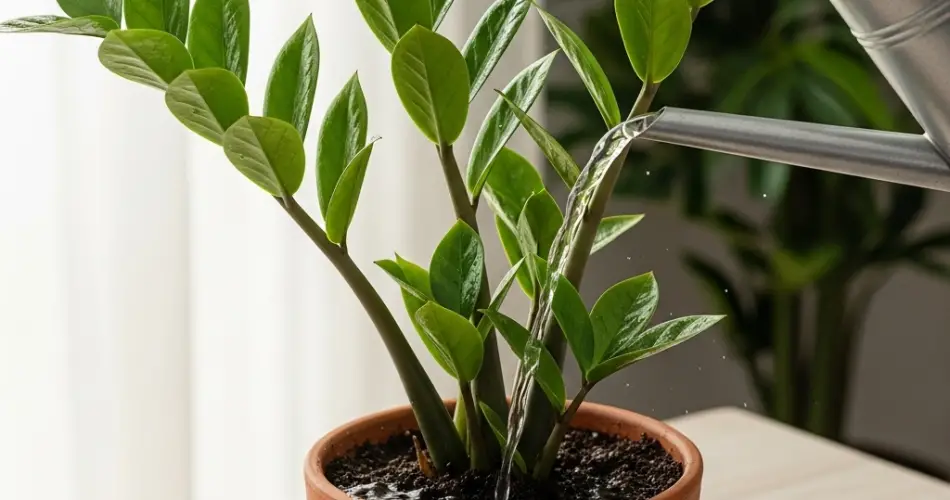
The ZZ plant (Zamioculcas zamiifolia) has become a staple in modern homes and offices, celebrated for its sculptural appearance and minimal care needs. One of its strongest qualities is drought tolerance, thanks to its rhizome roots that store water. But even the toughest houseplants have their limits, and improper watering—especially keeping the soil too wet—can lead to problems.
Understanding how to monitor and manage soil moisture is key to growing a healthy ZZ plant. Whether you’re a new plant owner or simply looking to fine-tune your watering routine, here’s everything you need to know to keep your ZZ thriving without overthinking it.
Why Soil Moisture Matters for ZZ Plants
ZZ plants evolved in dry grasslands and forested areas of Eastern Africa, where they experienced infrequent but deep rainfall. Their thick, waxy leaves and rhizome-based root system are designed to store moisture and survive long dry spells. While this makes them perfect for busy or forgetful plant parents, it also means that consistently moist soil can lead to root rot—a common issue with indoor ZZs.
Getting the soil moisture just right helps avoid under- or overwatering and ensures that your plant stays lush and resilient.
Signs of Too Much or Too Little Water
Knowing what your ZZ plant is trying to tell you can prevent bigger issues down the line. Here’s what to look for:
Too Much Water:
-
Yellowing leaves, especially on lower stems
-
Soft or mushy stalks
-
Foul smell from the soil (a sign of root rot)
-
Wilting even when soil appears moist
Too Little Water:
-
Wrinkled or drooping leaflets
-
Dry, brittle soil pulling away from the pot edges
-
Slow growth or leaf loss over time
The key is to find a balance where the plant is neither drying out completely for weeks nor sitting in soggy soil.
How to Check Soil Moisture Properly
Checking soil moisture doesn’t require any special tools—just a bit of consistency and observation. Here are a few effective ways to gauge soil moisture:
-
The Finger Test: Stick your index finger about 2 inches into the soil. If it feels dry at that depth, it’s time to water. If it’s still slightly damp, wait a few more days.
-
Use a Wooden Stick or Chopstick: Insert it into the soil and pull it out after a minute. If it comes out clean, the soil is dry. If it has wet soil clinging to it, hold off on watering.
-
Moisture Meter: For those who prefer a gadget-based approach, a moisture meter can give you a more precise reading. ZZ plants do best when the reading is in the “dry” to “slightly moist” range before watering.
Avoid watering on a set schedule. Instead, let the soil and plant behavior guide your routine.
Best Watering Practices for ZZ Plants
To avoid common mistakes, follow these watering tips tailored for ZZ plants:
-
Water Deeply, Then Wait: When it’s time to water, soak the soil until water drains from the bottom. This ensures the rhizomes get hydrated. Then allow the soil to dry out almost completely before watering again.
-
Use a Pot with Drainage Holes: Never plant your ZZ in a container without proper drainage. Excess water must be able to escape to prevent rot.
-
Empty Saucers Promptly: If water collects in the saucer after watering, empty it within 15–30 minutes to keep roots from sitting in moisture.
-
Reduce Frequency in Winter: ZZ plants enter a slower growth phase during colder months. Watering every 3–4 weeks might be enough in low light conditions.
-
Watch the Light Conditions: In brighter areas, your ZZ may need water more often, while in dimmer spaces, the soil stays wet longer.
Choosing the Right Soil Mix
Even the best watering habits won’t help if the soil doesn’t drain well. A ZZ plant needs light, loose, and aerated soil that allows excess moisture to flow through easily. Use or create a mix with:
-
Regular potting soil
-
Perlite or pumice (to improve aeration)
-
A handful of coarse sand or orchid bark for added drainage
Avoid moisture-retentive mixes like those formulated for tropical plants or moisture-loving species.
Final Tip: Don’t Be Afraid to Wait
Patience is a ZZ plant’s best friend. Many new plant owners kill ZZs with kindness, watering them far too often. Trust the plant’s natural rhythm and the dryness of the soil. It’s much safer to wait a few days too long than to water too soon.
Conclusion
ZZ plants are among the most forgiving houseplants, but they thrive best when soil moisture is managed thoughtfully. By learning to check the soil before watering, using the right soil mix, and adjusting for environmental changes, you’ll set your ZZ up for years of healthy growth. Watering doesn’t have to be complicated—it just needs to be intentional.


