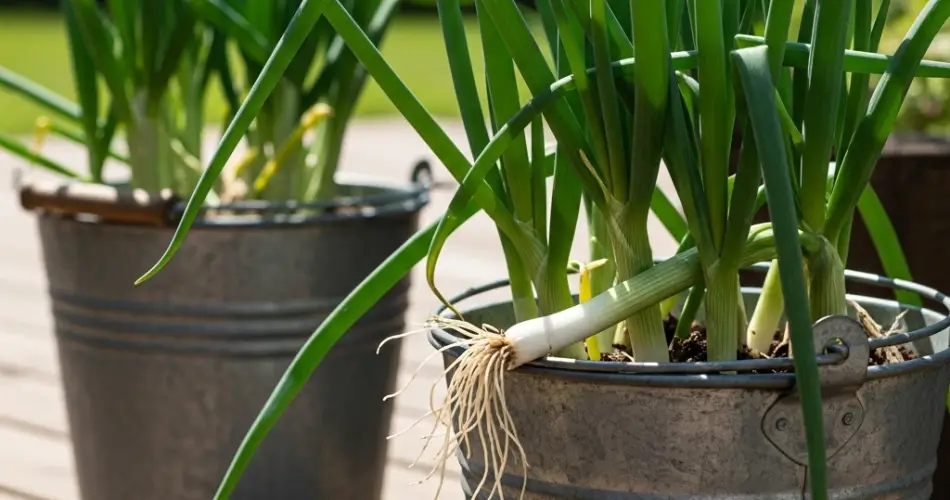
Scallions, also known as green onions, are a versatile and flavorful addition to any home kitchen. Their mild taste and crisp texture make them perfect for salads, garnishes, stir-fries, and soups. For gardeners with limited space, growing scallions in buckets is an ideal solution. Container gardening allows you to cultivate fresh scallions year-round, even in urban settings, by providing control over soil, water, and sunlight. This guide explains how to grow healthy scallions in buckets using simple, effective methods.
Why Bucket Gardening Works for Scallions
Bucket planting is particularly suited for scallions because their shallow root system thrives in containers. Buckets allow you to manage soil quality, drainage, and moisture levels, which are essential for consistent growth. For urban gardeners, balcony planting or container gardening provides flexibility and accessibility, ensuring you can enjoy fresh scallions throughout the year. Containers also help reduce exposure to pests and soil-borne diseases.
Choosing the Right Scallion Variety
Scallions come in various types, including standard long white varieties and smaller, fast-growing types ideal for continuous harvest. Popular varieties for container gardening include “Evergreen Hardy,” “White Lisbon,” and “Tokyo Long White.” These types grow well in limited space, provide tender stalks, and are suitable for year-round planting, allowing for a steady supply of fresh scallions.
Selecting and Preparing Buckets
Choose buckets that are at least 8–10 inches deep and 10–12 inches wide to accommodate multiple scallion plants. Ensure the containers have sufficient drainage holes to prevent waterlogging, which can lead to root rot. For added drainage, you can place a thin layer of gravel or small stones at the bottom of each bucket. Clean the buckets thoroughly to remove residues from previous plants, reducing the risk of disease.
Soil Preparation
Scallions thrive in loose, nutrient-rich soil that drains well. Use a high-quality potting mix blended with compost or organic matter to improve fertility and moisture retention. Adding perlite or coarse sand enhances drainage and prevents the soil from compacting. Avoid heavy garden soil, which can restrict root growth and reduce plant productivity. A slightly acidic to neutral pH of 6.0–7.0 is ideal for scallions.
Planting Scallions
You can grow scallions from seeds, sets, or small seedlings. For seeds, sow them about ½ inch deep and space them 1–2 inches apart. Thin seedlings as they grow to prevent overcrowding and ensure strong, healthy plants. Sets or transplants can be planted slightly deeper, with spacing of 1–2 inches between each plant. Water gently after planting to settle the soil around the roots and encourage quick establishment.
Sunlight Requirements
Scallions grow best in full sun but tolerate partial shade, making them adaptable to urban settings. Place your buckets in a location where they receive at least four to six hours of direct sunlight per day. Adequate sunlight encourages strong, healthy stalks and reduces the likelihood of the plants becoming leggy or weak. In hotter climates, partial shade during peak afternoon hours can prevent leaf scorching.
Watering and Maintenance
Consistent moisture is crucial for container-grown scallions. Keep the soil evenly moist, watering whenever the top inch feels dry. Avoid overwatering, as soggy soil can lead to root rot and fungal issues. Mulching the soil surface with straw, shredded leaves, or compost helps retain moisture, regulate soil temperature, and reduce weed growth. Regularly remove yellowing or damaged leaves to maintain healthy growth.
Fertilization
Although scallions are relatively light feeders, occasional fertilization supports robust growth. Apply a balanced liquid fertilizer or compost tea every two to three weeks to promote tender, flavorful stalks. Avoid excessive nitrogen, which can result in soft, weak leaves prone to bolting or disease. Proper nutrition ensures a continuous harvest throughout the year.
Harvesting Scallions
Scallions can be harvested once the stalks reach 6–8 inches in height. For continuous production, use the “cut-and-come-again” method, removing outer stalks and allowing the inner ones to continue growing. This approach provides a steady supply of fresh scallions without damaging the plant. Harvesting in the morning ensures crisp, flavorful stalks for cooking or garnishing.
Advantages of Bucket Gardening for Scallions
Growing scallions in buckets allows gardeners to maximize limited space, maintain control over growing conditions, and enjoy year-round harvests. Containers are portable, making it easy to move plants for optimal sunlight or protect them from extreme weather. Additionally, container-grown scallions tend to be cleaner, more tender, and less susceptible to pests than those grown in open garden beds.
Conclusion
Bucket gardening offers a practical and rewarding way to grow fresh scallions year-round, even in small urban spaces. By selecting the right variety, preparing nutrient-rich soil, providing adequate sunlight, and maintaining consistent watering and fertilization, you can enjoy a steady supply of healthy, flavorful scallions. With minimal effort and simple care, container-grown scallions can become a staple in your home garden and kitchen, adding fresh, vibrant greens to your meals throughout the year.


