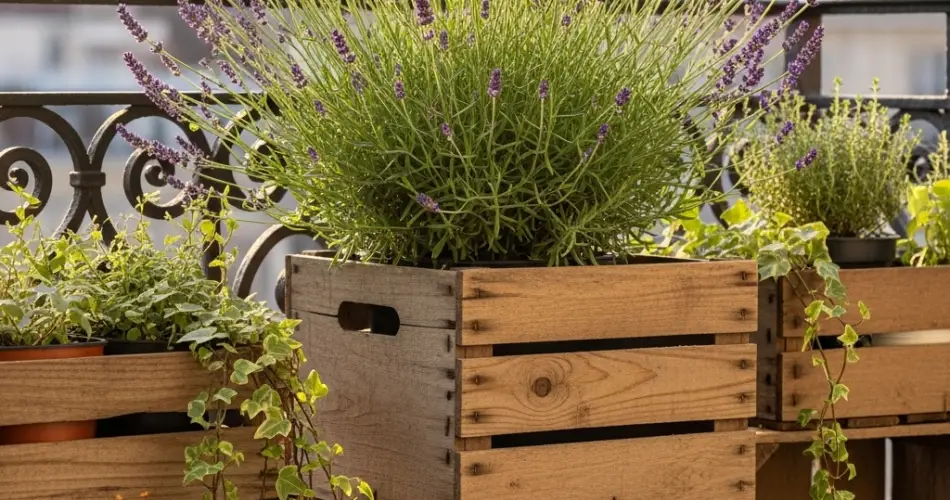
Lavender is a beloved herb known for its calming fragrance, elegant blooms, and versatility in both cooking and home décor. It’s also one of the easiest plants to grow in containers, making it perfect for small-space gardening. By planting lavender in wooden crates, you can enjoy a touch of rustic charm on your balcony while benefiting from this plant’s beauty and aroma year-round.
Crate planters not only offer a unique aesthetic but also give you the flexibility to move your plants for optimal sunlight and seasonal changes. Whether your balcony is large or modest, a crate garden filled with lavender can turn it into a serene and inviting space.
Why Lavender Thrives in Crates
Lavender is a Mediterranean plant that loves sunshine, warmth, and well-draining soil. Wooden crates naturally allow for good air circulation around the roots, preventing the damp conditions that lavender dislikes. Their portability means you can reposition them to catch the best light, and their rustic appearance blends well with the plant’s natural beauty.
A crate also allows you to create an ideal soil environment. Unlike heavy pots that can retain too much moisture, crates can be customized with proper lining and drainage to suit lavender’s needs perfectly.
Choosing the Right Crate
Size and Depth
Lavender varieties vary in size, but most thrive in a crate that’s at least 12 inches deep. This depth supports the root system and provides stability for mature plants, especially when they flower.
Material
Opt for untreated or food-safe wooden crates. Treated wood can leach chemicals into the soil, which can harm plants. Reclaimed wine boxes or vintage fruit crates are stylish and sustainable options.
Drainage
Proper drainage is essential for lavender. Drill several holes in the bottom of the crate if it doesn’t already have them. Place a layer of gravel or broken terracotta at the base to encourage water flow.
Lining
Use breathable landscape fabric or burlap to line the crate. This will help contain the soil while still allowing water to drain freely.
Preparing the Soil
Lavender prefers light, sandy, well-draining soil. A good mix for crate planting includes:
-
2 parts potting soil
-
1 part coarse sand or perlite
-
1 part compost
Avoid heavy clay-based soils, as they hold too much water and can lead to root rot. If your local soil is rich in clay, rely on commercial potting mixes formulated for Mediterranean or drought-tolerant plants.
Planting Lavender in Crates
You can start with seeds, but for faster results, plant young nursery-grown lavender.
Steps:
-
Fill your crate with the prepared soil mix, leaving about 1 inch of space at the top.
-
Place the lavender plant in the center or arrange multiple plants with enough space between them for airflow.
-
Firm the soil gently around the roots and water lightly to help them settle.
Sunlight and Placement
Lavender thrives in full sun, needing at least 6–8 hours of direct sunlight daily. On a balcony, position the crate where it gets the most light—usually near the railing or in an open corner. If your balcony is shaded, consider placing the crate on a wheeled stand so you can move it to sunnier spots.
Watering and Feeding
Lavender is drought-tolerant once established, so it’s better to water deeply but infrequently. Let the top inch of soil dry out before watering again. Overwatering is the most common cause of problems with lavender, especially in containers.
Feed your plants sparingly. A light application of a balanced, slow-release fertilizer in spring will support healthy growth without causing excessive foliage at the expense of flowers.
Pruning for Health and Shape
Pruning keeps lavender neat, encourages bushy growth, and prolongs its lifespan. Trim lightly after the first bloom to promote a second flush of flowers. In late summer or early fall, prune back about one-third of the plant, avoiding cutting into old woody stems.
Pest and Disease Control
Lavender’s natural oils make it unattractive to most pests. However, watch for fungal diseases in overly damp conditions. Good drainage, adequate spacing, and proper watering are your best defenses.
Harvesting and Using Lavender
The best time to harvest lavender is just as the buds are starting to open. Cut stems in the morning after the dew has dried for the strongest fragrance.
Fresh lavender can be used in cooking, teas, or infused oils. Dried lavender is perfect for sachets, potpourri, and homemade bath products. Hang harvested stems upside down in a dry, airy spot to preserve their aroma and color.
Styling Your Balcony with Lavender Crates
Lavender in wooden crates complements a variety of balcony styles, from rustic farmhouse to modern minimalist. You can:
-
Arrange multiple crates at different heights for visual interest.
-
Paint or stain the crates to match your outdoor furniture.
-
Pair lavender with other Mediterranean herbs like rosemary or thyme for a fragrant mini garden.
Final Thoughts
Wooden crate planters offer an attractive and practical way to grow lavender on your balcony. With the right soil, sunlight, and care, you can enjoy vibrant blooms, soothing scents, and the charm of rustic gardening even in the heart of the city.
A lavender-filled crate not only brings beauty to your space but also provides a year-round source of fragrance and relaxation—proving that even the smallest balcony can become a peaceful retreat.


