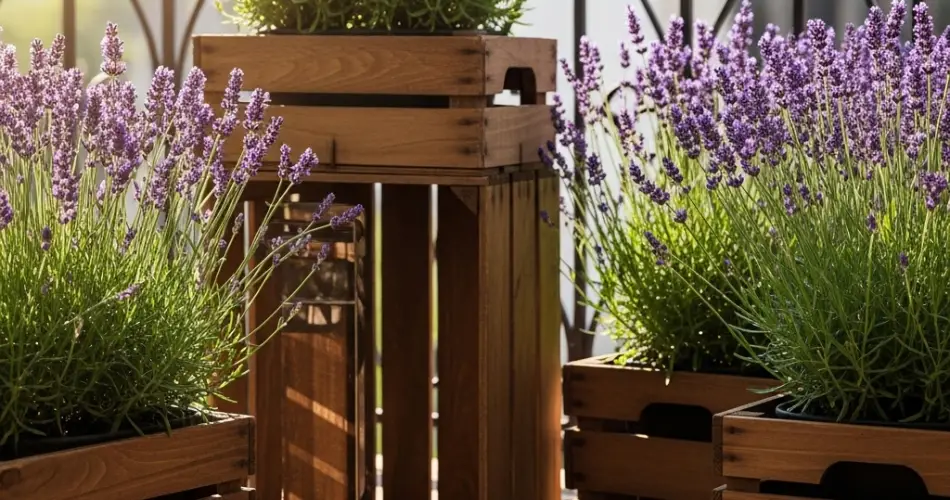
Lavender is one of the most beloved herbs for both its beauty and fragrance. Its purple blooms add charm to any space, while its calming scent creates a relaxing atmosphere. Even without a traditional garden, you can successfully grow lavender in a DIY balcony crate garden. This method combines rustic style with practical space-saving gardening, making it ideal for urban homes and small outdoor areas.
Why Lavender Thrives in Balcony Crates
Lavender is well-suited to container gardening, as it prefers slightly dry, well-drained soil and benefits from full sun. Balcony crates provide enough root space while allowing excess moisture to escape, preventing root rot. They are also easy to move, so you can adjust your plant’s position for maximum sunlight.
Using wooden crates adds a decorative, country-inspired look to your balcony. When made from reclaimed or repurposed materials, they also contribute to sustainable gardening by reducing waste.
Choosing and Preparing the Right Crate
Select a sturdy crate that can hold soil without collapsing. Wooden crates are ideal for their natural look, but plastic crates with solid sides can work as well. If using wood, choose untreated varieties to avoid chemical leaching into the soil. Cedar and redwood are naturally rot-resistant, making them excellent choices for outdoor use.
Preparation steps:
-
Clean the crate – Remove dirt and debris from previous use.
-
Drill drainage holes – Several holes at the base will ensure excess water flows out.
-
Smooth rough edges – Sand any splinters for safety and comfort.
-
Add a liner – Use breathable materials like burlap or landscape fabric to hold soil in place while allowing drainage.
For wooden crates, applying a non-toxic, plant-safe sealant can extend their lifespan outdoors.
The Best Soil Mix for Lavender
Lavender needs soil that drains quickly to mimic its natural Mediterranean environment. A suitable mix for crate gardening might include:
-
2 parts potting soil
-
1 part coarse sand or perlite for drainage
-
1 part compost for nutrients
Avoid heavy or clay-based soils, as they retain too much moisture and can damage the roots.
Planting Lavender in Crates
You can grow lavender from seeds, cuttings, or nursery plants. Starting from young plants is faster, as seeds take time to germinate and mature.
From seeds:
-
Sow indoors in early spring, pressing seeds lightly into the soil without covering them too deeply.
-
Keep them warm and lightly moist until germination, which can take 2–4 weeks.
From cuttings:
-
Take a healthy, non-flowering stem from an existing lavender plant.
-
Remove the lower leaves and dip the cut end in rooting hormone before planting in sandy soil.
From nursery plants:
-
Choose healthy, compact plants with no signs of disease.
-
Plant them at the same depth they were in their original container.
Sunlight and Watering Needs
Lavender thrives in full sun, requiring at least 6–8 hours of direct light daily. If your balcony doesn’t get enough sunlight, position your crate near the brightest spot or consider using a portable plant stand to raise it higher.
Water deeply but infrequently, allowing the soil to dry out between waterings. Overwatering is one of the most common causes of lavender decline in containers. In humid climates, good air circulation around the plant is essential to prevent fungal issues.
Feeding and Ongoing Care
Lavender is not a heavy feeder. Too much fertilizer can cause excessive leaf growth and fewer flowers. Apply a light dose of balanced, slow-release fertilizer in spring to encourage healthy blooms.
Pruning is key to keeping lavender full and healthy. In early spring, trim back about one-third of the plant’s height, avoiding cutting into the woody stems. Lightly trim again after flowering to encourage a second bloom.
Harvesting Lavender
Harvest when the flower buds have formed but are not yet fully open. This stage provides the strongest fragrance and longest-lasting blooms. Use sharp scissors or pruning shears to cut stems just above the leaves.
Lavender can be used fresh in floral arrangements or dried for potpourri, sachets, and crafts. Hang bundles upside down in a cool, dark place to preserve their color and scent.
Winter and Long-Term Care
In regions with mild winters, lavender can stay outdoors year-round. In colder climates, move crates indoors to a sunny window or a cool, bright room. Avoid overwatering during winter, as the plant enters a semi-dormant state.
Replace or refresh the top layer of soil each spring to keep the plant healthy and productive. Every few years, you may need to repot or replace older plants, as lavender tends to become woody over time.
Bringing Beauty and Fragrance to Your Balcony
A DIY balcony crate garden with blooming lavender transforms even the smallest space into a peaceful retreat. The combination of rustic wooden crates, vibrant purple flowers, and soothing fragrance makes this a rewarding gardening project for both beginners and experienced plant lovers.
With the right soil, sunlight, and care, your balcony can become a fragrant haven, offering fresh lavender for years to come.