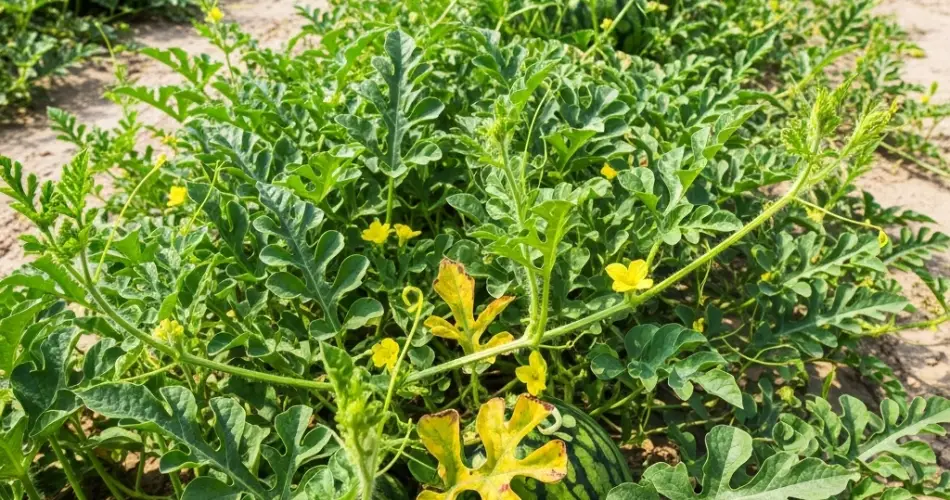
Watermelons are beloved for their sweet, juicy flesh, but any gardener who’s grown them knows the vines can quickly sprawl across an entire garden. While vigorous vine growth is a sign of a healthy plant, uncontrolled spreading can overwhelm other crops, block walkways, and make harvesting a challenge.
If you’re dealing with watermelon vines that are taking over your garden space, don’t worry. With a few strategic interventions, you can manage their growth without sacrificing fruit production.
Understanding Watermelon Growth Habits
Watermelon plants belong to the cucurbit family and are naturally vigorous creepers. Most traditional varieties can easily stretch 10 to 20 feet (3 to 6 meters) or more in a single season.
This sprawling habit is a survival mechanism: the plant sends out vines in all directions to find space, sun, and soil nutrients. While it’s a natural behavior, it can create challenges for space-conscious gardeners.
Strategy 1: Choose Compact or Bush Varieties
If you haven’t planted yet—or if you’re planning for future seasons—start by choosing compact or bush-type watermelon varieties. These cultivars are specifically bred for smaller spaces and container gardening.
Popular compact options include:
-
‘Sugar Baby Bush’
-
‘Bush Charleston Gray’
-
‘Yellow Doll’
-
‘Golden Midget’
These varieties produce full-sized or small watermelons on shorter vines, usually no more than 3 to 5 feet long.
Strategy 2: Train Vines Vertically
Vertical gardening is an excellent way to reclaim space while encouraging airflow and sun exposure.
How to trellis watermelon vines:
-
Use a sturdy trellis, arch, or A-frame support that can hold the weight of mature fruits.
-
Train vines to climb using garden ties or soft twine.
-
Support developing melons with slings made from fabric, mesh bags, or old T-shirts to prevent them from pulling the vines down.
While not all watermelon varieties adapt well to vertical growth, many smaller types can thrive when trained correctly.
Strategy 3: Redirect Vines Strategically
Instead of letting vines run wild, gently redirect them away from sensitive plants, walkways, or garden beds.
Tips:
-
Use garden staples or landscape pins to guide vines where you want them.
-
Lay down mulch or straw paths to encourage vines to grow in designated zones.
-
Monitor vine tips every few days and reposition them as needed before they root.
Early redirection prevents later entanglement and allows you to use every inch of garden space wisely.
Strategy 4: Prune Sparingly but Strategically
While excessive pruning can reduce yields, light pruning and tip-pinching can help manage size and focus energy on fruit development.
When and how to prune:
-
Cut back the growing tips once the plant has set 3 to 5 healthy fruits.
-
Remove side shoots or vines that show poor growth or disease.
-
Trim leaves or vines that block airflow or sunlight from reaching the center of the plant.
Use clean, sharp garden shears, and always disinfect tools between cuts to prevent the spread of disease.
Strategy 5: Mulch to Control Spread
A thick layer of mulch around watermelon plants helps guide growth, conserve moisture, and reduce weeds.
Best mulches for watermelons:
-
Straw or hay (free from weed seeds)
-
Dried grass clippings
-
Wood chips around the edges (not directly on stems)
Mulch also makes it easier to harvest ripe melons and prevents fruits from resting directly on the soil, which can cause rot.
Strategy 6: Use Containers or Raised Beds
Growing watermelon in containers or raised beds is a smart way to limit sprawling. Choose a large container (at least 18 inches deep) or dedicate a raised bed with trellising.
Container tips:
-
Use bush varieties for best results.
-
Provide strong supports.
-
Keep soil consistently moist and well-fed with organic fertilizer.
Raised beds allow for better drainage and control while encouraging vertical or redirected growth.
Strategy 7: Harvest Promptly
Once watermelons are ripe, harvest them quickly to lighten the load on vines and encourage the plant to direct its energy toward new fruit.
Signs of ripeness include:
-
A yellow spot where the melon rests on the ground
-
A dull, hollow sound when tapped
-
Drying tendril near the stem
-
Rough skin texture and strong fragrance
Leaving overripe melons on the vine can attract pests and weigh down the plant unnecessarily.
Final Thoughts
Watermelon vines may be vigorous growers, but with smart planning and a few simple techniques, you can keep them under control and still enjoy a sweet, abundant harvest. Whether you redirect the vines, grow vertically, prune selectively, or switch to compact varieties, there’s a solution for every space and situation.
Managing vine growth isn’t about stopping it—it’s about guiding it. With thoughtful care, your watermelon patch can remain productive, tidy, and a highlight of your summer garden.


