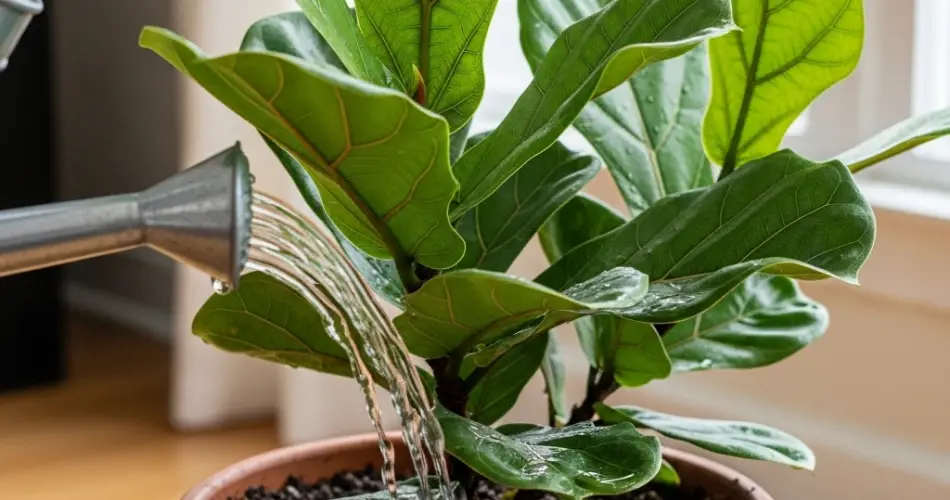
The fiddle leaf fig (Ficus lyrata) has become one of the most popular indoor plants thanks to its broad, glossy leaves and tall, sculptural form. While it makes a bold design statement, keeping it healthy and thriving—especially when it comes to watering—requires a bit of know-how. Watering mistakes are among the most common reasons fiddle leaf figs struggle, making it essential to understand the plant’s real needs.
Below is a comprehensive guide on how to water your fiddle leaf fig properly, including what to do, what to avoid, and how to tailor your watering routine to different environments.
Understand the Fiddle Leaf Fig’s Natural Habitat
Fiddle leaf figs originate from the tropical rainforests of West Africa. In nature, they grow in warm, humid conditions with regular rainfall, but they’re also used to dry periods between rains. This natural pattern of soaking and drying is what you want to replicate indoors.
They don’t like sitting in constantly wet soil, but they also don’t want to be completely dried out for long. Striking a balance is key.
How Often to Water
There’s no one-size-fits-all schedule. How often you water depends on several factors:
-
Indoor vs. Outdoor placement
-
Pot size and material
-
Soil composition
-
Light exposure
-
Season and humidity
A good general guideline is to water every 7–10 days, but always check the soil first.
Soil Test: Stick your finger into the soil about 2 inches deep. If it feels dry at that level, it’s time to water. If it’s still moist, wait a few more days.
How to Water Properly
When it’s time to water your fiddle leaf fig, do it thoroughly.
-
Water until it drains out the bottom. Pour water slowly and evenly across the soil surface until you see excess water running out of the drainage holes.
-
Let it drain completely. Discard any water collected in the saucer. Never let the roots sit in stagnant water, as this leads to root rot.
-
Use room temperature water. Cold water can shock the roots, while warm water may encourage fungal issues.
Avoid lightly misting or giving only a small amount of water. Shallow watering encourages shallow root growth and doesn’t hydrate the deeper root zone.
Pot and Soil Considerations
The type of pot and soil you use plays a significant role in watering success.
-
Choose a pot with drainage holes. This is non-negotiable. Even the most careful watering will fail in a pot that traps excess water.
-
Use a well-draining soil mix. A mix made for indoor tropical plants or amended with perlite and bark helps retain just enough moisture without becoming soggy.
Avoid dense or clay-heavy soil that holds water too long. Root rot is the most common problem fiddle leaf figs face due to poor drainage.
Seasonal Watering Adjustments
As seasons change, so should your watering routine:
-
Spring and Summer: This is the active growing season. Your plant will need more frequent watering as it uses more moisture for leaf development.
-
Fall and Winter: Growth slows down. Water less frequently, perhaps every 2–3 weeks, depending on the indoor climate.
In winter, indoor heating can dry out the soil more quickly, so monitor moisture levels carefully.
Signs of Overwatering
Too much water is worse than too little. Here are signs your fiddle leaf fig is getting too much:
-
Yellowing lower leaves
-
Brown spots in the center of the leaf
-
Drooping leaves despite moist soil
-
Mushy stems or a musty smell from the soil
If these signs appear, allow the soil to dry out completely, inspect the roots for rot, and consider repotting with fresh soil.
Signs of Underwatering
While less common, underwatering can still occur, especially in hot or dry climates:
-
Brown, crispy leaf edges
-
Drooping or curling leaves
-
Slow or no growth
Revive a thirsty plant by giving it a thorough watering and gradually returning it to a regular schedule.
Extra Tips for Healthy Watering
-
Consistency is key. Sudden changes in watering frequency can shock your plant.
-
Rotate your plant. Turning the pot every few weeks helps even out sun exposure and growth, which can affect moisture distribution.
-
Humidity helps. Fiddle leaf figs prefer humidity above 40%. Using a humidifier or placing a tray of water nearby can help in dry environments.
Final Thoughts
Watering a fiddle leaf fig may seem intimidating, but once you understand its preferences, it becomes second nature. The most important principle to follow is balance—moisture without sogginess, dryness without dehydration.
With proper watering, your fiddle leaf fig can remain vibrant, tall, and full of those iconic, fiddle-shaped leaves for years to come. Pay attention to your plant’s signals, monitor the soil, and adjust with the seasons. The result is a healthier plant that becomes a true focal point in any room.


