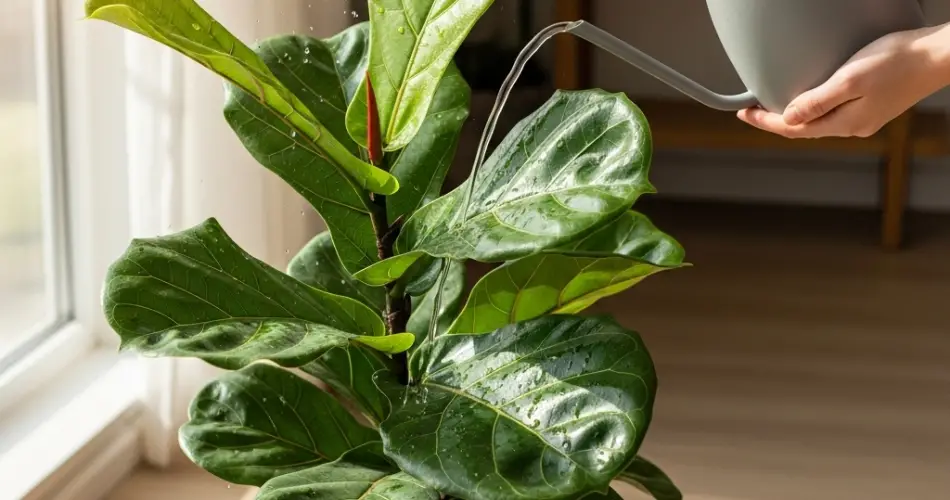
Fiddle leaf figs (Ficus lyrata) are loved for their large, glossy leaves and bold, sculptural presence in indoor spaces. While they can dramatically elevate any room, they also have a reputation for being a bit finicky—especially when it comes to watering. One of the most common challenges plant owners face is figuring out whether their fiddle leaf fig is suffering from too much or too little water.
Both underwatering and overwatering can lead to similar symptoms, such as leaf drop and discoloration, but understanding the subtle differences can help you take action quickly and effectively. Here’s how to tell the difference, what signs to look for, and how to get your fiddle leaf fig back on track.
Why Watering Matters So Much
Fiddle leaf figs have specific watering needs. Unlike more forgiving houseplants, they don’t appreciate extremes. Their roots like to be kept moist but not soggy, and any major swing in soil moisture—either too dry for too long or too saturated—can stress the plant.
The good news is that once you understand how your fig reacts to water imbalances, you can adjust your care routine and prevent long-term damage.
Signs of Underwatering
When a fiddle leaf fig doesn’t get enough water, it enters a state of stress. Here’s how to spot it:
-
Crispy or curling leaf edges: Dry, brown, or curling tips are one of the earliest indicators.
-
Drooping or limp leaves: If the plant isn’t hydrated, the leaves may start to wilt and droop downward.
-
Dry, compacted soil: Stick your finger into the potting mix. If it feels bone dry even a few inches down, your plant is likely thirsty.
-
Leaf drop (starting from the bottom): Older leaves at the bottom may yellow and fall off when the plant is consistently underwatered.
If your fig recovers quickly after a deep watering, this is a strong sign that underwatering was the issue.
Signs of Overwatering
Overwatering is more dangerous and harder to fix than underwatering because it can lead to root rot. Watch out for:
-
Yellowing leaves with brown spots: If you notice blotchy patches along with yellowing, especially on newer leaves, it’s often a sign of too much moisture.
-
Soft, mushy stems or roots: When roots stay soggy, they begin to rot, and this can spread up the plant.
-
Sour smell from soil: This is a telltale sign of bacterial or fungal activity due to excess moisture.
-
Soil stays wet for several days: Well-draining soil should dry out within a few days. Constant wetness indicates poor drainage or overwatering.
-
Sudden leaf drop (random, not just bottom leaves): A fiddle leaf fig that drops healthy-looking leaves across the plant may be reacting to soggy conditions.
If your plant shows these symptoms and the soil is still wet several days after watering, hold off on watering and consider repotting if necessary.
How to Prevent Watering Issues
The right watering habits start with the right environment. Here’s how to set your fiddle leaf fig up for success:
-
Use a well-draining potting mix: Look for soil blends designed for indoor trees or mix your own with peat, perlite, and bark.
-
Always choose a pot with drainage holes: Water should never pool at the bottom of the pot.
-
Water deeply, but infrequently: Instead of frequent small waterings, water until it drains out of the bottom, then wait until the top 2–3 inches of soil are dry before watering again.
-
Adjust for the seasons: During active growth in spring and summer, your fig may need water weekly. In winter, it may only need water every two to three weeks.
-
Monitor humidity and light: Fiddle leaf figs thrive in bright, indirect light and moderate humidity. In low light or dry air, their watering needs change.
Rescue Tips for Overwatered or Underwatered Figs
-
For underwatered plants: Soak the pot thoroughly and mist the leaves lightly. Resume regular watering only when the top soil dries out again.
-
For overwatered plants: Remove the plant from its pot and inspect the roots. Trim away any black or mushy roots, and repot in fresh, dry soil. Hold off on watering for several days and increase airflow around the plant.
When in Doubt, Let the Soil Guide You
The best way to avoid watering mistakes is to check the soil regularly. Stick your finger a few inches into the pot—if it’s dry, water; if it’s still moist, wait. Also, consider using a moisture meter to remove guesswork.
Conclusion
Caring for a fiddle leaf fig doesn’t have to be stressful. By learning to recognize the signs of underwatering and overwatering, you can quickly respond to your plant’s needs and prevent lasting damage. With the right balance, your fiddle leaf fig will reward you with vibrant foliage and continued growth for years to come.


