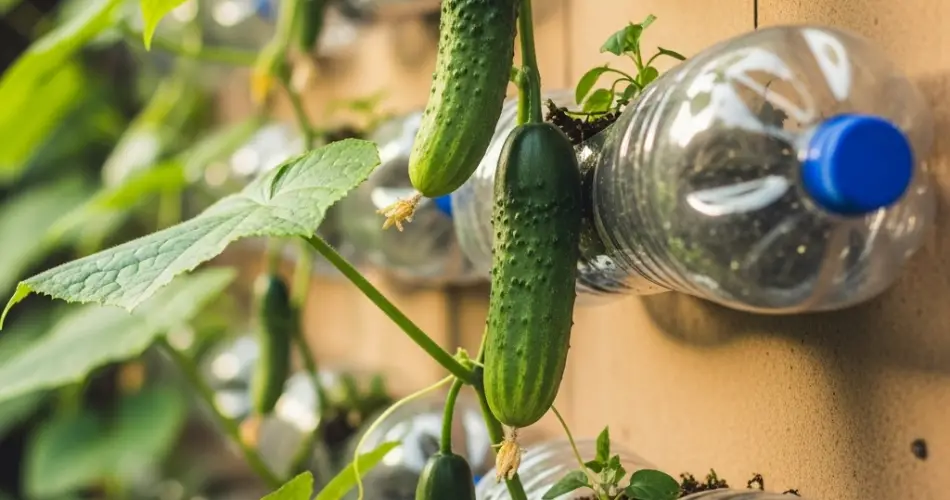
If you’re short on garden space but love the idea of growing your own crisp, refreshing cucumbers, vertical bottle gardening is a smart and sustainable solution. This method transforms plastic bottles into productive planters that climb up walls or fences—turning even the smallest spaces into green, edible gardens.
Cucumbers thrive when given the right support and sunlight, and growing them vertically helps reduce disease, improves airflow, and makes harvesting easier. With a little creativity, you can grow an abundant cucumber crop right on your wall—no garden bed required.
Why Grow Cucumbers Vertically in Bottles?
Vertical gardening is more than just a trend—it’s a practical technique that offers many advantages:
-
Maximizes limited space – Perfect for balconies, patios, or small urban yards
-
Encourages healthier growth – Better airflow reduces fungal issues
-
Keeps fruit clean and straight – Hanging cucumbers grow evenly without soil contact
-
Reduces pests – Less contact with the ground means fewer crawling insects
-
Eco-friendly – Reuses plastic bottles that would otherwise be discarded
-
Easy to maintain – Watering, feeding, and harvesting are all simpler in vertical setups
Cucumber vines naturally love to climb, making them ideal candidates for vertical gardening in bottle systems.
Best Cucumber Varieties for Vertical Bottle Gardens
Not all cucumbers are the same. For wall-mounted bottle gardening, compact or climbing varieties are ideal. Here are some good options:
-
Bush Champion – A compact plant that still produces generously
-
Spacemaster – Specially bred for small spaces and container growing
-
Poinsett 76 – Disease-resistant with vigorous climbing habit
-
Marketmore 76 – Classic slicer cucumber great for vertical growth
-
Miniature White or Lemon Cucumber – Unique varieties with small fruits perfect for tight areas
Choose varieties based on your climate, taste preference, and available vertical space.
What You’ll Need
Gather the following items to get started:
-
1.5 or 2-liter plastic bottles (cleaned and with caps)
-
Sharp utility knife or scissors
-
High-quality potting soil (with compost and perlite or coco coir)
-
Cucumber seeds or seedlings
-
String, wire, or screws for mounting
-
Wall, fence, or trellis for support
-
Trellis netting or wire grid (optional for additional climbing support)
-
Organic fertilizer (liquid or slow-release)
Step 1: Prepare the Bottles
-
Clean the bottles and remove labels.
-
Cut a rectangular hole (about 4–5 inches wide) on one side for planting.
-
Puncture small holes in the base and cap for proper drainage.
-
Add mounting holes near the top and bottom so you can attach them to a wall or frame securely.
-
Optional – Add small pebbles at the bottom of the bottle for extra drainage.
Step 2: Fill with Soil and Plant
Fill each bottle with well-draining potting mix up to about 2 inches from the top. Avoid using heavy garden soil, as it can compact and hinder root growth.
If using seeds, plant 1–2 seeds per bottle at about ½ inch deep. If transplanting seedlings, carefully place one healthy seedling per bottle and cover the root ball.
Water the soil gently to help settle it around the roots.
Step 3: Mount and Support Your Vertical Garden
Attach the bottles to a sunny wall, fence, or trellis—any spot that gets at least 6 hours of direct sunlight daily. Use screws, strong wire, or zip ties to hold the bottles in place.
Since cucumbers are vining plants, provide support for the vines to climb. You can tie a vertical string from the base of the plant to a higher anchor point or use trellis netting. Guide the vines as they grow to ensure even coverage and light access.
Step 4: Watering and Feeding
Cucumbers need consistent moisture to prevent bitterness and ensure steady fruit development. Water regularly—especially in hot weather—but avoid overwatering to prevent root rot. Bottles drain quickly, so monitor the moisture often.
Fertilize every two to three weeks with a diluted organic liquid fertilizer or use a slow-release option mixed into the soil at planting. Compost tea also works well to support healthy vine growth and flowering.
Step 5: Maintenance and Pest Control
Vertical gardening helps reduce pest issues, but always keep an eye out for aphids, whiteflies, or spider mites. Use neem oil or insecticidal soap if needed.
Prune yellowing leaves and excess side shoots to maintain airflow and direct the plant’s energy into fruit production. Train vines gently but consistently to keep them on their supports.
Step 6: Harvesting Cucumbers
Most cucumbers are ready to harvest in 50–70 days, depending on the variety. Pick fruits when they’re firm, evenly green (or yellow/white depending on type), and about 6–8 inches long for slicers or smaller for pickling types.
Harvest frequently to encourage more fruiting. Overripe cucumbers can slow down the plant’s productivity.
Final Thoughts
Growing cucumbers in plastic bottles on a vertical wall is a brilliant way to turn small spaces into bountiful gardens. It’s low-cost, space-efficient, and sustainable—all while producing delicious results.
Whether you’re a beginner or seasoned gardener, this technique lets you grow cucumbers in places you never imagined. With sunlight, water, and a bit of care, you’ll soon be harvesting your own crisp cucumbers straight from the wall—fresh, clean, and homegrown.


