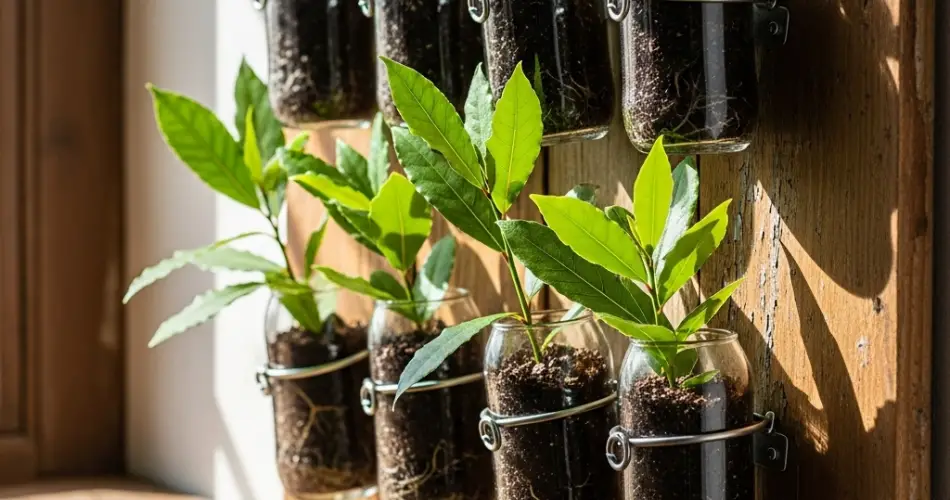
Bay laurel (Laurus nobilis) is a classic culinary herb known for its aromatic leaves, which enhance soups, stews, sauces, and marinades. Traditionally grown outdoors, bay laurel can also thrive indoors when provided with the right conditions. For urban gardeners with limited space, a vertical bay leaf garden made from recycled bottles offers a practical and sustainable solution. This method not only saves space but also brings fresh greenery into your home.
Selecting the Right Bottles
The first step is gathering suitable plastic bottles. Medium-sized bottles, typically 1–2 liters, work best because they provide sufficient soil depth for bay laurel roots while remaining lightweight for vertical installation. Ensure the bottles are clean and free from residues. Transparent bottles allow you to monitor soil moisture, while colored or decorated bottles add aesthetic appeal. Cut the bottles strategically to create openings for planting and watering.
Preparing Bottles for Planting
Prepare the bottles by cutting a horizontal opening near the top, large enough to accommodate a young bay laurel seedling. Drill or poke small holes in the bottom of each bottle to ensure proper drainage, preventing waterlogging and root rot. To hang the bottles vertically, attach strong strings, hooks, or brackets, ensuring they can support the weight of the soil and plant securely.
Choosing Soil and Planting Bay Laurel
Bay laurel prefers a well-draining, nutrient-rich potting mix. A Mediterranean herb mix or a combination of standard potting soil with sand or perlite works well. Fill each bottle with soil, leaving a small gap at the top to prevent overflow during watering. Plant seedlings by carefully placing the roots into the soil, covering them fully, and gently pressing the soil around the base to secure the plant. Ensure there is adequate space between plants to allow for healthy growth.
Lighting Requirements
Bay laurel requires plenty of sunlight to thrive. Place your vertical garden near a south- or west-facing window, or on a balcony that receives bright, indirect sunlight. Ideally, the plants should receive at least six hours of light per day. If natural light is insufficient, supplement with a full-spectrum grow light. Rotate the bottles occasionally to ensure even exposure and promote uniform growth.
Watering and Humidity
Consistent moisture is key for indoor bay laurel. Water when the top inch of soil feels dry, allowing excess water to drain through the holes at the bottom of the bottles. Avoid overwatering, which can lead to root rot. Bay laurel also benefits from moderate humidity. If your indoor environment is dry, particularly in winter, consider misting the leaves occasionally or using a small humidity tray.
Mounting the Vertical Garden
Once the bottles are ready, arrange and mount them in a vertical pattern on a wall, fence, or railing. Secure each bottle with hooks, nails, or strings, ensuring they are balanced and stable. Stagger the bottles to maximize light exposure and airflow for all plants. A well-organized vertical garden not only saves space but also creates a visually appealing, lush display.
Pruning and Maintenance
Pruning is essential to maintain a compact, healthy bay laurel. Trim new growth to encourage branching and remove yellow or damaged leaves regularly. Fertilize the plants every few months with a balanced, water-soluble fertilizer to support strong growth and vibrant foliage. Bay laurel grows slowly, so light pruning a few times a year is usually sufficient.
Harvesting Bay Leaves
A vertical bay leaf garden makes harvesting easy. Pick mature leaves from the outer branches as needed, leaving the inner stems intact. Fresh leaves can be used immediately or dried for later use. Avoid removing more than one-third of the plant at a time to prevent stress. Regular harvesting encourages new growth, ensuring a continuous supply of aromatic leaves.
Benefits of a Vertical Bottle Garden
A vertical garden using recycled bottles is environmentally friendly, space-efficient, and highly functional. It transforms waste into a productive herb-growing solution while bringing greenery indoors. Bay laurel offers culinary and aesthetic value, enhancing your kitchen with both its leaves and its glossy, evergreen foliage.
Creative Expansion
Once your vertical bay leaf garden is thriving, consider adding other herbs that share similar light and water needs, such as rosemary, thyme, or oregano. Using decorated or colored bottles can personalize your garden and create a vibrant visual display. Vertical gardening with multiple herbs can transform a small space into a productive and attractive indoor or balcony herb garden.
Conclusion
Building a vertical bay leaf garden with bottles is a smart, sustainable solution for small spaces. With proper soil, light, water, and maintenance, your bay laurel plants will flourish, providing fresh, aromatic leaves year-round. This approach combines practicality, sustainability, and aesthetics, turning simple recycled bottles into a functional and beautiful herb display. By creating a vertical herb garden, you enjoy fresh bay leaves for cooking while adding greenery and life to your home.


