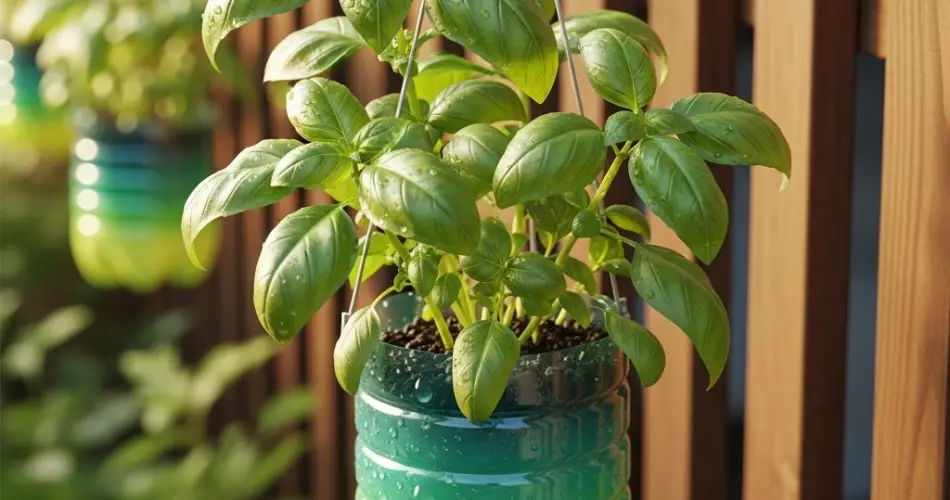
If you’re short on space but still want to enjoy fresh herbs at home, a vertical basil garden made from hanging plastic bottles is a clever and sustainable solution. This DIY project is easy to set up, eco-friendly, and perfect for balconies, patios, fences, or even sunny indoor walls. Not only does it help you grow your own basil, but it also makes great use of recycled materials.
Here’s how to create your own vertical basil garden using hanging plastic bottles step by step.
Materials Needed:
-
Clear plastic bottles (1.5- or 2-liter size)
-
Basil seeds or seedlings
-
Potting mix or a light soil blend
-
String, twine, or wire
-
Scissors or a utility knife
-
Nail and lighter (or heated skewer)
-
Hook or wall support for hanging
-
Optional: compost or organic fertilizer
Step 1: Select and Prepare the Bottles
Choose clear plastic bottles that are clean and free of labels. Start by cutting a rectangular window on the side of each bottle. This opening will serve as the planting area. Leave enough space at the bottom of the bottle to hold the soil.
Next, use a heated nail or skewer to poke small drainage holes in the bottom of each bottle. This allows excess water to escape and prevents root rot. Also, make two small holes near the top of each bottle (on opposite sides) for threading the string or wire for hanging.
Step 2: Create the Hanging System
Cut lengths of strong string or twine to hang your bottles vertically. Thread the string through the holes at the top of each bottle and tie securely. You can hang each bottle individually or connect several bottles vertically in a column, spacing them out so that the lower bottles receive enough light and airflow.
Attach the string to a sturdy hook, rod, or beam on a wall, fence, or balcony railing. Make sure the structure you hang them from can hold the weight of the filled bottles and is positioned where the plants can receive at least 4–6 hours of sunlight daily.
Step 3: Prepare the Soil
Basil prefers well-draining soil rich in organic matter. Mix potting soil with compost or a small amount of sand or coco coir to create a light, nutrient-rich medium. Fill each bottle about two-thirds full with the soil mix, lightly pressing it down but not compacting it too much.
Step 4: Plant the Basil
You can grow basil from seeds or use seedlings purchased from a nursery. If planting seeds, sprinkle 3–5 seeds in the center of the soil and cover them with a thin layer of soil—about 0.5 cm deep. Water lightly to moisten the soil.
If using seedlings, make a small hole in the soil and gently transplant the basil into the bottle. Firm the soil around the roots and water gently.
Label each bottle if you’re growing different basil varieties, such as sweet basil, Thai basil, or lemon basil.
Step 5: Watering and Maintenance
Water the bottles regularly, keeping the soil consistently moist but not soggy. A spray bottle or small watering can with a narrow spout works best to avoid overwatering. Because plastic bottles can heat up quickly in the sun, check the soil more frequently during hot weather.
As the basil grows, pinch off the top leaves to encourage bushier growth. Remove any flower buds that appear to keep the plant focused on producing flavorful leaves.
If the leaves start to yellow, feed the plants with diluted organic fertilizer or compost tea every two weeks.
Step 6: Harvesting Basil
Once your basil plants reach about 6–8 inches tall, you can begin harvesting. Use scissors or pinch off leaves just above a leaf node (where leaves grow out from the stem). This will encourage the plant to branch out and produce more leaves.
Regular harvesting helps keep the basil healthy and delays flowering, which can affect flavor.
Tips for a Thriving Vertical Garden
-
Position your vertical garden where it gets morning sun and light afternoon shade, especially in hot climates.
-
Rotate bottles occasionally to ensure even light exposure on all sides.
-
If rainwater is available, use it for watering—it’s free of chemicals and ideal for herbs.
-
Reuse old cotton fabric or shade netting to provide extra protection during extreme heat.
Conclusion
Creating a vertical basil garden with hanging plastic bottles is a practical and creative way to grow your own herbs at home. This method saves space, recycles plastic waste, and provides a steady supply of fresh basil for cooking. With just a few simple materials and regular care, your vertical herb garden can flourish year-round—turning walls and fences into vibrant green spaces full of aroma and flavor.


