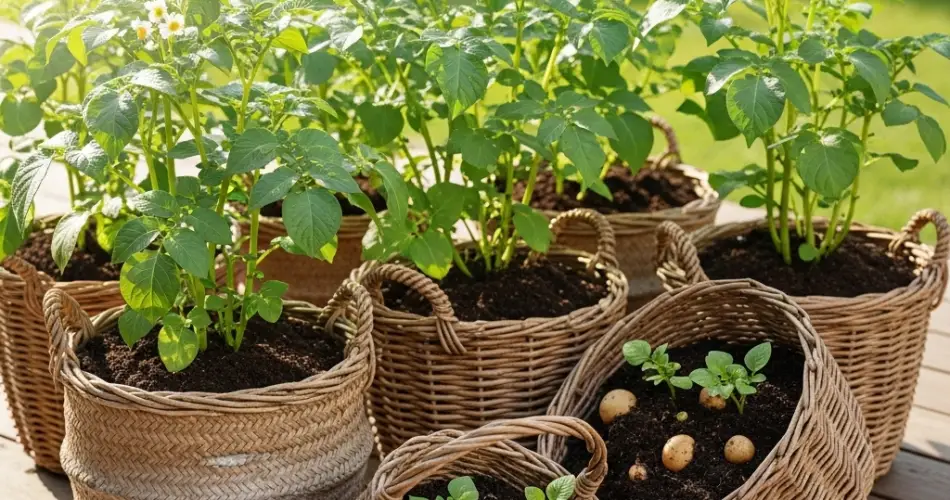
Potatoes are a staple food in kitchens worldwide, and the idea of harvesting your own fresh crop from home is both exciting and rewarding. For many city dwellers, the lack of garden space can feel like a major barrier to growing vegetables. However, innovative container gardening methods—such as using hanging baskets—make it possible to cultivate potatoes even in the smallest urban spaces.
This method is not only space-saving but also visually appealing, transforming ordinary balconies or patios into productive, green areas. With the right setup, growing potatoes in hanging baskets can give you a steady harvest while adding charm to your urban garden.
Why Hanging Baskets Work for Potatoes
Potatoes are underground crops, so many gardeners assume they require deep garden beds. While traditional planting works well, baskets provide an equally effective alternative when space is limited.
Hanging baskets allow potatoes to grow freely in loose, well-aerated soil. The elevation keeps plants away from many ground pests, and the improved airflow helps reduce the risk of fungal diseases. Baskets also make harvesting easier—simply tip the container over or sift through the soil to collect your crop.
Choosing the Right Basket
Not all baskets are suitable for potato growing. A few things to consider when selecting the right container:
-
Size and Depth: Choose baskets at least 12–16 inches deep to allow tubers to develop properly. The wider the basket, the more seed potatoes you can plant.
-
Material: Woven baskets lined with coconut coir or cloth work well, as they retain soil while still allowing drainage. Sturdy wire baskets with liners are also excellent choices.
-
Drainage: Ensure the basket has proper drainage holes to prevent soggy soil, which can lead to rot.
If your balcony or patio gets strong winds, secure baskets firmly to avoid damage.
Preparing the Soil Mix
Potatoes grow best in loose, fertile soil that allows tubers to expand without resistance. A compacted mix can result in small, deformed potatoes. The ideal blend includes:
-
Potting soil as the base.
-
Compost or aged manure for steady nutrition.
-
Coco coir, sand, or perlite for improved aeration and drainage.
The soil should be slightly acidic, with a pH around 5.5–6.5. This balance reduces the risk of scab and promotes healthy tuber formation.
Planting Potatoes in Hanging Baskets
Once your basket and soil are ready, planting is straightforward:
-
Line the basket with coir or cloth to hold the soil.
-
Fill one-third of the basket with your soil mix.
-
Place seed potatoes evenly spaced with the eyes facing upward. For medium baskets, plant 2–3 seed potatoes.
-
Cover with 3–4 inches of soil and water gently.
As the plants grow, you’ll need to practice “hilling,” or adding soil gradually to cover the stems. This encourages more tubers to form and protects them from sunlight.
Caring for Basket-Grown Potatoes
Hanging baskets dry out faster than ground containers, so careful attention to watering is essential.
-
Water deeply whenever the top inch of soil feels dry. In hot weather, daily watering may be required.
-
Feed every two weeks with a liquid fertilizer rich in phosphorus and potassium. Avoid excess nitrogen, as it encourages leafy growth instead of tuber development.
-
Mulch the surface with straw or shredded leaves to retain moisture and protect the soil from overheating.
Sunlight is equally important. Potatoes require 6–8 hours of full sun daily, so hang your baskets in the brightest spot available.
Pest and Disease Control
Urban gardening reduces some pest problems, but potatoes can still attract issues:
-
Aphids and beetles may feed on leaves. Inspect regularly and remove by hand or use organic sprays.
-
Blight and fungal issues can appear if the foliage stays wet. Always water at the base, not overhead.
-
Overcrowding in small baskets may stunt growth. Stick to the recommended planting number.
Healthy plants grown in the right conditions are naturally more resistant to problems.
Harvesting Your Crop
The most rewarding stage of basket potato gardening is harvest time. Depending on the variety, potatoes are ready in 70–120 days.
-
For new potatoes: Harvest when plants begin to flower. Gently dig into the basket and remove small, tender potatoes without disturbing the rest.
-
For full-sized potatoes: Wait until the foliage yellows and dies back. At this stage, tip the basket over or carefully remove the soil layer by layer to collect the tubers.
Allow freshly harvested potatoes to air-dry in a cool, shaded place before storing. Avoid direct sunlight, which can turn potatoes green and inedible.
Advantages of Hanging Basket Potatoes
-
Space-saving: Perfect for balconies, patios, or even windowsills.
-
Cleaner harvests: Tubers stay above ground pests and are easier to access.
-
Decorative appeal: Potato plants add greenery and charm to outdoor spaces.
-
Flexible placement: Baskets can be moved for better sunlight or protection from harsh weather.
Final Thoughts
Growing potatoes in hanging baskets is a creative, efficient solution for urban gardeners who want to maximize small spaces. With proper soil preparation, consistent care, and smart planting techniques, you can enjoy a satisfying harvest of fresh, homegrown potatoes right outside your window or on your balcony.
This method not only provides delicious food but also brings a touch of greenery and sustainability to city living. With hanging baskets, urban gardening becomes both practical and beautiful—proof that fresh produce doesn’t require a backyard.


