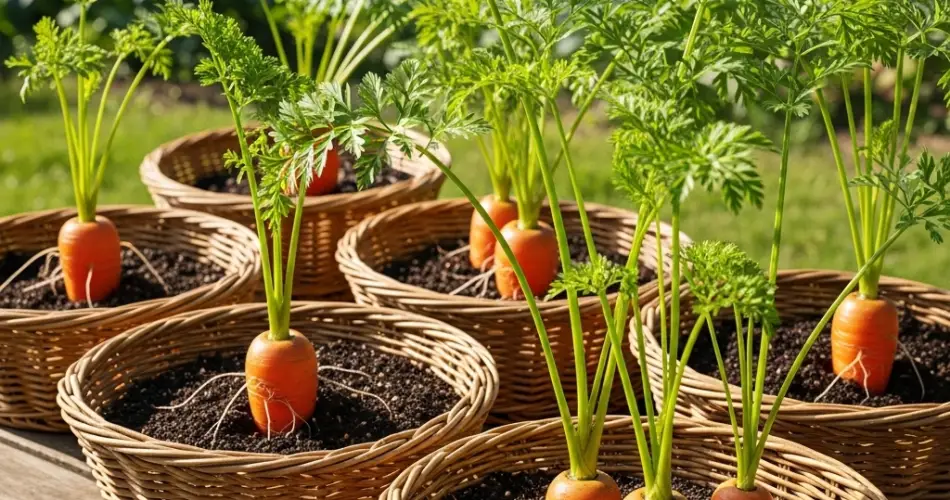
Carrots are a versatile and healthy root vegetable that fit perfectly into urban gardening. Their sweet, crunchy flavor and ability to store well make them a staple in many kitchens. For those with limited space, growing carrots in baskets offers a practical and creative solution. With the right preparation and care, you can harvest fresh, homegrown carrots from your balcony, patio, or even a sunny corner indoors.
Why Choose Baskets for Carrots?
Baskets provide several unique advantages when compared to traditional pots or raised beds:
-
Good drainage: Carrots need well-draining soil to prevent rot and splitting. Baskets, with their woven structure, allow excess water to escape easily.
-
Space-saving: They fit neatly in small areas like balconies, window ledges, or patios.
-
Portability: Lightweight and easy to move, baskets can be shifted to catch the best sun.
-
Aesthetic appeal: Woven containers add rustic charm while being highly functional.
These benefits make baskets an excellent choice for gardeners who want to grow fresh produce in urban settings.
Choosing the Right Basket
Not every basket is suitable for carrot growing. Because carrots are root vegetables, they need depth to develop properly. Select a basket that is:
-
At least 12–14 inches deep to allow roots to grow straight.
-
Lined with burlap, landscape fabric, or coco fiber to keep soil from spilling out.
-
Sturdy enough to hold moist soil without collapsing.
A medium to large basket will provide enough space for a good harvest while ensuring proper airflow and drainage.
Preparing the Soil Mix
Carrots thrive in loose, well-aerated soil that encourages smooth, straight root growth. Heavy or compacted soil often results in twisted, forked carrots. The ideal mix for baskets includes:
-
50% high-quality potting soil as the base.
-
30% compost for nutrients and organic matter.
-
20% sand or perlite to improve drainage and keep the soil light.
This blend ensures a balance of nutrition, moisture retention, and breathability—exactly what carrots need to form well.
Sowing Carrot Seeds in Baskets
Carrots grow best when planted directly in their container rather than transplanted. The roots are delicate, and disturbing them can stunt growth. To plant:
-
Moisten the soil before sowing so it’s damp but not waterlogged.
-
Sprinkle seeds evenly across the surface.
-
Cover lightly with a thin layer of soil, no deeper than ¼ inch.
-
Water gently to avoid washing the seeds out.
Carrot seeds take 7–14 days to germinate. Keep the soil consistently moist during this period to encourage sprouting.
Thinning Seedlings for Healthy Growth
Carrots grow best with enough space between each root. Once seedlings are about 2 inches tall, thin them carefully, leaving 2–3 inches between each plant. This prevents overcrowding and ensures that roots grow to full size instead of becoming thin and stunted.
The thinned seedlings can be used as microgreens in salads, adding a fresh bonus harvest to your basket garden.
Watering and Care
Carrots require even moisture throughout their growth cycle. Too much water can lead to cracking, while too little causes woody, bitter roots. Here are a few care tips:
-
Check moisture daily: Baskets dry out more quickly than traditional containers.
-
Water deeply but gently: Ensure the soil is evenly moist without becoming soggy.
-
Mulch lightly: A thin layer of straw or shredded leaves helps regulate soil temperature and reduces evaporation.
Feeding Carrots in Baskets
Carrots don’t need heavy feeding, but they do benefit from a nutrient boost during their growth. Since baskets leach nutrients faster than garden beds, use a diluted liquid fertilizer every two weeks. Choose a formula low in nitrogen and higher in potassium and phosphorus, which encourages strong root growth. Excess nitrogen results in leafy tops with small, underdeveloped carrots.
Harvesting Carrots from Baskets
Carrots are typically ready for harvest in 60–80 days, depending on the variety. Signs that they are ready include:
-
The tops of the roots are visible above the soil.
-
The carrot shoulders appear wide and well-formed.
To harvest, loosen the soil around the carrot with your hands and pull gently by the foliage. Avoid yanking, as this may snap the greens and leave the root behind.
Continuous Planting for Fresh Supply
To enjoy carrots throughout the season, practice successive planting. Sow new seeds every two to three weeks in fresh soil or after harvesting a batch. This way, you’ll always have carrots at different growth stages, providing a continuous harvest from your basket garden.
Common Problems and Solutions
-
Forked or twisted roots: Caused by rocky or compacted soil. Use a fine, light soil mix.
-
Slow germination: Carrot seeds are small and slow to sprout. Keep soil evenly moist and be patient.
-
Thin or spindly carrots: Often due to overcrowding. Be diligent with thinning seedlings.
By addressing these issues early, you’ll improve both the yield and quality of your crop.
Conclusion
Growing carrots in baskets is a rewarding way to bring fresh, crunchy roots to your table—even in the heart of the city. With the right soil mix, consistent care, and proper spacing, you can enjoy a steady harvest from your balcony, patio, or windowsill. The rustic charm of woven containers adds to the experience, making urban gardening not only productive but also visually appealing. By mastering basket-grown carrots, you transform limited space into a thriving source of fresh, homegrown produce.


