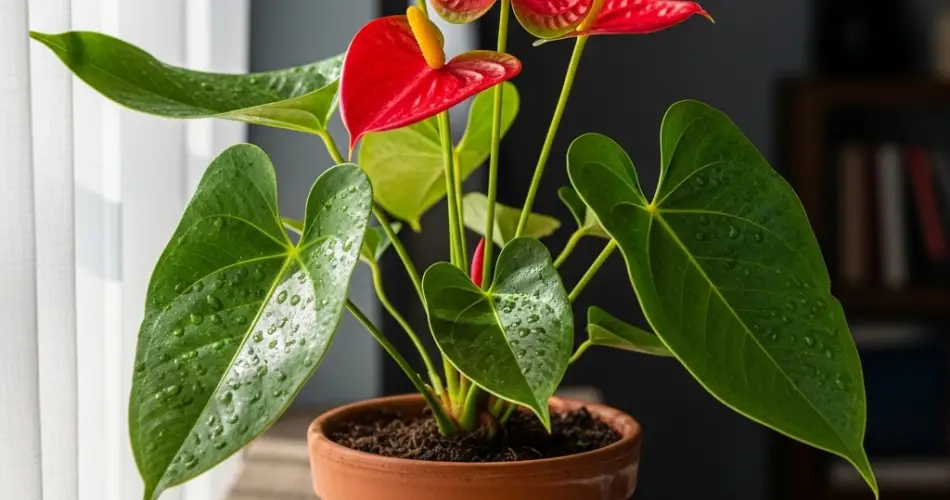
Anthuriums, with their glossy leaves and striking, heart-shaped flowers, bring a bold splash of tropical elegance to any indoor space. Known for their long-lasting blooms and vibrant colors—often in shades of red, pink, white, or purple—these plants are a favorite for both beginners and seasoned plant enthusiasts. With the right care, anthuriums can flower for months and remain lush year-round.
This guide covers everything you need to know to grow a thriving anthurium in a pot, from light and watering to soil and propagation.
1. Choosing the Right Anthurium Variety
While the most popular species for indoor growing is Anthurium andraeanum, there are many varieties to explore. Some have striking foliage patterns, while others are prized for unusually shaped flowers. Consider your space and aesthetic preferences when choosing a plant.
2. Light Requirements for Healthy Growth
Anthuriums flourish in bright, indirect light. Place your plant near an east- or south-facing window where it can enjoy gentle morning light but is shielded from harsh midday sun. Direct sunlight can scorch the leaves, while too little light will reduce blooming.
If natural light is limited, a grow light can help maintain healthy growth and regular flowering. Aim for around 8–10 hours of light per day.
3. The Ideal Pot and Soil Mix
Choosing the right pot is important for root health. Anthuriums prefer pots with drainage holes to prevent excess moisture from causing root rot.
For soil, use a well-draining mix rich in organic matter. A good combination is:
-
1 part orchid bark or coarse pine bark
-
1 part peat moss or coco coir
-
1 part perlite
This mimics their natural epiphytic environment, allowing roots to breathe while retaining enough moisture for steady growth.
4. Watering for Vibrant Blooms
Anthuriums prefer slightly moist soil but never soggy conditions. Water when the top 1–2 inches of soil feel dry to the touch. Use room-temperature water and pour evenly until it drains from the bottom, then empty the saucer.
Overwatering is a common cause of yellow leaves and root problems. In contrast, prolonged dryness can cause leaves to curl and flowers to fade prematurely. Maintaining balance is key.
5. Humidity and Temperature Needs
As tropical plants, anthuriums thrive in high humidity (60–80%). If your home is dry, especially in winter, consider:
-
Placing the pot on a pebble tray filled with water
-
Grouping plants together to create a humid microclimate
-
Using a humidifier in the room
Keep temperatures between 18–27°C (65–80°F) for best results, and avoid placing the plant near drafts, heaters, or air conditioners.
6. Feeding for Continuous Flowers
To encourage frequent blooming, feed your anthurium with a balanced, water-soluble fertilizer every 6–8 weeks during the growing season (spring through early autumn). A fertilizer with a slightly higher phosphorus content can help promote flower production.
Reduce feeding during winter when the plant’s growth naturally slows.
7. Pruning and Cleaning for Health
Remove faded flowers and yellowing leaves promptly to redirect energy toward new growth. Use clean, sharp scissors or pruning shears to prevent damage and disease spread.
Wipe the leaves occasionally with a damp cloth to remove dust, which helps the plant breathe and photosynthesize efficiently.
8. Repotting for Continued Growth
Anthuriums generally need repotting every 2–3 years or when roots begin to circle the inside of the pot. Choose a container just one size larger than the current pot, and refresh the soil mix. Spring is the best time to repot, giving the plant an entire growing season to settle in.
9. Propagation for More Plants
You can propagate anthuriums through division when repotting. Carefully separate healthy clumps, ensuring each section has roots and at least one leaf. Plant each division in fresh, well-draining mix and water lightly until established.
10. Common Problems and Solutions
-
Brown leaf tips – Often due to low humidity or inconsistent watering. Increase moisture in the air and adjust your watering schedule.
-
Yellow leaves – Can indicate overwatering or poor drainage. Check the soil and adjust care accordingly.
-
No flowers – Usually caused by insufficient light or nutrients. Move to a brighter location and fertilize regularly.
-
Pests – Aphids, scale, and spider mites occasionally appear. Treat promptly with insecticidal soap or neem oil.
11. Seasonal Care Adjustments
In cooler months, reduce watering and fertilizer as growth slows. Keep the plant away from cold drafts, and maintain as much humidity as possible. In spring and summer, resume a regular feeding schedule to encourage fresh growth and flowering.
Final Thoughts
Anthuriums are more than just beautiful tropical plants—they are long-lasting companions that can brighten your home with their bold colors and lush foliage year-round. By giving them the right balance of light, moisture, and nutrients, you’ll enjoy an ongoing display of blooms and healthy leaves.
With just a little attention, your potted anthurium can become a centerpiece of indoor beauty, offering tropical charm in any season.


