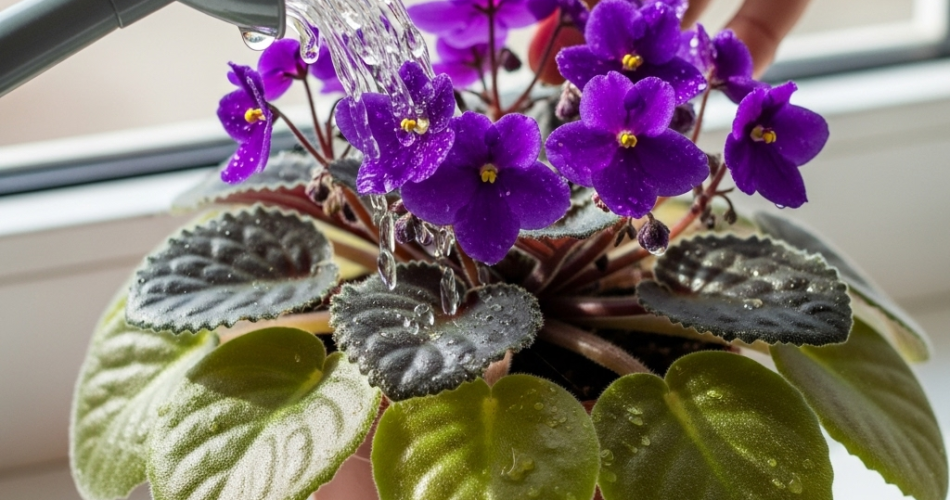
African violets (Saintpaulia spp.) are beloved for their velvety leaves and cheerful blooms that can brighten windowsills year-round. Although they have a reputation for being slightly finicky, mastering the right watering techniques is the key to healthy foliage and continuous flowering.
These compact houseplants originate from the cloud forests of East Africa, where they enjoy steady moisture, high humidity, and moderate temperatures. When grown indoors, mimicking these conditions—especially in terms of moisture management—helps African violets thrive and bloom more reliably.
Here’s a complete guide to watering African violets correctly, whether you’re a beginner or looking to improve your plant care routine.
Why Watering Matters So Much
Watering mistakes are among the top reasons African violets fail to bloom or suffer from poor health. These plants are sensitive to both overwatering and underwatering. Too much moisture can cause crown or root rot, while too little leads to dry, stunted plants with faded or absent flowers.
The key is to maintain consistently moist—but never soggy—soil and avoid getting water on the leaves, which can lead to leaf spotting and disease.
How Often Should You Water African Violets?
There is no one-size-fits-all schedule, but most African violets need watering every 5 to 7 days, depending on the season and indoor conditions. Instead of relying on a fixed routine, it’s better to check the soil’s moisture level regularly.
Use the finger test: Insert your finger about ½ inch into the soil. If it feels dry at that depth, it’s time to water. If it’s still slightly damp, wait another day or two.
Keep in mind that African violets dry out faster in brighter light or warmer temperatures and slower in cooler or low-light environments.
Top Watering Techniques for African Violets
There are several effective ways to water African violets, each with its pros and cons. Choose the method that suits your plant’s environment and your routine best.
1. Bottom Watering (Preferred Method)
This is the most recommended technique for African violets.
-
Place the pot in a shallow tray of room-temperature water for 20 to 30 minutes.
-
Allow the plant to absorb moisture through the drainage holes.
-
Once the top of the soil feels moist, remove the pot and let excess water drain.
Why it’s effective: It keeps the foliage dry, reduces the risk of fungal diseases, and ensures even moisture distribution.
2. Top Watering with Care
Top watering is also acceptable if done cautiously.
-
Use a narrow-spout watering can to direct water only to the soil, avoiding leaves and crown.
-
Pour slowly and evenly until water begins to drain from the bottom.
-
Empty the saucer after 10–15 minutes to prevent waterlogging.
Tip: Water early in the day so any splashes on the leaves dry before nighttime.
3. Self-Watering Pots
These specialized pots are designed to provide steady moisture via a reservoir.
-
Fill the base reservoir as needed.
-
A wick or porous insert allows water to move up to the soil as needed.
Benefit: Helps maintain consistent moisture levels and reduces the need to check soil frequently.
Best Water Type and Temperature
African violets are sensitive to water quality. Tap water that contains chlorine, fluoride, or heavy salts can cause leaf spotting and poor growth.
Use room-temperature, filtered, or distilled water to prevent shock and mineral buildup. Avoid cold water, which can chill the roots and affect blooming.
Soil and Pot Considerations
African violets prefer a loose, airy potting mix that retains moisture but drains quickly. Use a mix designed specifically for African violets or combine equal parts of peat moss, perlite, and vermiculite.
Always use pots with drainage holes. Plastic pots retain moisture longer, while clay pots dry out faster—choose based on your watering habits and indoor climate.
Signs of Watering Problems
Recognizing the signs of overwatering or underwatering can help you make timely corrections.
Overwatering symptoms:
-
Wilting or soft leaves despite wet soil
-
Yellowing lower leaves
-
Crown or root rot
-
Foul odor from the soil
Underwatering symptoms:
-
Droopy, dry leaves
-
Soil pulling away from pot edges
-
Dry, brittle roots
-
Failure to bloom
If overwatered, allow the plant to dry out and consider repotting into fresh, dry soil. For underwatered plants, water thoroughly and resume a more consistent watering routine.
Seasonal Adjustments
During active growing months (spring and summer), African violets need slightly more water, especially if blooming. In cooler seasons, reduce watering frequency and avoid letting the soil stay damp for too long.
Maintain moderate room temperatures between 65–75°F (18–24°C) and avoid cold drafts or heat sources that can dry the plant out faster.
Final Tips for Blooming Success
-
Keep humidity moderate: Aim for 40–60% humidity to replicate the plant’s natural environment.
-
Rotate the pot weekly: This ensures even growth and exposure to light, helping the plant bloom uniformly.
-
Avoid misting: African violets dislike wet leaves and high moisture on the surface.
-
Clean leaves gently: Use a soft brush or cloth to remove dust and improve light absorption.
With proper watering and attention to moisture balance, African violets will reward you with vibrant blooms and lush growth throughout the year.


