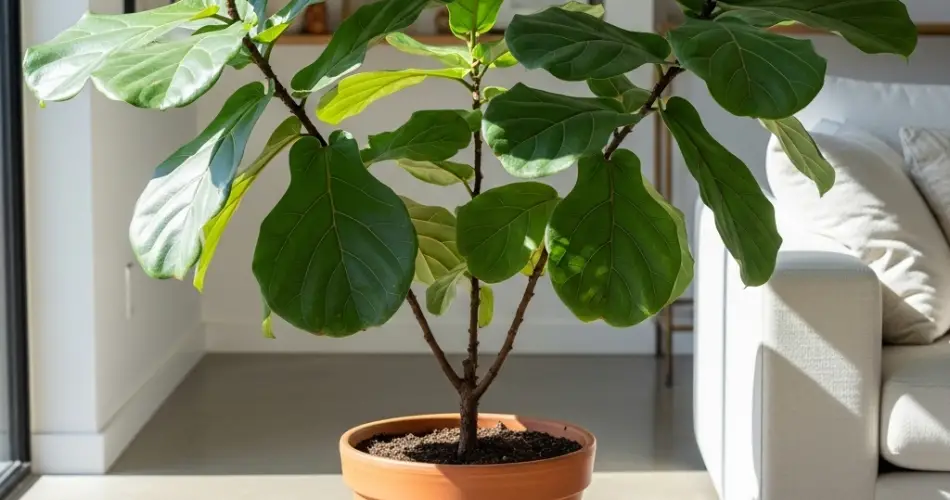
Fiddle leaf figs (Ficus lyrata) are prized for their large, glossy leaves and dramatic presence in interior spaces. While they are visually striking, they require consistent care, particularly in maintaining proper hydration. Both overwatering and underwatering can cause problems, from leaf browning to root rot. Understanding how to keep your fiddle leaf fig hydrated throughout the year ensures vibrant foliage, healthy growth, and a long-lasting, thriving plant. This guide provides comprehensive tips on watering, seasonal adjustments, and related care practices.
Understanding Fiddle Leaf Fig Water Needs
Fiddle leaf figs are tropical plants that thrive in environments with consistent moisture but well-draining soil. Their large leaves allow for significant transpiration, which means they can lose water quickly in dry indoor conditions. Overwatering is a common mistake, leading to yellowing leaves and root rot, while underwatering causes leaf curling, browning, and dropping. Achieving a balance between soil moisture and drainage is key to maintaining healthy foliage year-round.
Choosing the Right Container and Soil
The container and soil type directly influence water retention and drainage. Use a pot with adequate drainage holes to prevent water from pooling at the bottom. Terracotta or unglazed ceramic pots are ideal, as they allow excess moisture to evaporate, reducing the risk of root rot.
For soil, choose a well-draining mix that retains enough moisture for the roots but prevents saturation. A combination of potting soil, perlite, and pine bark or orchid bark creates an ideal environment. Proper soil and container selection enable the plant to absorb water efficiently while preventing waterlogged conditions.
Watering Techniques for Healthy Growth
Watering a fiddle leaf fig requires careful observation and proper technique:
-
Check Soil Moisture: Insert your finger about 1–2 inches into the soil. Water only when the soil feels dry at this depth.
-
Water Thoroughly: Pour water evenly around the base of the plant until it drains from the bottom. This ensures all roots receive moisture.
-
Avoid Wet Leaves: Water the soil, not the leaves, to prevent fungal growth or leaf damage.
-
Room-Temperature Water: Use water at room temperature to prevent shocking the roots.
Seasonal Watering Adjustments
Fiddle leaf figs’ water requirements vary with the seasons:
-
Spring and Summer: These are the active growing months. Water more frequently, generally every 7–10 days, depending on temperature, humidity, and sunlight exposure. Increased light and warmth accelerate growth, increasing water uptake.
-
Fall and Winter: During cooler months, growth slows, and water requirements decrease. Reduce watering to every 2–3 weeks, ensuring the soil dries slightly between watering sessions. Overwatering in winter is a leading cause of root problems.
Monitoring Plant Hydration
Regular observation helps maintain proper hydration. Signs of underwatering include drooping or curling leaves, dry leaf edges, and slow growth. Overwatering symptoms include yellowing, soft leaves, and root rot. Monitor the plant’s response after watering and adjust your routine as needed. Additionally, consider environmental factors such as indoor heating, air conditioning, and light exposure, which affect soil moisture and evaporation rates.
Additional Tips for Year-Round Health
-
Humidity: Fiddle leaf figs prefer higher humidity levels. Occasional misting or placing a humidity tray nearby can help maintain leaf turgor.
-
Sunlight: Provide bright, indirect light to support water absorption and overall growth. Low light can slow water uptake and affect hydration.
-
Fertilization: Feed the plant during the growing season with a balanced, water-soluble fertilizer to support healthy leaves and root development.
-
Repotting: Repot every 2–3 years to refresh soil and accommodate root growth, ensuring proper water absorption and drainage.
Benefits of Proper Hydration
Consistent hydration keeps fiddle leaf figs’ large leaves glossy, firm, and healthy. Well-watered plants produce lush foliage, are more resistant to pests and disease, and display strong, upright growth. By understanding seasonal needs, monitoring soil moisture, and using proper containers and soil, gardeners can maintain healthy, vibrant fiddle leaf figs year-round.
Maintaining the right hydration balance is the cornerstone of successful fiddle leaf fig care. With careful observation, seasonal adjustments, and proper watering techniques, your plant can thrive in any indoor environment, providing dramatic visual appeal and healthy foliage for years to come.


