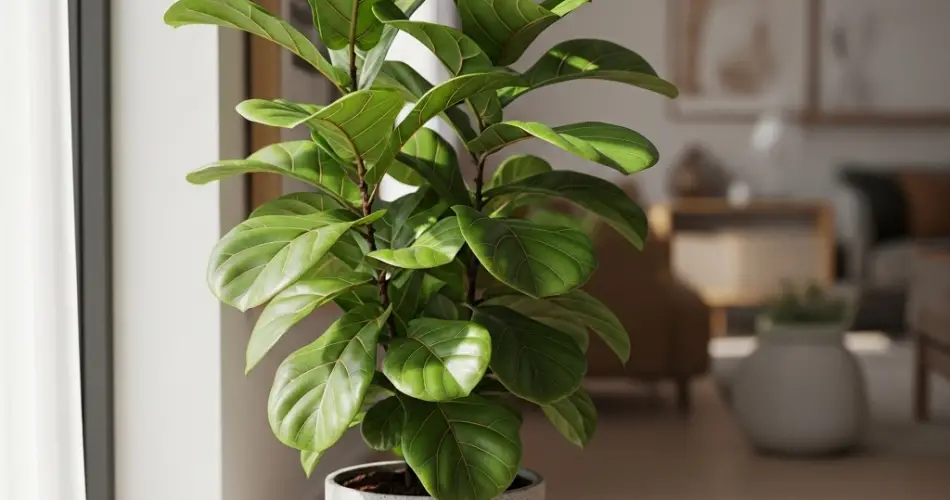
The fiddle leaf fig (Ficus lyrata) has become one of the most popular indoor plants, admired for its tall, sculptural presence and striking violin-shaped leaves. While its beauty makes it a centerpiece in many homes, caring for a fiddle leaf fig can sometimes feel intimidating—especially when it comes to watering. Many plant owners wonder whether misting the leaves is a good idea, or if there are more effective ways to keep this tropical beauty thriving indoors.
To answer this, it helps to look at where the fiddle leaf fig comes from and how its natural environment differs from the average home. By understanding its needs, you can create the right conditions and adopt a watering routine that supports long-lasting health.
Understanding the Fiddle Leaf Fig’s Native Habitat
Fiddle leaf figs are native to the warm, humid rainforests of West Africa, where they grow tall beneath the forest canopy. In their natural environment, they enjoy indirect light, steady warmth, and moisture in the air. However, while the atmosphere is humid, the soil itself drains quickly, preventing the roots from sitting in excess water.
This distinction is important. While the plant enjoys humidity around its leaves, its roots are highly sensitive to overwatering. Replicating these conditions in your home requires a balance between proper soil moisture and air humidity.
Should You Mist Your Fiddle Leaf Fig?
Misting is a common practice many plant owners use to increase humidity, but when it comes to fiddle leaf figs, it’s not the most effective method. Misting may temporarily raise humidity levels, but the effect lasts only a few minutes before the air returns to normal.
Additionally, water droplets left on large leaves can create spots, encourage fungal issues, or attract pests if the environment is not well-ventilated. For this reason, misting isn’t the best way to provide consistent humidity for your fiddle leaf fig.
Instead of relying on misting, you can maintain healthier humidity levels with methods that last longer, such as using a humidifier, grouping plants together, or placing a water tray with pebbles near the plant. These strategies better mimic the steady humidity of its natural habitat.
The Importance of Proper Watering
While humidity affects the leaves, watering determines the health of the roots. A well-watered fiddle leaf fig should have vibrant green leaves that are firm and upright. Overwatering or underwatering, on the other hand, can lead to common problems like leaf drop, browning edges, or root rot.
The most reliable method is the “soak and dry” technique. Water the plant thoroughly until excess water drains out of the pot’s bottom, then allow the top two inches of soil to dry before watering again. This cycle gives the roots moisture while preventing them from sitting in waterlogged soil.
How Often to Water a Fiddle Leaf Fig
The frequency of watering depends on factors such as pot size, soil type, light levels, and climate. In bright conditions with plenty of indirect sunlight, the plant will use water more quickly. In low light or cooler environments, it will need water less often.
-
Spring and Summer: During active growth, water about once every 7–10 days, but always check the soil first.
-
Fall and Winter: Growth slows down, so reduce watering to every 2–3 weeks, depending on dryness.
It’s better to test the soil with your finger before following a strict schedule. If the soil feels dry about two inches deep, it’s time to water.
Signs of Watering Problems
Your fiddle leaf fig will let you know when it’s not receiving the right amount of water.
-
Overwatering: Yellowing leaves, brown spots, or mushy roots indicate too much water.
-
Underwatering: Dry, crispy leaf edges or drooping leaves suggest the plant is thirsty.
-
Inconsistent watering: Sudden leaf drop often happens when the plant experiences irregular moisture levels.
Catching these signs early helps you adjust before the plant suffers long-term stress.
Tips for Healthy Growth
Beyond watering, a few extra practices will keep your fiddle leaf fig in top condition:
-
Place the plant in bright, indirect light to encourage steady growth.
-
Use a well-draining potting mix, ideally designed for houseplants or tropical species.
-
Rotate the pot every few weeks to ensure even light exposure and balanced growth.
-
Dust the leaves regularly with a damp cloth to keep them clean and able to photosynthesize efficiently.
-
Consider adding a humidifier in winter months when indoor air is particularly dry.
Final Thoughts
While misting may seem like a quick solution to care for your fiddle leaf fig, it’s not the most effective way to provide the humidity this tropical plant needs. Instead, focus on consistent watering practices, proper soil drainage, and reliable methods of boosting indoor humidity. By doing so, you’ll create an environment that closely mimics its natural rainforest home.
With the right care, your fiddle leaf fig will reward you with lush, glossy leaves and steady growth, turning it into the striking centerpiece it was meant to be.


