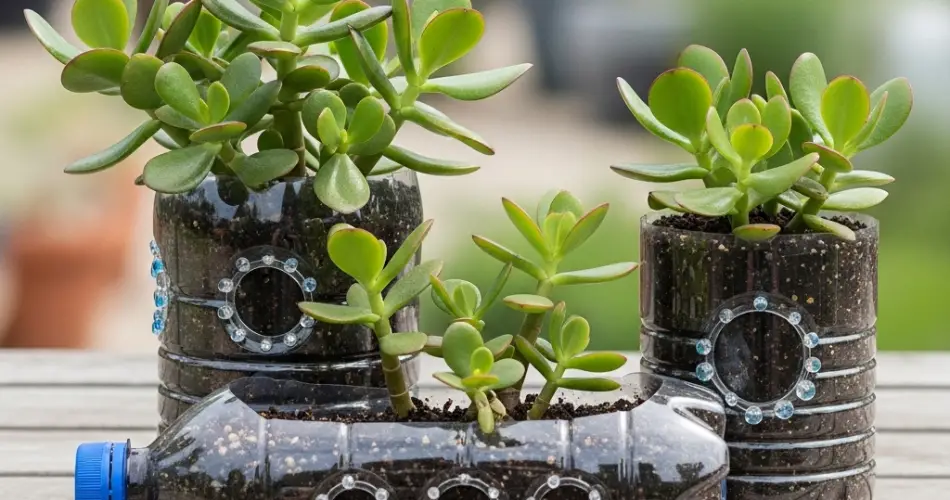
Jade plants (Crassula ovata) are a timeless favorite among succulent lovers, prized for their thick, glossy green leaves and easy-care nature. Often associated with good luck and prosperity, these charming plants make excellent additions to windowsills, office desks, and minimalist home gardens. And with a little creativity, you can grow them in an eco-conscious way—by using recycled plastic bottles.
Growing jade in plastic bottles is not only practical and budget-friendly but also a great way to reduce plastic waste. With the right setup, this hardy succulent will thrive while bringing a modern, sustainable touch to your space.
Why Grow Jade in Recycled Bottles?
Jade plants are well-suited to small containers due to their slow-growing nature and ability to store water in their fleshy leaves and stems. Recycled bottles make ideal mini planters because they’re easy to modify, allow for visibility of root health and moisture levels, and help reduce single-use plastic waste.
A plastic bottle planter also offers the flexibility to experiment with soil-based or self-watering setups, depending on your preference and available time for plant care.
Materials You’ll Need
-
A healthy jade plant cutting or small plant
-
A clean plastic bottle (500 ml to 1.5 liters)
-
Well-draining soil (succulent or cactus mix)
-
A small amount of gravel or pebbles (for drainage)
-
Scissors or a craft knife
-
Optional: cotton wick (for self-watering systems), twine, fabric, or paint for decoration
Preparing the Bottle Planter
Start by selecting a bottle that suits the size of your jade cutting. Transparent bottles are ideal for tracking moisture, but they can also be decorated to reduce light exposure at the root level.
To make a simple bottle planter:
-
Cut the bottle about one-third of the way down from the top.
-
Use the bottom portion as your planter.
-
Poke several small holes in the base for drainage if you’re going for a soil-based setup.
-
Add a thin layer of gravel or pebbles at the bottom to improve drainage.
For a self-watering version:
-
Cut the bottle as above, and keep both parts.
-
Remove the cap and thread a cotton wick through the opening.
-
Invert the top part and place it inside the bottom, forming a water reservoir below the soil chamber.
-
Add water to the reservoir and soil to the top, ensuring the wick touches both.
Decorate the outside of the bottle with jute, fabric, or paint to match your style, and to protect the roots from direct light.
Preparing the Soil and Plant
Jade plants thrive in sandy, well-drained soil. If you don’t have a cactus or succulent mix, make your own by combining:
-
2 parts potting soil
-
1 part coarse sand or perlite
-
1 part fine gravel or crushed pumice
If starting from a cutting, allow it to dry for a few days until the end forms a callus—this prevents rot. Then follow these steps:
-
Fill the prepared bottle planter halfway with your soil mix.
-
Insert the jade cutting or young plant, ensuring it stands upright.
-
Fill in the remaining space with soil and press gently to stabilize the plant.
-
Water lightly until the soil is just moist—not soaked.
Light and Location
Place your jade bottle planter in a spot that receives plenty of light—ideally 4–6 hours of bright, indirect sunlight daily. South- or west-facing windows are excellent choices. Too little light may cause the plant to grow leggy, while intense direct sun can scorch the leaves.
If natural light is limited, consider supplementing with a grow light.
Watering and Maintenance
One of the most common mistakes with jade plants is overwatering. In a recycled bottle setup, the key is to keep the soil dry most of the time.
-
In soil-based planters, water only when the top 2 inches of soil are dry.
-
In self-watering bottles, refill the bottom chamber when empty, but don’t allow constant wetness around the roots.
Dust the leaves regularly to keep them glossy and allow the plant to photosynthesize efficiently. Rotate the bottle every couple of weeks to encourage even growth.
During the growing season (spring and summer), you can fertilize once a month using a diluted cactus or succulent fertilizer. Stop feeding in fall and winter, when growth naturally slows down.
Repotting and Propagation
Jade plants grow slowly, so they don’t need frequent repotting. However, when the plant becomes top-heavy or the roots outgrow the bottle, move it to a larger recycled container or clay pot.
You can easily propagate jade by taking stem or leaf cuttings. Allow them to dry for a few days, then plant them in a new bottle with dry soil and follow the same setup process.
Eco-Friendly Gardening with Style
Growing jade plants in recycled bottles offers a creative and sustainable way to enjoy succulents in modern living spaces. It’s a rewarding project that’s perfect for beginners, apartment dwellers, and anyone looking to make gardening more eco-conscious. With the right care and light, your jade plant will thrive—bringing a touch of green and good fortune to your minimalist, planet-friendly home


