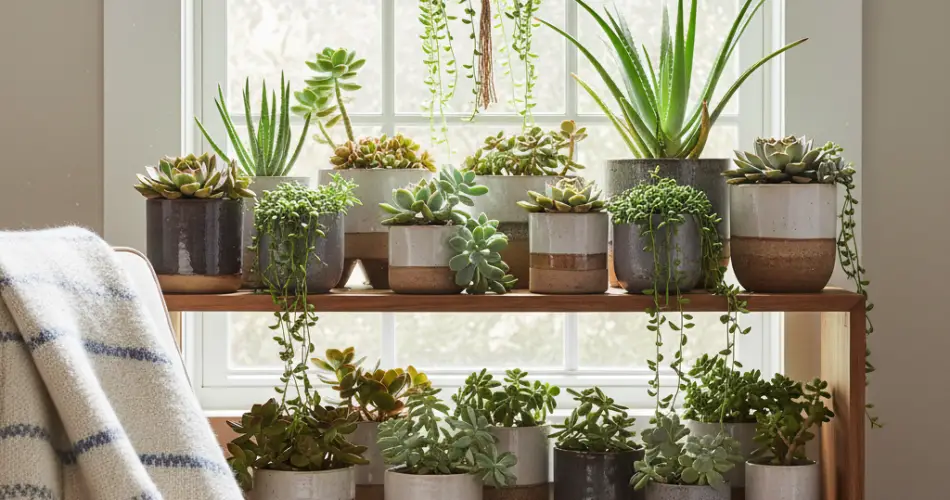
Succulents are among the most popular plants for modern gardeners, prized for their striking shapes, vibrant colors, and incredible resilience. From Echeveria rosettes to Aloe and Haworthia, these water-storing plants are easy to care for when their basic needs are met. Of all the care requirements, light is the most critical for maintaining healthy growth, vibrant colors, and compact, attractive forms. Understanding succulent light requirements for both indoor and outdoor environments is essential to help your plants thrive.
Why Light Matters for Succulents
Succulents store water in their thick leaves, stems, or roots, allowing them to survive in harsh, arid environments. In their natural habitats—deserts, rocky slopes, and sunny meadows—they receive abundant sunlight. This exposure encourages strong, compact growth and promotes the vibrant coloration many succulents are known for.
Without sufficient light, succulents stretch toward the nearest source of brightness, producing leggy, weak stems and dull leaves. Too much direct sun, however, can scorch their foliage and cause sunburn, leaving brown or pale patches. Striking the right balance ensures the plant remains healthy and visually appealing.
Indoor Light Requirements
When grown indoors, succulents need bright, indirect light to mimic their natural environment. A sunny windowsill is ideal, but it’s important to protect them from intense, direct rays that can burn their delicate leaves.
Best indoor placements include:
-
South-facing windows: Provide strong light, but a sheer curtain can prevent scorching.
-
East-facing windows: Offer gentle morning sunlight, which is ideal for most succulent species.
-
West-facing windows: Can work if sunlight is filtered or the plant is slightly back from the window.
For most indoor succulents, 6–8 hours of bright light per day is optimal. If natural sunlight is limited, you can supplement with artificial grow lights to provide the intensity needed for healthy growth.
Signs of Low Light
Succulents are resilient, but in low-light conditions, they show clear signs of stress:
-
Stretched or “etiolated” growth as they reach for light.
-
Pale or faded leaf coloration.
-
Slow growth and weaker leaves.
If your plant exhibits these signs, consider moving it to a brighter location or using supplemental lighting to maintain its compact form and color.
Outdoor Light Requirements
When grown outdoors, succulents generally prefer full sun to partial shade, depending on the species. Desert-adapted varieties like Echeveria, Sedum, and Aloe thrive in direct sun, while others, such as Haworthia or Gasteria, prefer bright but filtered light.
Outdoor care tips include:
-
Place sun-loving succulents in areas with at least 6 hours of direct sunlight daily.
-
Provide partial shade for more sensitive species to prevent leaf burn, especially during hot afternoons.
-
Acclimate indoor succulents to outdoor light gradually to avoid shock or sunburn. Start with a few hours of morning sun and increase exposure over one to two weeks.
Artificial Lighting for Indoor Succulents
If your home or office lacks sufficient natural light, succulents respond well to artificial lighting. LED or fluorescent grow lights can provide the spectrum and intensity needed for healthy growth.
Tips for artificial lighting:
-
Use full-spectrum lights to mimic sunlight.
-
Place lights about 12–18 inches above the plants.
-
Keep them on for 10–12 hours per day to replicate natural light cycles.
With proper artificial light, succulents indoors can maintain compact, colorful foliage and even bloom in some species.
Seasonal Adjustments
Light availability changes with the seasons, so succulents may need repositioning:
-
Summer: Outdoor plants may need partial shade to avoid scorching during intense midday sun.
-
Winter: Indoor plants benefit from placement near the brightest available windows or additional grow lights to compensate for shorter daylight hours.
Rotating your plants regularly also ensures even growth and prevents lopsided or tilted stems.
Signs of Too Much Light
While succulents love sunlight, too much can be damaging:
-
Leaves develop brown, crispy patches.
-
Colors may fade or appear bleached.
-
Leaves can curl or shrivel from excessive exposure.
Filtering sunlight or moving plants slightly back from intense rays usually solves these problems.
Final Thoughts
Succulents are remarkably adaptable, but light is the key to keeping them healthy, compact, and colorful. Indoors, bright, indirect light or supplemental grow lights support steady growth and vibrant foliage. Outdoors, most succulents thrive in full sun to partial shade, with adjustments based on species and intensity.
By observing your plants and responding to their light needs, you can ensure they remain strong, attractive, and long-lasting. Whether displayed on a sunny windowsill, hanging in a patio garden, or arranged on an indoor shelf with grow lights, the right light will help your succulents flourish and showcase their natural beauty year-round.


