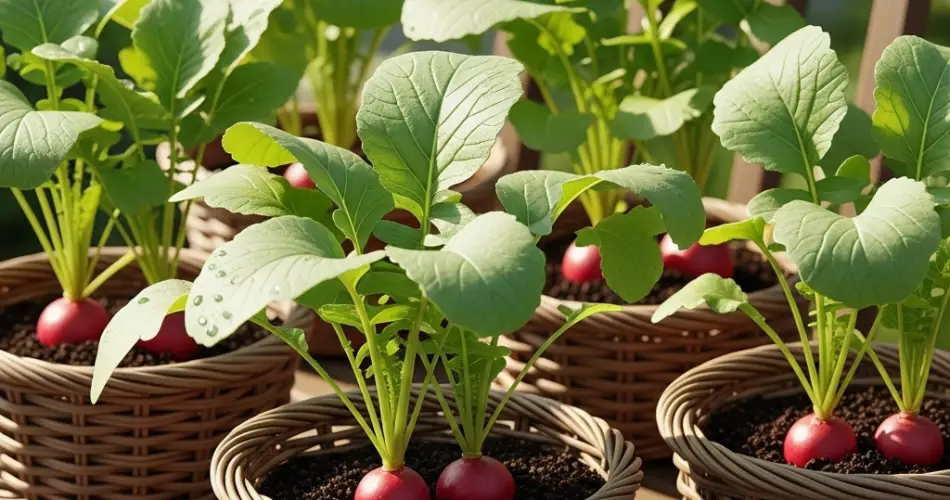
Radishes are among the easiest and fastest vegetables to grow, making them an ideal crop for gardeners with limited space. Whether you live in an apartment or have only a small balcony, radishes can thrive in baskets and woven containers. Their quick growth cycle means you can enjoy fresh, crisp harvests in just a few weeks. This guide takes you through each step of planting radishes in baskets, from choosing the right container to harvesting your first crop.
Why Grow Radishes in Baskets?
Baskets are surprisingly effective for growing radishes. They provide excellent drainage, which is essential since radishes dislike soggy soil. Woven containers also allow for good airflow around the roots, reducing the risk of rot and disease. Additionally, baskets save space and can be arranged on balconies, patios, or even hung from sturdy hooks. Their rustic look adds charm while also being practical for small-space gardening.
Step 1: Choosing the Right Basket
The first step is selecting a basket suitable for radish growth. Radishes don’t require deep soil, but they do need enough room for their roots to develop.
-
Depth: Choose a basket that is at least 6–8 inches deep. This depth accommodates most radish varieties, including round and short-rooted types.
-
Material: Opt for sturdy woven containers made of bamboo, wicker, or rattan. Line them to hold soil in place and extend their durability.
-
Drainage: Proper drainage is essential. If the basket doesn’t naturally allow excess water to escape, make small holes in the liner or base.
Step 2: Preparing the Basket
Before planting, prepare the basket to ensure healthy growth:
-
Add a liner: Use burlap, coco coir, or breathable fabric to prevent soil from leaking while still allowing drainage.
-
Soil mix: Radishes thrive in loose, fertile soil. A good mix includes potting soil, compost, and a little sand or perlite for aeration.
-
Filling the basket: Fill the basket with soil, leaving about an inch of space at the top to prevent spillage when watering.
Step 3: Sowing Radish Seeds
Radishes grow best when sown directly into their final container rather than being transplanted.
-
Spacing: Sow seeds about half an inch deep, leaving at least 2 inches between each seed. This spacing ensures the roots have enough room to swell without crowding.
-
Rows or scattered: You can plant in neat rows or scatter the seeds evenly for a fuller look.
-
Thinning: Once seedlings sprout, thin them to maintain spacing. Overcrowding leads to thin, misshapen roots.
Step 4: Watering and Care
Radishes mature quickly, but they require consistent moisture and sunlight.
-
Watering: Keep the soil evenly moist but not waterlogged. In baskets, soil dries faster, so check daily, especially in warm weather.
-
Sunlight: Place the basket in a sunny spot where the plants can receive at least 6 hours of sunlight per day. Without enough light, radishes may produce more leaves than roots.
-
Fertilizing: Radishes don’t need heavy feeding. A light application of balanced liquid fertilizer halfway through their growth cycle is sufficient. Too much nitrogen will result in leafy tops and small roots.
Step 5: Mulching and Maintenance
Adding a thin layer of organic mulch—like straw, shredded leaves, or coco husk—helps retain soil moisture and keeps the basket from drying out too quickly. Mulch also prevents soil from splashing onto the leaves during watering.
Regularly check for pests such as aphids or flea beetles. While radishes are generally low-maintenance, early intervention with natural remedies like neem oil can prevent damage.
Step 6: Harvesting Radishes
One of the most rewarding aspects of growing radishes is how quickly they mature.
-
Timing: Most varieties are ready to harvest within 25–35 days after sowing.
-
Signs: Look for radishes that are about 1 inch in diameter. You may see the shoulders of the roots peeking above the soil line.
-
Technique: Gently pull the radish by the base of the stem. If the soil is compacted, loosen it slightly before harvesting to avoid breaking the roots.
Step 7: Successive Planting for Continuous Harvest
To enjoy a steady supply of radishes, practice successive planting. After harvesting the first batch, loosen the soil, add a little compost, and sow new seeds. By planting every two weeks, you can keep your basket garden producing fresh radishes throughout the season.
Tips for Better Results
-
Choose fast-growing varieties: Varieties like ‘Cherry Belle’ and ‘French Breakfast’ are ideal for baskets.
-
Avoid overcrowding: Proper spacing ensures plump roots.
-
Rotate locations: If possible, move baskets around to follow the sun and prevent soil-borne pests from building up.
-
Mix with other crops: Radishes can be planted alongside quick-growing herbs like chives or parsley in the same basket for a multi-purpose container garden.
Conclusion
Growing radishes in baskets is a simple and rewarding project for gardeners of all levels. With minimal effort, you can enjoy crisp, peppery radishes fresh from your balcony or patio. By choosing the right container, preparing the soil, and following a consistent care routine, you’ll have a harvest in just a few weeks. Basket gardening not only makes efficient use of limited space but also adds beauty and practicality to urban living.


