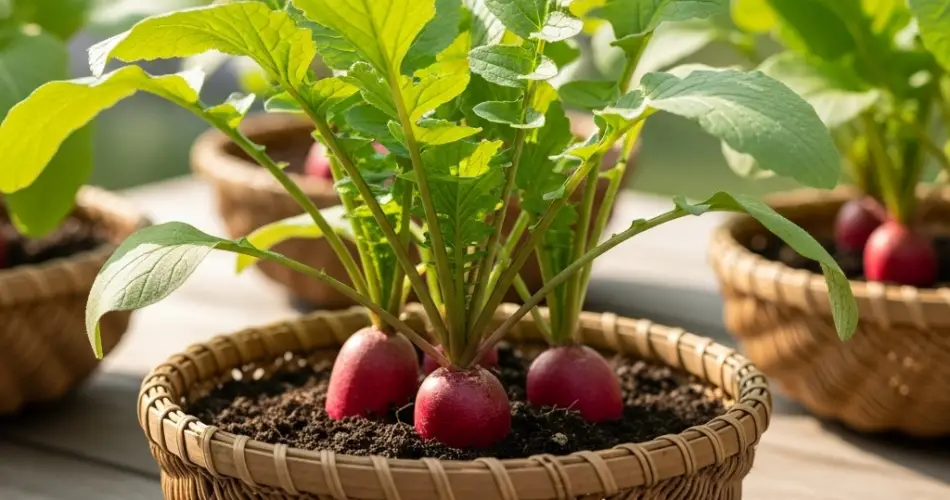
Radishes are one of the easiest and fastest vegetables to grow, making them a favorite choice for beginners and experienced gardeners alike. Their crisp texture, peppery flavor, and quick harvest time mean you can enjoy fresh produce in just a few weeks after planting. While radishes are often grown in garden beds, they also thrive in containers, and one of the most space-efficient and visually appealing options is basket gardening.
For those living in apartments, urban areas, or homes with small outdoor spaces, growing radishes in baskets provides a convenient and rewarding way to enjoy homegrown vegetables. With the right setup and care, you’ll find that radishes are one of the simplest crops to succeed with.
Why Choose Baskets for Radishes?
Baskets are ideal for radish cultivation for several reasons:
-
Compact and space-saving: Hanging baskets or woven baskets allow you to grow food even in limited areas like balconies, patios, or small courtyards.
-
Good drainage: Baskets typically provide excellent drainage, preventing waterlogged soil that can cause root rot.
-
Mobility: Lightweight baskets can be moved around easily to catch sunlight or shelter plants from extreme weather.
-
Decorative appeal: A basket of lush green radish tops adds charm to urban or backyard settings while being functional.
Radishes don’t require deep soil, so they adapt perfectly to baskets as long as the container is wide enough and at least 6–8 inches deep.
Choosing the Right Basket
The first step to successful basket gardening is selecting the right container.
-
Depth and width: Radishes are root crops, so they need room to expand. A basket that is 8–10 inches deep and 12–14 inches wide works well for most varieties.
-
Material: Woven baskets lined with coco coir or moss are attractive and allow good air circulation. Plastic baskets retain moisture better, which may be helpful in hot climates.
-
Drainage holes: Ensure the basket has proper drainage. If using a decorative woven basket, line it with breathable fabric or coir to hold the soil while letting excess water escape.
-
Support system: If hanging, use strong hooks or brackets since a soil-filled basket can be heavy, especially after watering.
Soil Preparation
Radishes grow best in loose, fertile, and well-draining soil. The quality of the soil mix is crucial for basket-grown radishes because the confined space can dry out quickly or become compacted.
-
Soil mix: Use a high-quality potting mix blended with compost for added nutrients. Avoid heavy garden soil, as it can become dense in baskets.
-
Drainage improvement: Adding perlite, coarse sand, or coconut husk chips ensures the soil stays airy and drains well.
-
pH balance: Aim for slightly acidic to neutral soil, between 6.0 and 7.0.
A well-prepared soil mix ensures radishes develop evenly shaped roots without becoming tough or woody.
Planting Radishes in Baskets
Radishes are best grown from seed because they germinate quickly and don’t transplant well.
-
Sowing seeds: Scatter radish seeds evenly across the surface, then cover them lightly with ½ inch of soil.
-
Spacing: Thin seedlings to about 2 inches apart to give roots room to grow without crowding.
-
Variety choice: Choose fast-maturing types like ‘Cherry Belle’ or ‘French Breakfast’ for quick harvests, or daikon varieties for longer roots if you have deeper baskets.
-
Successive planting: Sow seeds every 1–2 weeks to ensure a continuous harvest throughout the season.
Care and Maintenance
Radishes are low-maintenance, but a few consistent practices will ensure healthy growth and tasty results.
-
Sunlight: Place baskets where they receive at least 5–6 hours of sunlight daily. Morning sun is especially beneficial.
-
Watering: Keep soil consistently moist but not soggy. Radishes grow quickly, and uneven watering can result in cracked or bitter roots.
-
Fertilizing: Radishes don’t require heavy feeding. Too much nitrogen encourages leafy tops instead of roots. Instead, use a balanced organic fertilizer or compost tea every few weeks.
-
Thinning seedlings: Overcrowding is one of the most common mistakes. Remove weaker seedlings to allow the strongest plants to thrive.
Harvesting Radishes
One of the most satisfying aspects of radishes is their speed from seed to table.
-
Timing: Most radishes are ready in 25–35 days. Check seed packets for exact maturity times.
-
Signs of readiness: Radishes are ready when the shoulders of the root bulge slightly above the soil surface.
-
Harvest method: Gently pull the radish from the soil by grasping the base of the leaves. Harvest promptly, as leaving them too long can make roots pithy and woody.
Common Challenges and Solutions
-
Spindly roots: Often caused by overcrowding or too much shade. Ensure proper spacing and sunlight.
-
Cracked roots: Usually from inconsistent watering. Keep soil evenly moist.
-
Pests: Aphids or flea beetles may occasionally target radish greens. Use neem oil or insecticidal soap for organic control.
-
Poor flavor: Over-mature radishes tend to taste bitter. Harvest on time for the best flavor and texture.
Conclusion
Basket gardening with radishes is a simple and rewarding way to enjoy homegrown produce, even in limited spaces. With minimal effort, you can sow seeds, provide basic care, and harvest fresh radishes in just a few weeks. Whether displayed on a sunny balcony, hung along a patio, or placed in a small courtyard, radish baskets bring both beauty and productivity to urban living.
Quick-growing, low-maintenance, and flavorful, radishes are proof that anyone can succeed in gardening, no matter how much or little space they have.


