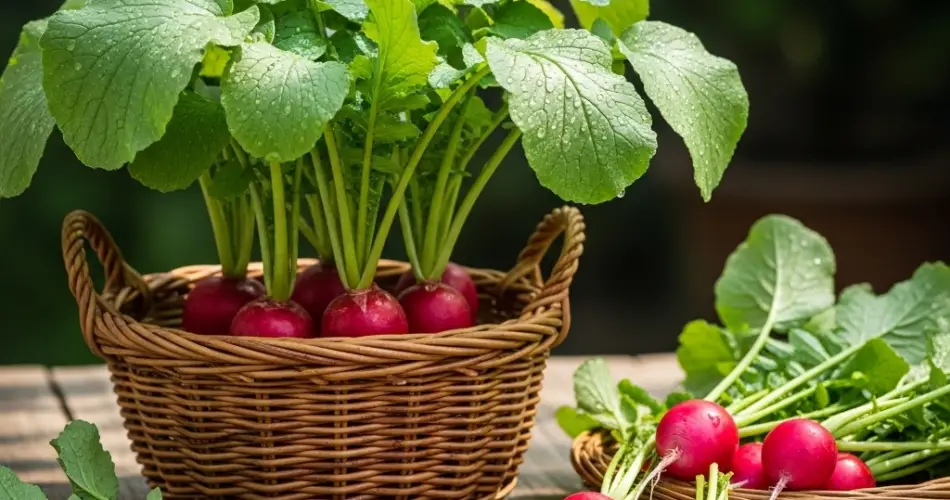
Radishes are among the easiest and fastest-growing vegetables, making them perfect for anyone who wants to enjoy fresh produce in a short amount of time. From seed to harvest, many radish varieties are ready in less than a month, making them ideal for busy gardeners, beginners, or those with limited space. While radishes grow well in garden beds, they are equally successful in compact containers, and woven or hanging baskets provide a surprisingly effective and decorative option.
For urban gardeners or anyone with just a balcony or small patio, compact basket gardening offers a chance to enjoy crisp, peppery radishes without requiring a large outdoor space. With the right setup and a little care, radishes will thrive in baskets and deliver quick, consistent harvests.
Why Baskets Work Well for Radishes
Radishes don’t need much soil depth, which makes them perfect for container growing. Compact baskets provide an ideal balance of portability, style, and function. Here are some reasons baskets are a smart choice for radish cultivation:
-
Shallow root system: Most radish varieties only need 6–8 inches of soil, making them well-suited to smaller baskets.
-
Drainage: Baskets, especially those lined with coco coir or moss, allow excess water to escape, preventing root rot.
-
Flexibility: Baskets can be hung, placed on balconies, or moved around to capture sunlight as the seasons shift.
-
Aesthetic appeal: A lush basket of radish greens not only provides food but also enhances the look of small outdoor spaces.
Compact baskets maximize productivity in limited areas, proving that even small-scale gardening can yield delicious results.
Choosing the Right Basket
The type of basket you choose has a big impact on your success.
-
Depth and size: A basket 8–10 inches deep and 12–14 inches wide is ideal for most radishes. If you plan to grow longer varieties, such as daikon, choose deeper baskets.
-
Material: Woven baskets lined with coir are breathable and look attractive, while plastic or resin baskets retain moisture better in hot climates.
-
Support: If hanging, ensure your hooks or supports are strong enough to hold the weight of the soil, plants, and water.
-
Drainage: Good drainage is essential. Line the basket with coir, burlap, or landscape fabric to hold the soil while allowing water to flow through.
Preparing the Soil
Healthy radishes begin with the right soil mix. Because baskets can dry out quickly, soil must be both moisture-retentive and well-draining.
-
Base mix: Use a lightweight potting mix rather than heavy garden soil.
-
Nutrients: Blend in compost or well-rotted organic matter to provide a steady supply of nutrients.
-
Drainage boosters: Add perlite, coarse sand, or coconut coir chips to keep soil loose.
-
pH level: Radishes prefer a slightly acidic to neutral range of 6.0–7.0.
A loose, rich soil ensures roots grow round, tender, and flavorful.
Planting Radishes in Baskets
Radishes are direct-sown from seed, as they don’t transplant well.
-
Sowing: Sprinkle seeds evenly across the basket and cover them with about ½ inch of soil.
-
Spacing: Once seedlings emerge, thin them to about 2 inches apart to give each plant room for root development.
-
Varieties: Choose quick-growing types like ‘Cherry Belle,’ ‘Easter Egg,’ or ‘French Breakfast’ for fast harvests. For extended variety, try sowing both round and elongated types together.
-
Succession planting: To enjoy continuous harvests, sow new seeds every 1–2 weeks.
Caring for Basket-Grown Radishes
Radishes are low-maintenance, but they still benefit from consistent care.
-
Sunlight: Place the basket where it gets at least 5–6 hours of direct sunlight daily. Morning sun is particularly beneficial.
-
Watering: Keep the soil evenly moist. Because baskets dry out faster than larger containers, check moisture regularly. Inconsistent watering can lead to cracked or overly spicy radishes.
-
Fertilizing: Radishes don’t need much fertilizer. Avoid high-nitrogen feeds, which encourage leafy tops instead of root growth. Instead, use a balanced organic fertilizer or compost tea sparingly.
-
Thinning: Thin seedlings promptly to avoid overcrowding, which causes misshapen or underdeveloped roots.
Harvesting Radishes
The best part of growing radishes is how quickly you can enjoy them.
-
Timing: Most small radish varieties are ready to harvest in 25–35 days. Always check the seed packet for exact timing.
-
Signs of maturity: Radishes are ready when you see the root shoulders pushing slightly above the soil surface.
-
Harvest method: Grasp the greens at the base and gently pull the radish from the soil.
-
Regular harvests: Don’t delay harvesting. Over-mature radishes become tough and bitter. By sowing in intervals, you can enjoy fresh radishes consistently.
Common Problems and Solutions
Even in baskets, radishes are generally trouble-free, but a few issues may arise:
-
Spindly roots: Usually caused by overcrowding or inadequate sunlight. Thin seedlings and move baskets to sunnier spots.
-
Cracking: Caused by uneven watering. Maintain steady moisture.
-
Pests: Flea beetles or aphids may appear. Neem oil or insecticidal soap can help manage them naturally.
-
Bitter taste: Radishes left too long in the soil develop a sharp, unpleasant flavor. Harvest promptly.
Conclusion
Compact baskets make growing radishes simple, efficient, and rewarding. With just a little care, you can sow seeds, water regularly, and harvest crisp, peppery radishes within weeks. Whether you live in a small apartment with a balcony, a townhouse with limited outdoor space, or simply want a decorative and practical gardening project, radish basket gardening is an excellent choice.
Quick to grow, easy to maintain, and delicious to eat, radishes prove that even the smallest garden setups can deliver fresh, homegrown food. With a basket, some seeds, and a bit of sunlight, you’ll be harvesting radishes before you know it.


