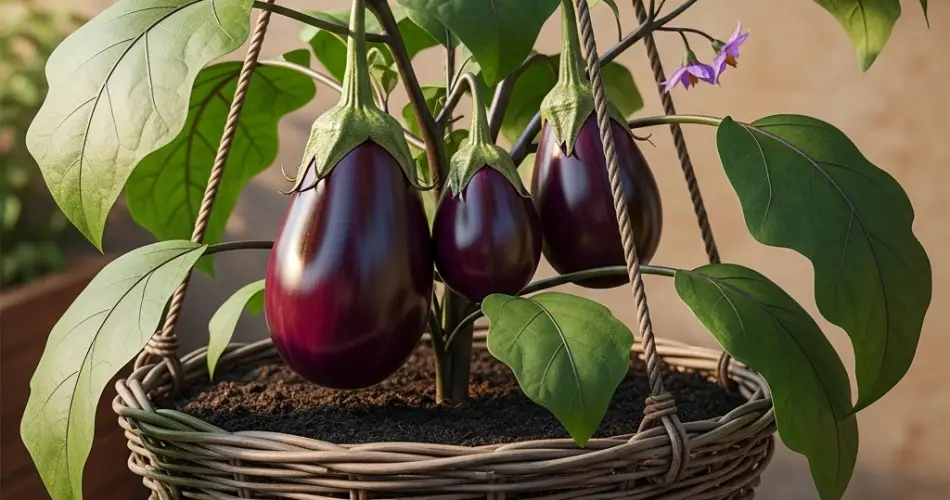
Eggplants are a rewarding vegetable to grow at home, offering both beauty in the garden and versatility in the kitchen. Their deep purple fruits and lush green foliage bring charm to any outdoor space, while their rich flavor enhances countless recipes. Although many gardeners assume eggplants require large garden beds, these plants thrive just as well in containers—including baskets. With the right preparation, baskets can serve as both functional planters and decorative additions to patios, balconies, and backyards.
This guide will walk you step by step through the process of planting and caring for eggplants in baskets, ensuring a healthy harvest.
Why Use Baskets for Eggplant Gardening?
Baskets offer several unique advantages:
-
Portability: They are easy to move, allowing you to chase the sunlight or bring plants indoors during harsh weather.
-
Excellent drainage: When properly prepared, baskets prevent water from stagnating around roots.
-
Space efficiency: Ideal for small patios or balconies where ground planting isn’t possible.
-
Rustic style: Woven baskets add a natural, decorative touch to your gardening space.
By reusing baskets, you also contribute to sustainable gardening practices, turning everyday household items into productive growing containers.
Step 1: Choosing the Right Basket
The success of your eggplant crop starts with choosing the right basket. Select one that is:
-
Deep enough: At least 12–14 inches to allow proper root growth.
-
Wide: Eggplants spread out, so give them room to flourish.
-
Strong and stable: Thick wicker, rattan, or bamboo works well. Avoid flimsy baskets that may collapse under the weight of soil and plants.
-
Lined or ready to be lined: Since baskets are porous, lining is essential to retain soil and water.
A sturdy basket ensures the plant has both the support and space it needs to grow successfully.
Step 2: Preparing the Basket
Once you have your basket, prepare it to function like a proper planter:
-
Add a liner: Use burlap, coconut coir, or landscape fabric to keep soil from spilling out while still allowing water to drain.
-
Create drainage: Place a layer of gravel, small stones, or broken terracotta pieces at the bottom. This keeps the soil from getting waterlogged.
-
Mix the soil: Eggplants prefer a nutrient-rich, well-draining mix. A good blend includes:
-
2 parts potting soil or garden soil
-
1 part compost for nutrients
-
1 part sand or perlite for aeration
-
This ensures the soil holds enough moisture without becoming compacted.
Step 3: Planting Eggplants
You can grow eggplants from seeds or seedlings. Beginners often find seedlings more reliable.
-
Seeds: Start indoors 6–8 weeks before the last frost. Transplant them into the basket when they have several true leaves and the weather is warm.
-
Seedlings: Choose compact varieties suited for container gardening, such as ‘Little Finger’ or ‘Patio Baby.’
Plant one seedling per medium basket, or two if your basket is especially large. Place the seedling at the same depth it was growing in its original container. Gently press the soil around the base to secure it.
Step 4: Sunlight and Watering
Eggplants love warmth and need plenty of sunshine. Position your basket in a spot that gets 6–8 hours of direct sunlight daily.
-
Watering: Check the soil regularly. Because baskets dry out faster than pots, consistent watering is essential. Keep the soil evenly moist but avoid overwatering.
-
Mulching: A layer of straw, dried leaves, or coconut husk helps retain moisture and reduce soil temperature fluctuations.
Regular watering and sunlight are critical for producing healthy fruits.
Step 5: Ongoing Care
Like most vegetables, eggplants require steady care to thrive.
-
Fertilization: Apply a balanced organic fertilizer every 3–4 weeks. Eggplants are heavy feeders and benefit from nutrient boosts during flowering and fruiting.
-
Support: As plants grow taller, their stems may need staking or a small cage to hold the weight of developing fruits.
-
Pruning: Remove yellowing leaves and side shoots that compete for energy. This directs the plant’s strength toward producing fruits.
-
Pest management: Watch out for flea beetles, aphids, or spider mites. Natural remedies such as neem oil or insecticidal soap work well.
With consistent care, your eggplants will grow strong and productive.
Step 6: Harvesting
Harvesting at the right time ensures tender and flavorful eggplants.
-
Appearance: Pick them when the skin is glossy and firm. A dull surface indicates overripeness.
-
Size: Depending on the variety, fruits are typically ready when they reach 4–6 inches long.
-
Technique: Use scissors or pruning shears to cut the fruit, leaving a short stem attached. Pulling by hand may damage the plant.
Frequent harvesting encourages the plant to produce more fruit, extending your yield throughout the season.
Final Thoughts
Growing eggplants in baskets is a simple yet rewarding way to enjoy fresh, homegrown produce. With just a few steps—choosing a sturdy basket, preparing it properly, providing sunlight, and offering regular care—you can transform a simple container into a thriving mini-garden.
Not only does this method save space and bring rustic beauty to your backyard or balcony, but it also makes gardening more accessible for beginners. Whether grilled, roasted, or added to stews, your basket-grown eggplants will bring freshness and flavor straight from the garden to your table.


