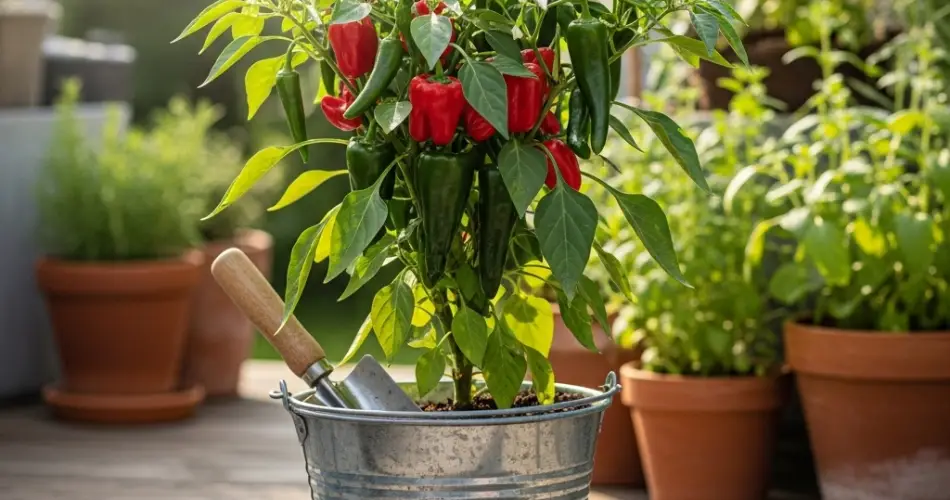
Chili peppers are a favorite among home gardeners thanks to their bold flavor, vibrant appearance, and versatility in cooking. Whether you enjoy them mildly spicy or blazing hot, growing chili peppers at home ensures you always have a fresh supply for your meals. The best part is that you don’t need a large garden to grow them. With the right setup, chili peppers thrive beautifully in containers, making them perfect for balconies, patios, and even sunny windowsills.
This guide will walk you step by step through planting and caring for chili peppers in containers, from choosing the right pot to harvesting your own fiery crop.
Step 1: Choose the Right Container
The first step to successful chili planting is selecting the proper container. A 5-gallon pot or bucket is ideal for most chili varieties. The container should be at least 12 inches deep to accommodate the plant’s root system.
Good drainage is essential, so ensure your container has several holes at the bottom. If using a bucket or recycled container, drill drainage holes before filling it with soil. Place a saucer underneath if growing indoors to prevent water spills.
Step 2: Select the Chili Variety
Different chili varieties offer different flavors and heat levels. Some of the most container-friendly varieties include:
-
Jalapeño – Mild to medium heat, great for daily cooking.
-
Cayenne – Long, thin peppers with a moderate kick.
-
Thai Chili – Compact plants with small but fiery fruits.
-
Habanero – Extremely hot with a fruity undertone.
-
Bird’s Eye Chili – Productive and perfect for small pots.
Choose based on your spice preference and available space. Compact or dwarf varieties are best for small containers.
Step 3: Prepare the Soil Mix
Chili peppers thrive in well-draining, nutrient-rich soil. A recommended mix for containers includes:
-
50% high-quality potting soil
-
30% compost or organic matter
-
20% perlite or coarse sand for aeration
This combination provides a good balance of nutrients, moisture retention, and drainage. Adding a handful of slow-release fertilizer or bone meal before planting will give your peppers a healthy start.
Step 4: Planting the Seeds or Seedlings
You can start chili peppers either from seeds or by transplanting young seedlings from a nursery.
-
If planting seeds: Sow them about ¼ inch deep in the prepared soil. Plant two or three seeds per container, then thin them later to keep only the strongest seedling.
-
If transplanting seedlings: Dig a hole large enough for the root ball, place the seedling inside, and cover gently with soil. Firm the soil around the plant without compacting it too much.
After planting, water lightly to help the soil settle around the roots.
Step 5: Provide Proper Sunlight
Chili peppers love warmth and sunshine. Place your containers where the plants can receive 6–8 hours of direct sunlight daily. If growing indoors, position them near a south-facing window or use a grow light to ensure steady growth.
Step 6: Watering Correctly
Consistent watering is crucial for chili peppers, especially in containers where soil dries out faster than in garden beds.
-
Keep the soil moist but not waterlogged.
-
Water when the top inch of soil feels dry to the touch.
-
During hot summer days, plants may need daily watering.
Overwatering can cause root rot, while underwatering may lead to flower and fruit drop, so balance is key.
Step 7: Fertilizing for Growth and Fruit
Chili peppers are moderate feeders and benefit from regular fertilization. Use a balanced liquid fertilizer every two weeks during the growing season.
-
In the early growth stage, a nitrogen-rich fertilizer helps the plant develop strong leaves.
-
Once flowers appear, switch to a potassium- and phosphorus-rich fertilizer to encourage fruiting and improve pepper flavor.
Organic options such as compost tea, fish emulsion, or seaweed extract also work well.
Step 8: Pruning and Supporting Plants
Some chili plants, especially tall varieties, may need support to prevent bending under the weight of fruits. Use bamboo stakes or small trellises to keep them upright.
Pruning lower leaves and small side shoots can improve airflow, reduce pests, and focus the plant’s energy on producing peppers.
Step 9: Pest and Disease Management
Container-grown chili peppers are less prone to pests than garden plants, but problems may still occur. Common issues include:
-
Aphids and spider mites – Spray with neem oil or wipe leaves with soapy water.
-
Yellowing leaves – Often due to overwatering or nutrient deficiency.
-
Blossom drop – Can result from temperature stress; keep plants in stable, warm conditions.
Regularly check your plants so you can address issues early.
Step 10: Harvesting Your Chilies
Chili peppers are ready to harvest once they reach their mature size. You can pick them green for milder flavors or leave them on the plant until they turn red, orange, or yellow, depending on the variety.
To harvest, use scissors or pruning shears to cut peppers off the plant, leaving a short stem attached. This prevents damage to the plant and encourages more production.
Harvesting regularly also stimulates the plant to keep producing throughout the season.
Final Thoughts
Growing chili peppers in containers is a rewarding project that fits perfectly into small-space gardening. With the right container, soil mix, and care, you can enjoy a steady supply of spicy, homegrown chilies. Whether you’re adding heat to sauces, stir-fries, or pickles, container-grown peppers bring both flavor and beauty to your kitchen garden.
No matter your space, with a bucket or pot and a bit of attention, you can harvest fresh chilies right at home.


