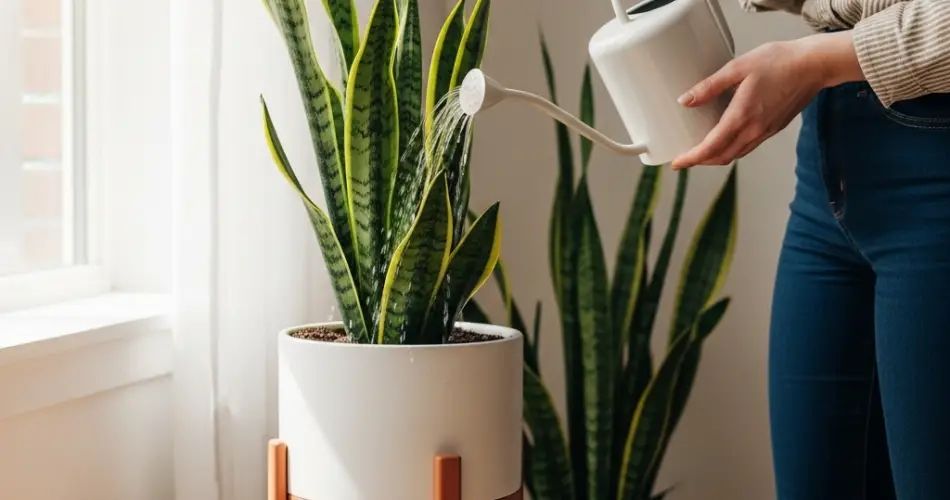
Snake plants, also known as Sansevieria or Dracaena trifasciata, are among the most resilient and low-maintenance houseplants available. Their upright, sword-like leaves and tolerance to a range of conditions make them ideal for both beginner and experienced plant owners. One of the few ways to harm a snake plant, however, is by overwatering it. When it comes to snake plants, less really is more.
Understanding Snake Plant Origins
To properly care for a snake plant, it helps to know its natural environment. Native to arid regions of West Africa, snake plants are adapted to dry climates and infrequent rainfall. Their thick, fleshy leaves are designed to store water for extended periods, similar to succulents. This makes them highly drought-tolerant and particularly sensitive to overwatering.
How Often Should You Water a Snake Plant?
Unlike many houseplants that require regular watering, snake plants prefer their soil to dry out almost completely between waterings. A general guideline is to water every 2–6 weeks, depending on environmental factors. The timing will vary based on:
-
Season: Snake plants require less water in the cooler months (fall and winter) when growth slows down. During spring and summer, they may need slightly more frequent watering but still less than other tropical plants.
-
Humidity and Temperature: In dry, warm climates, the soil may dry out faster. In cooler or more humid spaces, watering should be less frequent.
-
Light Conditions: Snake plants grown in bright, indirect light may dry out quicker than those kept in low light.
A good rule of thumb is to water only when the top 2–3 inches (5–7 cm) of soil are dry to the touch.
Best Watering Practices for Snake Plants
-
Use the “Soak and Dry” Method
When it’s time to water, do so thoroughly. Water the soil until excess begins to drain from the bottom of the pot. Then allow the soil to dry completely before watering again. Never water lightly or too frequently, as this can keep the lower soil layers consistently wet, leading to root rot. -
Always Check the Soil First
Before watering, use your finger or a moisture meter to check the dryness of the soil. It’s better to wait a few extra days than to water too soon. -
Avoid Watering the Leaves
Pour water directly onto the soil, not over the leaves. Water trapped between the leaf bases can cause rot at the crown of the plant, especially in cooler environments. -
Use Pots with Drainage Holes
Snake plants hate “wet feet.” Ensure the container you use has drainage holes to allow excess water to escape. Avoid decorative pots without holes unless they’re used as covers over a functional grower’s pot. -
Water Less During Dormancy
In the winter months, when the plant enters a rest phase, reduce watering significantly. One watering every 4–6 weeks is often enough during this time.
Warning Signs of Overwatering
Overwatering is the leading cause of snake plant problems. Symptoms include:
-
Soft or mushy leaves
-
Yellowing leaves, especially at the base
-
Foul smell from the soil
-
Roots turning black or mushy (a sign of rot)
-
Leaves collapsing or falling over easily
If you notice any of these signs, stop watering immediately. Remove the plant from the pot and inspect the roots. Trim off any rotted parts and repot in fresh, dry soil. Let the plant recover before resuming a cautious watering schedule.
Underwatering: Less Common but Possible
While rare, snake plants can become too dry if ignored for extended periods. Indicators include:
-
Wrinkled or curling leaves
-
Leaves losing firmness and becoming thin
-
Soil pulling away from the edges of the pot
If this happens, give the plant a good soak and resume monitoring the soil moisture going forward. Luckily, snake plants are quick to bounce back from mild underwatering.
Choosing the Right Soil and Pot
Proper drainage is crucial for snake plant health. Use a well-draining soil mix designed for succulents or cacti. You can also mix standard potting soil with perlite, coarse sand, or pumice to improve drainage.
The pot should be appropriately sized—too large, and the soil will hold excess moisture; too small, and it may dry out too quickly. Regardless of the size, always prioritize drainage.
Final Thoughts
Snake plants are incredibly forgiving when it comes to care, but watering remains the most important factor in their health. By resisting the urge to water frequently and focusing on soil dryness instead, you’ll help your snake plant thrive for years. When in doubt, always wait. It’s better to underwater a snake plant than to water too soon.


