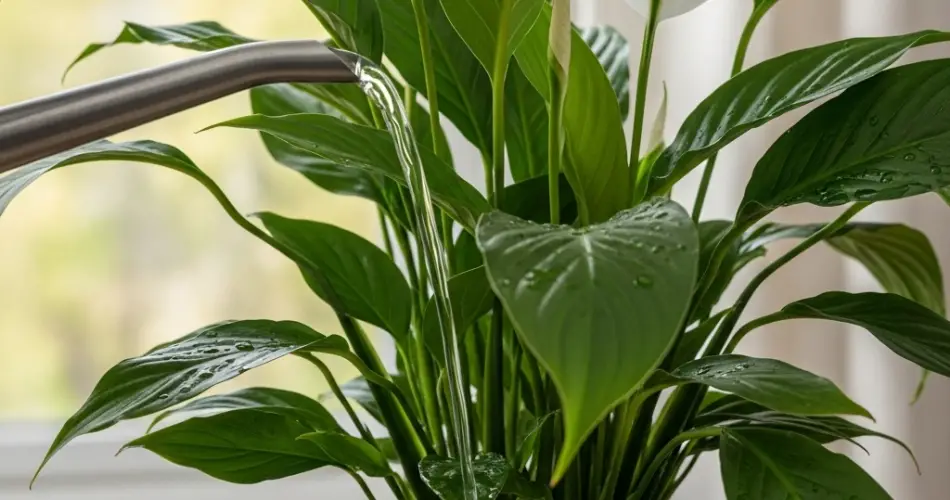
Peace lilies (Spathiphyllum spp.) are among the most popular houseplants for their elegant white spathes and deep green foliage. While relatively low-maintenance, they are quite particular when it comes to watering. Giving your Peace Lily either too much or too little water can quickly lead to problems with its appearance and health.
Understanding the signs of overwatering and underwatering is key to keeping your Peace Lily looking vibrant. Here’s how to tell the difference and what to do about it.
General Watering Needs of Peace Lilies
Peace lilies naturally grow in tropical rainforests, where they thrive in consistently moist but well-draining soil. They don’t like to dry out completely, but they also don’t tolerate soggy roots. Striking the right balance is essential. As a rule of thumb:
-
Water when the top inch of soil feels dry.
-
Always allow excess water to drain out of the pot.
-
Avoid letting the plant sit in standing water.
Signs of Overwatering
Overwatering is one of the most common mistakes in Peace Lily care. It can quickly lead to root rot, which damages the root system and hinders the plant’s ability to take up water and nutrients.
1. Yellowing Leaves
If your Peace Lily’s lower leaves are turning yellow and the soil feels constantly wet, overwatering is likely the cause. Yellowing that starts from the base and spreads upward is a classic indicator of too much water in the root zone.
2. Mushy Stems or Roots
Lift the plant gently from its pot to inspect the root ball. Overwatered roots are soft, brown, and may have a foul odor. Healthy roots should be firm and white.
3. Wilting Despite Moist Soil
It may seem counterintuitive, but overwatered plants can wilt too. If the leaves are drooping and the soil is wet, it’s a sign that the roots are damaged and can no longer absorb water properly.
4. Mold or Fungus on the Soil Surface
A persistent layer of mold or green algae on top of the soil usually means moisture is lingering too long. It can also create an environment where fungal diseases thrive.
5. Foul Smell from the Pot
A sour or rotten smell coming from the soil is another red flag that root rot may be developing due to excessive moisture.
Signs of Underwatering
While overwatering is common, underwatering can be just as problematic—especially if it happens repeatedly.
1. Drooping Leaves with Dry Soil
A classic sign of underwatering is wilting that improves shortly after watering. If the soil is dry and crumbly and the leaves are drooping, your plant is probably thirsty.
2. Crispy or Brown Leaf Edges
Leaves that develop dry, crispy edges—especially near the tips—indicate that the plant hasn’t been getting enough water to keep its tissues hydrated.
3. Curling Leaves
When water is scarce, Peace Lily leaves may begin to curl inward as a self-defense mechanism to reduce moisture loss.
4. Soil Pulling Away from the Pot
If the soil dries out too much, it can shrink and pull away from the sides of the pot. This makes it even harder for water to reach the roots during watering.
5. Stunted Growth or Lack of Flowers
Without enough moisture, your Peace Lily may stop producing new leaves and fail to bloom. Peace Lilies need consistent hydration to support healthy flowering.
How to Fix the Problem
If You’ve Overwatered:
-
Remove the plant from the pot and inspect the roots.
-
Trim away any rotted, mushy roots with sterile scissors.
-
Repot the plant in fresh, well-draining soil.
-
Use a container with proper drainage holes.
-
Allow the top inch of soil to dry before the next watering.
If You’ve Underwatered:
-
Give your plant a deep soak by placing the pot in a basin of water for 15–20 minutes.
-
Let it absorb moisture through the drainage holes until the soil is evenly moist.
-
Resume regular watering once the plant perks up.
-
Avoid letting the soil completely dry out between waterings in the future.
Preventative Tips for Healthy Watering
-
Use a moisture meter to check the soil if you’re unsure whether it’s time to water.
-
Water with room-temperature water to prevent root shock.
-
Stick to a consistent watering schedule, adjusting based on season and humidity.
-
Reduce watering frequency in winter, when growth slows and the plant needs less moisture.
-
Always make sure excess water drains out of the pot after each watering.
Final Thoughts
Peace Lilies are forgiving plants, but they’ll let you know when something isn’t right—especially with watering. By learning to recognize the signs of overwatering and underwatering, you can adjust your routine and keep your plant healthy and thriving. With the right balance of moisture, your Peace Lily will reward you with lush green foliage and graceful white blooms for years to come.


