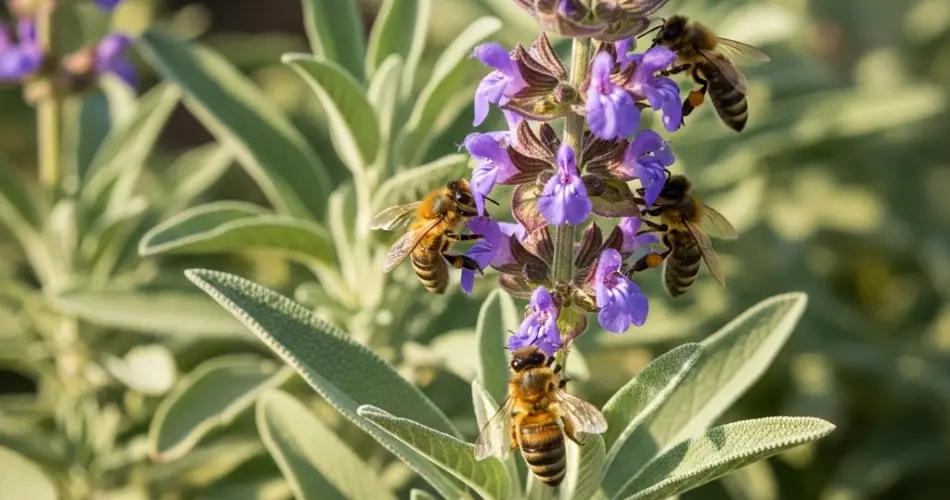
Sage (Salvia officinalis) is not only a popular culinary herb but also a powerful pollinator magnet, especially for bees. With its attractive, fragrant foliage and vibrant, nectar-rich blooms, sage has become a must-have plant for gardeners who want to support pollinators and encourage biodiversity. Whether you’re growing it in a herb garden, flower bed, or container, sage offers both practical and ecological benefits.
If you’re looking to create a pollinator-friendly garden, here’s why sage should be one of your top choices—and why bees can’t seem to resist it.
The Science Behind Sage’s Bee Appeal
Sage belongs to the mint family (Lamiaceae), a group of plants known for their aromatic leaves and tubular flowers. These flowers are particularly suited to bees because their shape allows pollinators to access nectar efficiently while simultaneously brushing against the pollen-covered anthers.
The blooms of common sage are typically violet or blue, although some varieties produce pink, purple, or white flowers. Bees are especially attracted to blue and purple hues, making sage a visual beacon in the garden.
In addition to its flower color and shape, sage produces high-quality nectar. This sweet reward is rich in sugars, making it a valuable energy source for bees. The combination of visual appeal and food availability is what makes sage such an irresistible plant for pollinators.
A Reliable Nectar Source
One reason bees love sage is that it blooms for an extended period, often from late spring to early summer, and sometimes even longer in warm climates. This long flowering window provides a consistent and reliable source of nectar and pollen during a time when many pollinators are most active.
Unlike some plants that bloom for only a few days, sage offers weeks of feeding opportunities. This consistency makes it especially important in gardens that aim to support pollinators throughout the season.
Different Types of Sage Attract Different Pollinators
There are many varieties of sage, each with slightly different qualities. While culinary sage (Salvia officinalis) is beloved by both chefs and bees, ornamental sages—such as Salvia nemorosa, Salvia greggii, and Salvia leucantha—offer additional benefits for pollinators.
These ornamental sages tend to have even longer blooming periods and larger flowers, making them even more attractive to bees, butterflies, and hummingbirds. Mixing different sage varieties in your garden can create a visually striking display while also supporting a wider range of pollinator species.
Sage Supports Bee Health
Bees need more than just sugar from nectar—they also rely on the nutrients in pollen. Sage flowers produce both, making them a well-rounded food source. Healthy bees are better able to resist disease, reproduce, and carry out their vital role in pollinating other plants.
Additionally, sage is a low-maintenance, pesticide-free plant when grown under the right conditions. This reduces the risk of chemical exposure to visiting pollinators, which is a growing concern in conventional gardening practices.
How to Grow Sage for Pollinators
If you’re inspired to grow sage to attract bees, here are a few simple tips:
-
Choose a sunny spot: Sage thrives in full sun, which also makes it more visible and accessible to pollinators.
-
Provide well-drained soil: Sage hates soggy roots, so plant it in sandy or loamy soil that drains well.
-
Avoid over-fertilizing: Too much fertilizer can reduce flower production, which in turn limits nectar availability for bees.
-
Let it flower: While sage leaves are best harvested before the plant blooms, allowing at least a few plants to flower ensures a steady supply of nectar for bees.
-
Prune wisely: After flowering, cut the plant back to encourage fresh growth and potentially a second flush of blooms.
Companion Planting Benefits
Sage does more than attract bees. It also acts as a natural pest deterrent, repelling insects such as cabbage moths, carrot flies, and aphids. This makes it an excellent companion plant in vegetable gardens, especially near crops like tomatoes, carrots, and cabbage.
By attracting beneficial pollinators and repelling harmful pests, sage plays a double role in creating a healthy, productive garden ecosystem.
Encouraging Biodiversity
Adding sage to your garden contributes to a more diverse and balanced habitat. Bees, butterflies, and other pollinators play a crucial role in plant reproduction, and gardens that support them are more vibrant and resilient.
Planting sage is a small step that yields big results—not just in your own garden, but in the wider environment. As pollinator populations face global declines due to habitat loss, pesticides, and disease, every bee-friendly plant helps make a difference.
Final Thoughts
Sage is more than just a fragrant herb for your kitchen—it’s a vital resource for pollinators, especially bees. Its vibrant flowers, high nectar yield, and long blooming season make it a favorite in any pollinator-friendly garden. By growing sage, you’re not only enhancing your garden’s beauty and productivity but also supporting the essential work of pollinators in our ecosystems.


