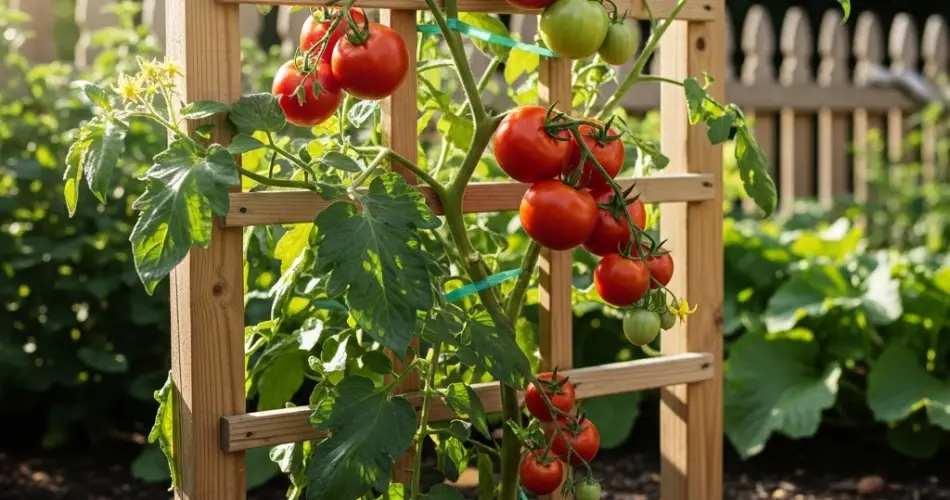
Growing tomatoes in containers is a popular choice for gardeners who want fresh, homegrown fruit but may lack the space for a full garden. Container gardening allows you to cultivate tomatoes on patios, balconies, or small backyard areas, making it accessible to urban and suburban gardeners alike. However, tomato plants can become heavy and sprawling as they grow, which is why supporting structures like rustic wooden trellises are essential. Not only do trellises provide practical support, but they also add charm and structure to your garden setup.
Why Use a Trellis for Container Tomatoes?
Tomatoes are naturally vining plants that need support to thrive. Without support, they can sprawl across the soil, making harvesting difficult and increasing the risk of disease. Contact with wet soil can cause rot, while dense foliage can trap moisture and encourage fungal growth. A sturdy trellis elevates the plant, promoting airflow around the leaves and stems, which reduces disease risk and makes it easier to tend to the plant. Additionally, vertical growth maximizes space in small gardens and containers, allowing you to grow more plants in limited areas.
Choosing the Right Wooden Trellis
A rustic wooden trellis is an excellent option for container-grown tomatoes. The natural look of wood complements the greenery and fruit of the tomato plant, creating an aesthetically pleasing garden feature. Cedar, redwood, or treated pine are popular choices because they resist rot and withstand outdoor conditions. When choosing a trellis, consider the height and width of your tomato variety. Indeterminate tomatoes, which continue to grow throughout the season, require taller trellises, while smaller determinate varieties need shorter structures.
Building or Installing Your Trellis
You can purchase pre-made trellises or build a simple one yourself using wooden stakes, slats, or lattice panels. For DIY trellises, measure your container and choose a design that fits securely without tipping over. A simple design involves two stakes placed behind the container, connected at the top with horizontal slats or crossbars to create support for the tomato stems. Ensure the trellis is firmly anchored in the container, either by inserting the base into the soil or attaching it to the sides of a sturdy planter. Stability is crucial, especially as tomato plants grow taller and heavier with fruit.
Planting Tomatoes with a Trellis
When planting tomatoes in containers with a trellis, start with a large container, at least 12 to 18 inches deep and wide, filled with nutrient-rich, well-draining soil. Incorporate compost or organic fertilizer to provide essential nutrients for growth. Plant your tomato seedling near the center of the container, close enough to the trellis so the vines can be guided upward. As the plant grows, gently tie stems to the trellis using soft ties, strips of fabric, or twine to prevent damage. Avoid tying too tightly, as tomato stems are delicate and can be easily crushed.
Sunlight, Watering, and Maintenance
Tomatoes require full sun for optimal growth, so position your container in a spot that receives at least six hours of direct sunlight daily. Water consistently to keep the soil evenly moist, but avoid waterlogging, which can damage roots. Mulching the soil helps retain moisture and suppress weeds, especially in larger container setups. Regular pruning also improves air circulation and encourages the plant to focus energy on fruit production rather than excessive foliage growth. Remove suckers—the small shoots that appear between the main stem and branches—to maintain a tidy, productive plant.
Harvesting and Trellis Care
Supporting tomatoes on a trellis makes harvesting easier. Ripe fruit is easy to spot and pick without bending over or disturbing the plant. Check regularly for disease or pests, such as aphids or whiteflies, and address issues promptly to protect your harvest. Wooden trellises may require seasonal maintenance, such as tightening joints, sanding rough edges, or applying a weatherproof sealant to prolong their life. Proper care ensures that the trellis remains sturdy and functional throughout the growing season.
Aesthetic and Functional Benefits
Beyond supporting plant growth, rustic wooden trellises enhance the overall look of your container garden. The natural wood adds charm and structure, creating a vertical garden feature that is both practical and visually appealing. They can also be paired with other climbing plants, such as beans or cucumbers, to create a mixed, multi-layered garden space.
Conclusion
Rustic wooden trellises are an indispensable tool for container tomato gardening. They provide vital support for vining plants, improve air circulation, reduce disease risk, and make harvesting easier. With proper sunlight, watering, and maintenance, your tomato plants can thrive, producing a bountiful harvest in limited spaces. Whether you choose to build your own trellis or purchase a ready-made structure, a wooden trellis combines practicality with rustic charm, turning a simple container garden into a productive and attractive feature of your backyard or balcony.


