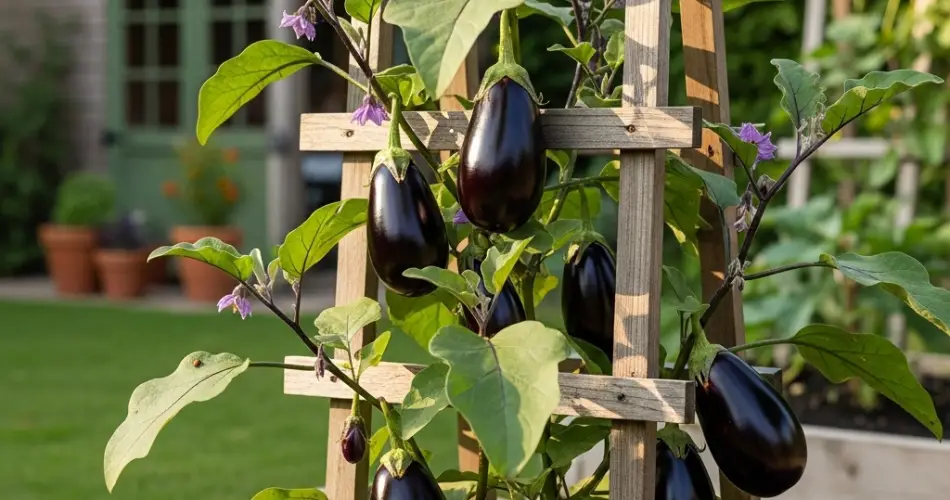
Eggplants, with their glossy purple fruits and rich, savory flavor, are a highlight of many summer gardens. While they are rewarding to grow, eggplants can also be a little demanding. Their stems, though sturdy at first, often struggle to hold the weight of developing fruits. Heavy winds, sudden rains, or simply the weight of multiple ripening eggplants can cause plants to topple, bend, or even snap. To avoid this, many gardeners turn to support systems.
For those practicing organic gardening, rustic wooden supports are an ideal choice. They blend naturally into the garden landscape, are easy to construct, and provide the sturdy reinforcement eggplants need to grow healthily and productively.
Why Eggplants Need Support
Unlike vining crops such as beans or cucumbers, eggplants don’t climb naturally. Instead, they grow upright into bushy plants with relatively brittle stems. As the fruits mature, they become surprisingly heavy, often pulling branches downward until they rest on the ground. This can lead to:
-
Stem breakage: Heavy fruits can snap branches.
-
Fruit rot: Eggplants lying on damp soil are prone to spots and fungal diseases.
-
Pest damage: Fruits touching the ground attract slugs and insects.
-
Reduced airflow: Plants sprawled on the soil are more susceptible to mildew and blight.
Providing proper support keeps plants upright, ensuring cleaner fruits, improved air circulation, and an overall healthier crop.
Benefits of Rustic Wooden Supports
Wooden supports have long been trusted in traditional gardens, and for good reason. For organic gardeners, they offer several unique advantages:
-
Natural material: Wood fits seamlessly into organic growing methods and decomposes safely over time.
-
Sustainability: Reclaimed or untreated wood can be repurposed, reducing waste.
-
Strength: Thick wooden stakes and frames can support even large-fruited eggplant varieties.
-
Rustic appeal: Their simple, natural look enhances the charm of a home garden.
-
Affordability: Many supports can be made from scrap wood or branches collected from pruning.
Types of Wooden Supports for Eggplants
1. Single Wooden Stakes
The simplest method is to drive a sturdy wooden stake into the soil near each plant. Tie the main stem loosely to the stake using twine or fabric strips.
-
Best for: Small gardens or individual plants.
-
Tip: Use stakes at least 3–4 feet tall to accommodate mature eggplants.
2. Teepee or Tripod Supports
Arrange three wooden poles in a triangle and tie them together at the top, forming a teepee shape. Plant eggplants at the base, tying stems to the poles as they grow.
-
Best for: Supporting multiple plants in one grouping.
-
Tip: Ideal for raised beds or areas where space is limited.
3. A-Frame Wooden Trellis
Construct two slanted wooden frames connected at the top. Eggplants can be tied along the slats, preventing sprawl and providing stability.
-
Best for: Larger plantings and heavy varieties.
-
Tip: This design also shades soil beneath, reducing weed growth.
4. Wooden Cages
Similar to tomato cages, wooden cages enclose each plant with vertical and horizontal slats. They keep stems upright and fruits off the ground.
-
Best for: Gardeners who prefer minimal tying.
-
Tip: Build cages wide enough to allow good airflow around foliage.
5. Rustic Branch Frames
For an eco-friendly option, use pruned tree branches as supports. These irregular, natural poles can be tied together to form unique, rustic frameworks.
-
Best for: Organic gardens aiming for low-cost, sustainable methods.
-
Tip: Use hardwood branches to ensure durability throughout the season.
How to Install and Maintain Wooden Supports
-
Prepare the soil: Before placing supports, enrich the soil with compost or organic matter to ensure strong plant growth.
-
Set supports early: Install stakes or frames at planting time to avoid disturbing roots later.
-
Tie plants gently: Use soft ties, twine, or strips of fabric. Avoid plastic ties that may cut into stems.
-
Check regularly: As plants grow and fruits develop, adjust ties and add extra supports if needed.
-
End-of-season care: At harvest’s end, clean and store wooden supports for reuse, or compost natural branches if they are no longer sturdy.
Organic Growing Tips for Healthy Eggplants
-
Mulch generously: A thick layer of straw or compost helps retain moisture and suppress weeds.
-
Water deeply: Eggplants prefer consistent watering to prevent bitterness in fruits.
-
Companion plant: Basil and marigolds nearby can deter pests naturally.
-
Fertilize organically: Use compost tea or seaweed extract for steady growth and fruiting.
-
Prune selectively: Removing excess leaves improves airflow and directs energy to fruit production.
Final Thoughts
Supporting eggplants with rustic wooden structures is both practical and aesthetically pleasing. These natural supports keep plants upright, fruits healthy, and gardens tidy, all while staying true to organic principles. Whether you choose simple stakes, handcrafted cages, or artistic branch frames, wooden supports provide the strength eggplants need to thrive.
For gardeners who value sustainability and charm in their growing spaces, rustic wooden supports are more than just a functional tool—they’re part of the organic gardening tradition that nurtures both plants and the earth. With the right supports in place, your eggplants will stand tall, resist damage, and reward you with a bountiful, chemical-free harvest.


