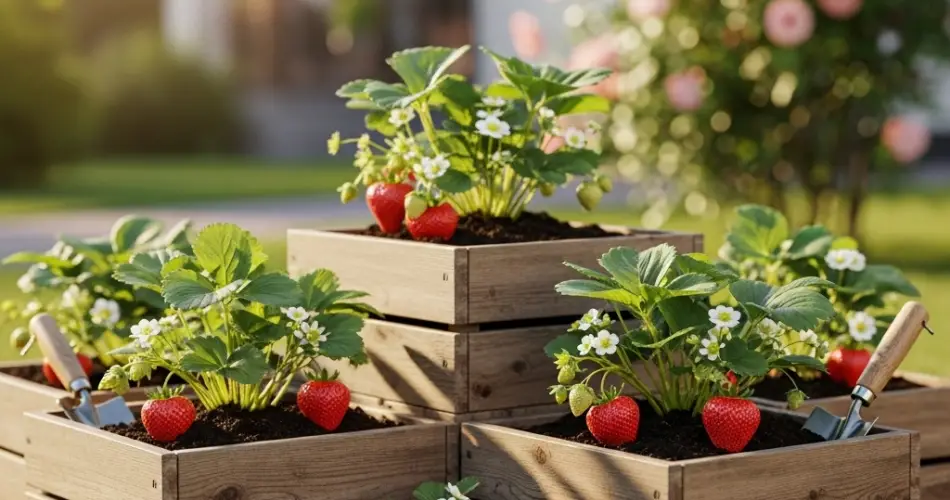
Strawberries are among the most cherished fruits, loved for their sweetness, vibrant red color, and refreshing flavor. Many people assume you need sprawling garden beds to grow them, but strawberries are incredibly adaptable and can thrive in small spaces. One of the most creative and efficient ways to cultivate them is by using rustic wooden planters. These containers not only provide the right growing environment but also add charm to your garden, balcony, or patio. With some preparation and consistent care, you can enjoy fresh strawberry harvests right at home.
Why Choose Wooden Planters for Strawberries?
Wooden planters are excellent for growing strawberries because they provide flexibility and a natural look that complements outdoor spaces. Unlike plastic or ceramic pots, wooden containers help regulate soil temperature, keeping roots cooler during hot days. Their rustic appearance also creates a cozy, traditional garden aesthetic that pairs well with the charm of strawberry plants.
Additionally, wooden planters allow you to control soil conditions more effectively. You can provide a nutrient-rich, well-draining mix, free from weeds or soil-borne pests that might be present in the ground. Elevating strawberries in planters also keeps the fruits cleaner and less prone to damage from crawling insects.
Selecting the Right Wooden Planter
The key to successful strawberry harvests lies in choosing an appropriate container. Strawberries don’t need very deep soil, so a planter around 8–10 inches deep is sufficient. The width, however, should be generous enough to give each plant room to spread its leaves and roots. Planters that are 12–18 inches wide provide ample space for multiple strawberry plants.
Ensure your planter has proper drainage holes at the bottom. Wooden boxes without drainage can retain excess water, which leads to root rot. Cedar, pine, and oak are good choices for planters since they are naturally resistant to decay. If you are repurposing old wood, avoid chemically treated lumber, as it may leach harmful substances into the soil.
Preparing the Perfect Soil
Strawberries thrive in loose, fertile soil that drains well. For wooden planters, a mix of potting soil, compost, and sand or perlite works well. Compost provides essential nutrients, while sand or perlite improves aeration and drainage. Aim for a soil pH between 5.5 and 7.0, slightly acidic to neutral.
Before planting, fill the wooden box with this prepared soil mixture, leaving about two inches of space at the top for watering and mulching. Adding a slow-release organic fertilizer at this stage ensures your strawberries receive balanced nutrition throughout their growing season.
Planting Strawberries
Strawberries can be planted as bare-root crowns or seedlings purchased from a nursery. Space the plants 10–12 inches apart, which gives them room to develop strong root systems and spread naturally. When planting, make sure the crown of the strawberry (the point where the roots meet the leaves) is level with the soil surface. Burying the crown too deep can cause rot, while leaving it too high may dry it out.
After planting, water thoroughly to help settle the roots into the soil. The initial watering is crucial for establishing healthy plants.
Sunlight and Watering
Strawberries need plenty of sunlight to produce abundant and sweet fruit. Position your wooden planter where it receives at least 6–8 hours of direct sunlight daily. If your growing space is partly shaded, choose everbearing or alpine varieties, which tend to tolerate less sun while still producing fruit.
Watering should be consistent. Wooden planters tend to dry out faster than garden beds, especially in warm weather. Check soil moisture daily and water whenever the top inch feels dry. Direct water at the soil level to avoid wetting the leaves, as damp foliage increases the risk of fungal diseases.
Mulching for Healthy Plants
Mulching is one of the best practices when growing strawberries in planters. A layer of straw, dried leaves, or pine needles helps retain soil moisture, regulate temperature, and keep the fruits from resting directly on the soil, which prevents rotting. Mulch also discourages weed growth, making maintenance easier.
Fertilizing and Care
Strawberries benefit from regular feeding. A balanced liquid fertilizer applied every 3–4 weeks supports healthy foliage and fruiting. Avoid fertilizers too rich in nitrogen, as they encourage leaf growth at the expense of fruit production.
You may notice runners—long stems that produce baby strawberry plants. If your goal is to maximize fruit yield, trim off most runners to direct energy back into the main plants. However, if you’d like to expand your strawberry garden, allow some runners to take root in small pots, which can later be transplanted into new wooden planters.
Harvesting Your Strawberries
Strawberries are typically ready to harvest about four weeks after flowering. Pick them when they are fully red and firm, as they will not ripen further once picked. Gently twist the fruit from the stem instead of pulling to avoid damaging the plant. Regular harvesting encourages continuous fruit production throughout the season.
Extending Your Strawberry Season
Planting different types of strawberries can give you a longer harvest. June-bearing varieties provide one large crop in early summer, while everbearing and day-neutral types yield smaller but continuous harvests throughout the growing season. Combining both types ensures you enjoy strawberries for months.
Final Thoughts
Rustic wooden planters bring both function and charm to strawberry gardening. They provide a controlled growing environment, make harvesting easier, and transform even the smallest outdoor space into a productive mini-garden. With the right care—sunlight, consistent watering, proper soil, and regular feeding—you can look forward to sweet, juicy strawberries that taste far better than store-bought varieties.
By growing strawberries in rustic wooden containers, you not only create a delightful focal point in your garden but also gain the satisfaction of harvesting fresh fruit right at home.


