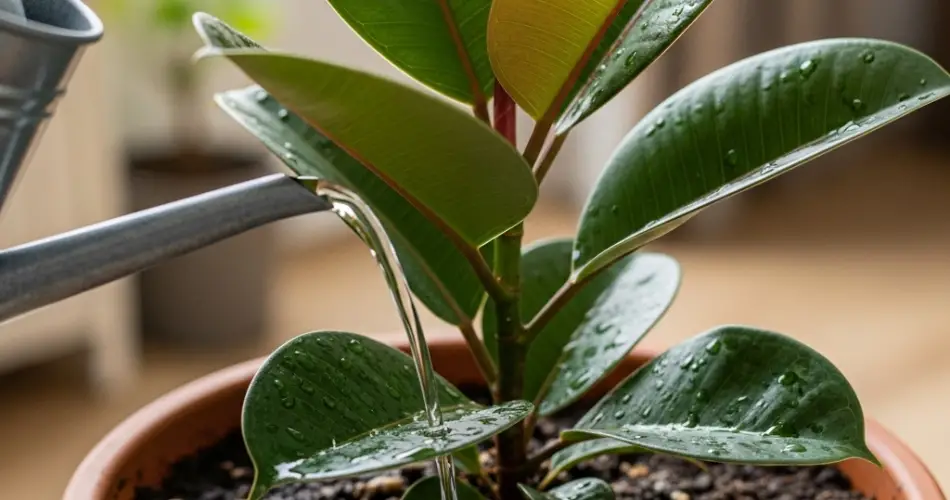
Rubber plants (Ficus elastica) are prized for their glossy, deep-green leaves and upright structure, making them a popular choice for indoor greenery. While they are fairly resilient, one of the most common reasons rubber plants struggle is improper watering—either too much or too little. Root health plays a critical role in the plant’s ability to grow and stay lush, and that health begins with understanding how to water correctly.
In this guide, we’ll explore the signs of healthy and unhealthy roots, how to water your rubber plant properly, and how to recover it if root damage has already begun.
The Importance of Root Health in Rubber Plants
Roots are the lifeline of your rubber plant. They absorb moisture, nutrients, and oxygen from the soil. Healthy roots are typically firm, white or tan in color, and spread throughout the potting mix. When roots are compromised due to improper watering, the plant will show stress through its foliage—drooping leaves, yellowing, leaf drop, or stunted growth.
Two major culprits affect rubber plant root health: overwatering and underwatering. Learning to balance the two is the key to success.
How to Water Your Rubber Plant the Right Way
Rubber plants prefer their soil to dry slightly between waterings. A good rule of thumb is to water when the top 1–2 inches (2.5–5 cm) of soil feel dry to the touch. The frequency will depend on temperature, humidity, light exposure, and the type of pot and soil used.
Steps for proper watering:
-
Check the soil first – Insert your finger into the soil. If it feels moist, wait a few more days.
-
Water evenly – Water around the base of the plant until it runs out the bottom drainage holes.
-
Empty excess water – Never leave standing water in the saucer. This can lead to root rot.
-
Adjust seasonally – In winter, the plant requires less water due to slower growth and reduced evaporation.
Signs of Overwatering
Overwatering is the most dangerous mistake when caring for a rubber plant. When roots are kept too wet, they cannot access the oxygen they need, leading to decay and fungal growth.
Look for these red flags:
-
Yellowing lower leaves that gradually fall off.
-
A musty smell coming from the soil or drainage holes.
-
Mushy, dark, or blackened roots (if you unpot the plant to check).
-
Soil that stays wet for days, even with moderate indoor temperatures.
If you catch overwatering early, let the plant dry out before watering again. If the roots are mushy and black, you’ll need to repot the plant in fresh soil after trimming away the damaged roots.
Signs of Underwatering
While rubber plants prefer not to sit in soggy soil, they still need consistent hydration. Underwatering is usually easier to recover from, but long periods of drought can damage roots just as much as rot.
Signs of underwatering include:
-
Drooping leaves that feel dry or curl inward.
-
Brown, crispy edges on the leaves.
-
Soil pulling away from the sides of the pot.
-
Very slow or stunted growth, especially in warmer months.
To fix underwatering, begin by slowly reintroducing water. Drench the soil thoroughly, allowing water to reach the root zone, and ensure it drains well. Do not flood a severely dry plant all at once; rehydrate it over a few days.
Choosing the Right Pot and Soil for Root Health
Watering alone won’t keep roots healthy. Your pot and soil choice matter just as much.
-
Pot selection – Always use a pot with drainage holes. Terracotta pots are ideal because they allow excess moisture to evaporate.
-
Soil mix – Use a well-draining potting mix with components like peat, perlite, and pine bark. Avoid dense or compacted soils that retain too much moisture.
Good airflow and drainage help prevent root suffocation and fungal infections.
When to Repot for Better Root Health
If your rubber plant’s roots are circling the bottom of the pot, poking through the drainage holes, or if the soil no longer retains moisture evenly, it’s time to repot. Choose a container 1–2 inches larger in diameter and refresh the potting mix.
Repotting also provides an opportunity to inspect the roots. Trim any dead or mushy sections before placing the plant in its new container.
Maintaining a Watering Routine
Set a regular watering schedule based on the plant’s environment. During the active growing season (spring and summer), your rubber plant will need more frequent watering. In fall and winter, reduce watering and monitor the plant for signs of stress.
-
Use a moisture meter for more accurate readings.
-
Group plants together to increase humidity naturally.
-
Avoid misting the leaves frequently; instead, focus on root hydration.
Conclusion
Proper watering is the foundation of healthy rubber plant roots. By understanding the signs of over- and underwatering, using the right soil and pot, and adjusting your routine to seasonal changes, you’ll support vigorous root development. A well-hydrated rubber plant rewards you with glossy leaves, new growth, and a resilient indoor presence for years to come.


