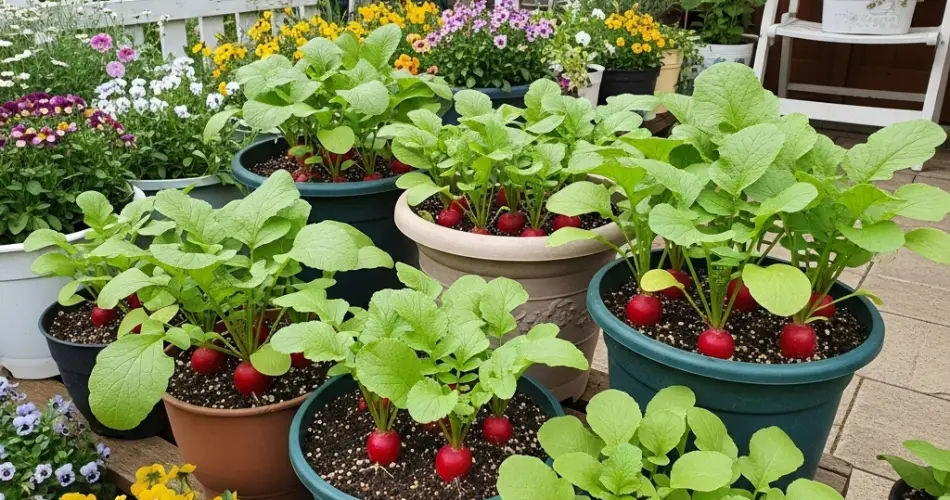
Radishes are one of the quickest and easiest vegetables to grow, making them perfect for beginners and experienced gardeners alike. If you don’t have a traditional garden bed, no worries—radishes grow beautifully in pots, containers, or even recycled household items. With minimal space and a little care, you can enjoy fresh, crisp radishes straight from your patio, balcony, or windowsill.
Whether you prefer them raw in salads or roasted as a side dish, growing radishes in containers is a fast, rewarding way to bring root vegetables from your pot to your plate in just a few weeks.
Why Grow Radishes in Pots?
Container gardening offers several advantages for radish growers:
-
Space-saving: Ideal for apartment dwellers or those with small yards.
-
Fast growth: Radishes mature quickly—often in just 25 to 35 days.
-
Pest control: Containers reduce the risk of soil-borne pests and diseases.
-
Custom soil: You control the growing medium, improving drainage and nutrient content.
-
Portability: Easily move pots to sunnier spots or out of harsh weather.
If you’re looking for a low-effort vegetable that delivers results quickly, radishes are the perfect choice.
Choosing the Right Container
Radishes don’t require deep containers, but they do need enough space for roots to expand. A pot with a minimum depth of 15–20 cm (6–8 inches) is usually sufficient for most varieties. Wider pots are better for growing multiple radishes at once.
Plastic, clay, or recycled containers like buckets or large food tubs can all work well. Just make sure they have drainage holes at the bottom to prevent water buildup.
Selecting Radish Varieties for Containers
Most radish types grow well in pots, but quick-growing, small-rooted varieties are especially suited for containers. Here are a few great choices:
-
Cherry Belle: A classic round red radish, ready in about 22 days.
-
French Breakfast: Oblong with red-and-white tips; mild and crisp.
-
Easter Egg: A colorful mix of red, purple, and white varieties.
-
Sparkler: Round, red-skinned with a white tip and crunchy texture.
Avoid larger or long-rooted types unless you have deep pots that can accommodate them.
Preparing the Soil
Radishes thrive in loose, well-draining soil that’s rich in organic matter. Use a high-quality potting mix combined with compost. Avoid compacted or clay-heavy soils, as they can hinder root growth and lead to misshapen radishes.
Fill your container almost to the top, leaving about 2–3 cm of space for watering. Smooth the surface and water lightly before sowing.
Sowing Radish Seeds
-
Spacing: Sow seeds directly into the soil about 1 cm deep and 3–5 cm apart. You can sprinkle them in rows or use a grid pattern.
-
Water Gently: Mist or lightly water the soil to avoid disturbing the seeds.
-
Light: Place the pot in a sunny location with at least 6 hours of sunlight per day. Radishes love cool weather and full sun.
Seeds usually germinate within 3–7 days.
Caring for Potted Radishes
-
Thinning: Once the seedlings are a few centimeters tall, thin them by snipping the weaker ones at the base, leaving about 5 cm between plants. This gives the roots room to grow.
-
Watering: Keep the soil consistently moist, but not soggy. In warm weather, check daily—dry soil can cause radishes to become woody or split.
-
Feeding: Radishes don’t need heavy feeding. If your soil is nutrient-rich, they’ll do fine. Otherwise, apply diluted compost tea or a mild organic fertilizer once during the growing cycle.
Common Issues and Troubleshooting
-
Bolting: Radishes can bolt (go to flower) in hot weather or if left in the soil too long. Harvest promptly to avoid this.
-
Poor Root Formation: Caused by overcrowding or insufficient sunlight. Make sure to thin seedlings and position pots in full sun.
-
Pests: Aphids or flea beetles may appear. Use natural insecticidal soap or cover seedlings with a mesh row cover.
Harvesting Radishes
Radishes grow fast—most are ready to harvest in 3 to 5 weeks after planting. Check the root size by gently brushing back the soil around the base of the leaves. If the root looks plump (usually about 2–3 cm in diameter), it’s time to harvest.
Grasp the base of the greens and pull the radish gently out of the soil. Rinse and enjoy them fresh, pickled, or roasted.
Don’t throw away the leaves—radish greens are edible and packed with nutrients. They can be sautéed, added to soups, or blended into smoothies.
Replanting for Continuous Harvest
Radishes can be planted in succession every 2 to 3 weeks for a steady supply. After harvesting, refresh the soil by mixing in a bit of compost and replant new seeds.
This cycle can continue throughout the cooler months of spring and fall. In hot summer climates, switch to a shady spot or wait for cooler weather to resume planting.
Final Thoughts
Growing radishes in pots is a simple, satisfying way to bring fresh produce to your table. With minimal space, quick turnaround, and little maintenance, it’s an excellent crop for anyone looking to dip their toes into home gardening. Whether you’re working with a tiny balcony or a sunny windowsill, radishes offer a reliable and tasty harvest in just a few short weeks.


