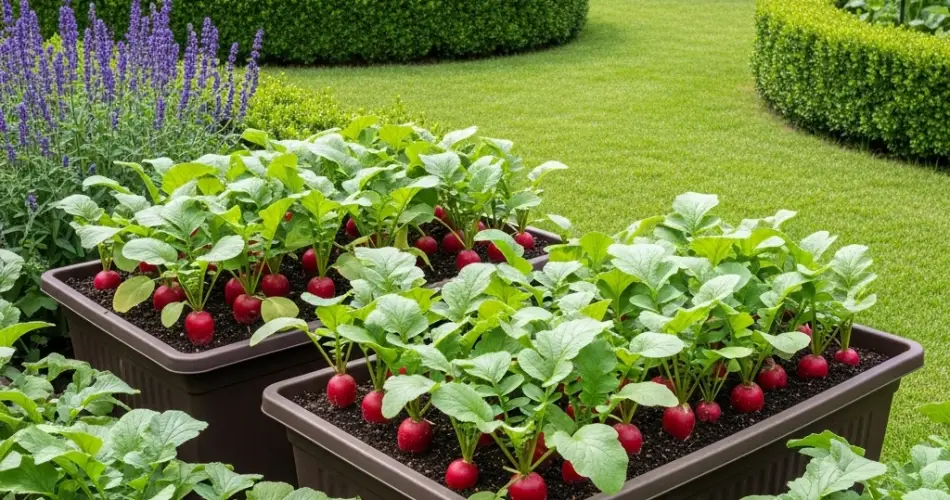
If you’re looking for a quick and easy crop to grow at home, radishes are an excellent choice. These crisp, peppery root vegetables grow rapidly and don’t require a lot of space, making them perfect for container gardening. Whether you’re a beginner or an experienced gardener, radishes offer fast results and continuous harvests with minimal effort.
With the right setup, you can grow radishes on your balcony, patio, windowsill, or even indoors under the right lighting. They’re a great option for urban gardening and for those with limited time and space.
Why Grow Radishes in Containers?
Radishes have a compact growth habit and shallow roots, making them especially well-suited for containers. Here are some benefits of container radish gardening:
-
Quick harvest – Many varieties mature in as little as 25–30 days
-
Space-saving – Perfect for balconies, small patios, or kitchen windows
-
Soil control – Allows you to create the perfect soil environment
-
Mobility – Move containers to follow the sun or protect from rain
-
Less weeding and pest exposure – Elevated containers help reduce pests and soil-borne diseases
Container gardening also lets you grow multiple batches of radishes throughout the season, making it a productive and rewarding choice.
Choosing the Right Radish Varieties
When selecting radish seeds for container gardening, opt for fast-growing, compact varieties. Here are some top picks:
-
Cherry Belle – Classic round, red-skinned radish with white flesh; ready in 22–25 days
-
French Breakfast – Oblong, red with white tips; mildly spicy and matures in 25–30 days
-
White Icicle – Slender white variety with crisp flesh; matures in about 30 days
-
Easter Egg – A colorful mix of red, pink, purple, and white radishes; ready in 30 days
-
Sparkler – Round with red tops and white bottoms; matures in 25–28 days
These varieties are quick to mature and thrive in shallow containers.
Materials You’ll Need
To get started, gather the following items:
-
Containers at least 6–8 inches deep with drainage holes
-
High-quality potting soil with compost or organic matter
-
Radish seeds (choose a fast-growing variety)
-
Watering can or spray bottle
-
Organic fertilizer (optional)
-
Labels (optional, if planting multiple varieties)
Step 1: Prepare Your Container
Choose a container wide enough to accommodate multiple radish plants spaced apart. You can use plastic pots, window boxes, repurposed buckets, or shallow grow trays. Just make sure the container has good drainage to prevent waterlogging.
Fill the container with a loose, well-draining potting mix enriched with compost. Avoid heavy or clay-like soils, which can hinder root development.
Step 2: Sow the Seeds
Sow radish seeds directly into the container, spacing them about 1 inch apart in rows that are 2–3 inches apart. Plant the seeds about ½ inch deep and cover them lightly with soil.
Gently water the container to moisten the soil evenly, being careful not to wash away the seeds. Label your container if you’re growing multiple varieties.
Step 3: Provide Sunlight and Water
Radishes grow best in full sun. Place the container in a location that receives at least 6 hours of direct sunlight daily. If growing indoors, a sunny windowsill or grow light can work as well.
Keep the soil evenly moist but not soggy. Radishes grow quickly, and inconsistent watering can lead to cracked roots or overly spicy flavor. Water when the top inch of soil feels dry to the touch.
Step 4: Thin the Seedlings
Once the radish seedlings are about 2 inches tall, thin them out by snipping the weaker ones at soil level. Leave about 2 inches of space between plants so the roots have room to develop properly.
Thinned seedlings can be added to salads or sandwiches as microgreens.
Step 5: Fertilize Lightly
If your soil is rich in compost, you may not need additional fertilizer. However, a light feeding of diluted organic fertilizer once or twice during the growing period can support healthy leaf and root development.
Avoid fertilizers high in nitrogen, as they promote leafy growth at the expense of root size.
Step 6: Monitor Growth and Watch for Pests
Keep an eye out for pests like aphids, flea beetles, or caterpillars. Since radishes grow quickly, pests are usually not a major issue in container setups. Neem oil or soapy water sprays can handle most minor infestations naturally.
Make sure your containers aren’t overcrowded, as this can lead to poor air circulation and diseases like powdery mildew.
Step 7: Harvest on Time
Most radish varieties are ready to harvest within 3–4 weeks. Check maturity by brushing away a little soil to view the top of the root. Harvest when the roots are about 1 inch in diameter.
To harvest, gently pull the radish from the soil by the base of the stem. Wash them well, and they’re ready to eat fresh or store in the fridge.
Don’t forget—radish greens are edible too. Use them in salads, stir-fries, or soups for extra nutrition.
Step 8: Succession Planting
To enjoy a continuous supply of radishes, plant a new batch every two weeks during the growing season. This method, known as succession planting, ensures a steady harvest throughout the year.
Once you harvest a container, recondition the soil with a bit of compost, and plant again.
Final Thoughts
Radishes are one of the fastest and easiest vegetables to grow in containers. With minimal care, a small sunny space, and just a few weeks of patience, you can enjoy crisp, colorful, and flavorful roots that are perfect for salads, snacks, and more.
If you’re new to gardening or simply looking for a low-maintenance crop, container-grown radishes are a smart, satisfying choice. Give it a try—and enjoy fresh radishes from your own home in just a few short weeks.


