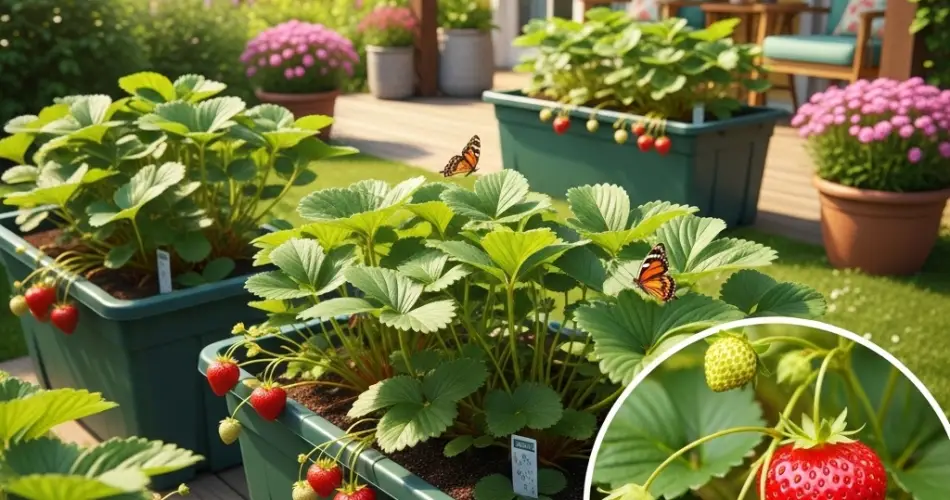
Growing strawberries at home is a rewarding experience, and you don’t need a large backyard to enjoy fresh, sweet berries. With the right setup, you can successfully grow strawberries on balconies, patios, rooftops, or even small terraces. These compact, low-maintenance plants are well-suited to container gardening, making them a perfect choice for urban gardeners and those with limited space.
By following a few basic steps and choosing the right variety, you can enjoy a steady supply of juicy, homegrown strawberries throughout the growing season.
Why Grow Strawberries in Small Outdoor Spaces?
Strawberries adapt well to pots, hanging baskets, grow bags, and even vertical towers—making them ideal for patios and balconies. They don’t require deep soil, and with regular sunlight, proper watering, and minimal maintenance, they thrive in container settings. In fact, container-grown strawberries tend to stay cleaner and are less susceptible to soil-borne pests and diseases.
This method also allows better control of soil quality and drainage, while keeping the plants off the ground and away from slugs or animals.
Best Strawberry Varieties for Containers
When growing strawberries in limited spaces, choose compact and productive varieties. Some of the best options include:
-
Alpine Strawberries (Fragaria vesca): Small, aromatic berries that grow well in shallow containers and don’t send out runners.
-
Everbearing Varieties (e.g., ‘Albion’, ‘Seascape’): Produce fruit in small bursts from spring through fall.
-
Day-Neutral Varieties: Less dependent on day length, offering continuous fruit production.
-
Compact June-Bearers: Offer a single large harvest and are suitable for larger containers or raised beds.
These varieties offer manageable plant sizes and generous fruit yields, perfect for small outdoor areas.
What You’ll Need
To get started, gather the following supplies:
-
Pots, hanging baskets, grow bags, or vertical towers (minimum depth of 15–20 cm)
-
High-quality potting mix (well-draining and rich in organic matter)
-
Strawberry seedlings or bare-root plants
-
A watering can or hose with a gentle spray setting
-
Organic fertilizer or compost
-
Mulch (straw, dried leaves, or coconut coir)
Preparing Your Containers
-
Choose the Right Container: Use containers with good drainage. Hanging baskets, window boxes, or tiered towers work especially well on balconies and patios. Make sure the container has drainage holes to prevent water from pooling.
-
Fill with Potting Mix: Use a light, fluffy potting mix enriched with compost. Avoid using garden soil, which can be too heavy and poorly draining for containers.
-
Arrange Plants: Space plants 15–20 cm apart if planting multiple in a single container. Position the crown (where the leaves meet the roots) at soil level—burying it too deeply can cause rot.
Optimal Growing Conditions
-
Sunlight: Strawberries need at least 6 hours of direct sunlight each day. Place the containers in a sunny corner of your balcony or patio. South- or west-facing spots are ideal.
-
Watering: Container-grown strawberries dry out faster than in-ground plants. Water when the top 2–3 cm of soil feels dry. Keep the soil evenly moist, but not waterlogged. Early morning watering is ideal to avoid leaf burn.
-
Fertilizing: Feed plants every two to three weeks with a balanced, organic liquid fertilizer. During flowering and fruiting, switch to a potassium-rich feed to promote berry development.
-
Mulching: Use a thin layer of mulch around the base of the plant to retain moisture, suppress weeds, and keep the fruit clean.
Flowering, Pollination, and Fruiting
Strawberries begin producing white or pale pink flowers before setting fruit. These flowers require pollination. If you’re growing outdoors, bees and other insects will naturally do the job. If pollinators are scarce, you can use a soft paintbrush to gently transfer pollen between flowers.
Once pollinated, fruits will begin to develop and ripen over the next few weeks. Monitor the berries daily during ripening, as they can mature quickly in warm weather.
Harvesting Tips
Strawberries are ready to harvest when they turn fully red and are firm to the touch. Use scissors or gently twist the berry from the stem to avoid damaging the plant. Harvest regularly to encourage continued fruiting, especially for everbearing and day-neutral varieties.
Pick in the morning when the berries are cool for the best flavor and shelf life.
Maintaining Healthy Plants
-
Prune damaged or yellowing leaves to maintain airflow and plant health.
-
Remove runners (long stems with new plantlets) unless you want to propagate more plants. Removing them encourages energy to stay in fruit production.
-
Watch for pests like aphids, spider mites, or birds. Use netting to protect ripening fruit and natural sprays like neem oil for insects.
-
Rejuvenate plants annually by replanting runners or refreshing soil to maintain vigor and productivity.
Final Thoughts
Growing strawberries on balconies and patios is a simple and enjoyable way to bring fresh fruit into your daily life. With a sunny spot, the right variety, and consistent care, you can enjoy sweet, ripe strawberries even in the smallest of spaces. This form of urban gardening brings color, greenery, and flavor to your outdoor area—and lets you enjoy the taste of freshly picked strawberries just steps from your kitchen.


