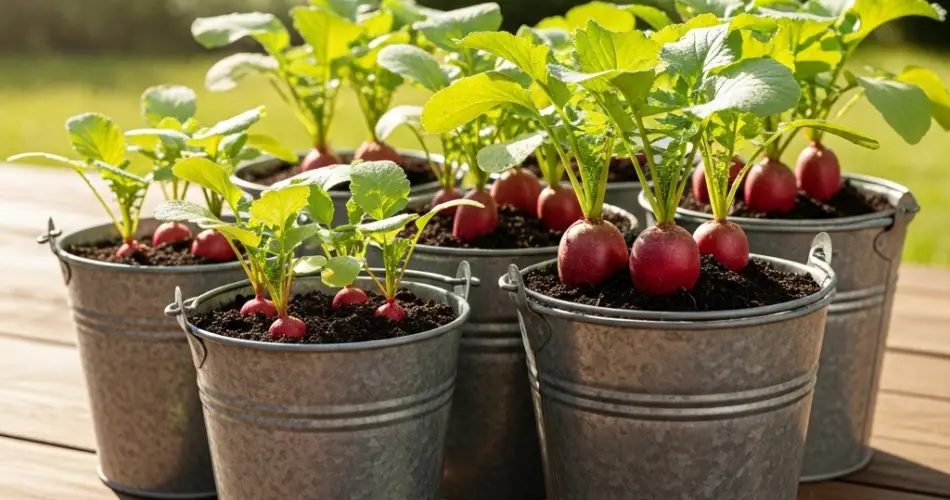
Radishes are fast-growing, crunchy, and flavorful root vegetables that are ideal for small-space gardening. Their compact size and short growing season make them perfect for container gardening, including pots, buckets, and small planters. Growing radishes in buckets allows gardeners to enjoy fresh, homegrown produce even when outdoor space is limited. With proper soil preparation, container selection, and care, radishes can thrive in compact setups, producing multiple harvests throughout the season.
Why Grow Radishes in Buckets?
Buckets provide excellent conditions for cultivating radishes because they allow precise control over soil, drainage, and nutrient levels. Container-grown radishes are less susceptible to common garden pests and soil-borne diseases, and buckets can be moved to optimize sunlight exposure. Additionally, container gardening saves space and makes it easy to grow radishes in urban environments or small patios, where traditional garden beds are not feasible.
Choosing the Right Buckets
Selecting the appropriate bucket is essential for healthy radish growth. Radishes have shallow roots, so a container 8–10 inches deep is typically sufficient. The diameter should be at least 12 inches to accommodate multiple radish plants while allowing proper spacing. Plastic, food-grade, or clay buckets work well, provided they have adequate drainage holes at the bottom to prevent waterlogging. A stable bucket is important to avoid tipping when watering or during windy conditions.
Preparing the Soil Mix
Radishes require loose, well-draining soil to form crisp, flavorful roots. A compacted or heavy soil will hinder root expansion, leading to misshapen or stunted radishes. A recommended bucket soil mix includes:
-
50% garden soil or loamy topsoil: Provides structure and essential minerals.
-
30% compost or well-rotted organic matter: Adds fertility, retains moisture, and promotes healthy microbial activity.
-
20% perlite, coarse sand, or vermiculite: Ensures drainage and prevents soil compaction.
Mix all components thoroughly and lightly moisten the soil before planting. Avoid dense clay soils, which can retain too much water and reduce root quality. A well-prepared soil mix encourages rapid root development and supports continuous growth.
Planting Radishes
Radishes can be grown directly from seeds. Plant seeds about ½ inch deep and 1–2 inches apart. Once seedlings emerge, thin them to 2–3 inches apart to allow adequate room for root expansion. Proper spacing is crucial for forming round, uniform roots and maintaining good airflow between plants, which reduces the risk of disease. For continuous harvests, sow seeds in successive batches every two to three weeks.
Sunlight and Growing Conditions
Radishes thrive in full sun but tolerate partial shade, making them adaptable for container gardening in urban environments. Aim for at least 4–6 hours of sunlight daily for optimal growth. In very hot climates, partial afternoon shade can prevent radishes from bolting, a process in which plants flower prematurely and produce woody, bitter roots. Buckets can be moved to capture the best light conditions or protect plants from extreme temperatures.
Watering and Mulching
Consistent moisture is essential for container-grown radishes. Buckets dry out faster than in-ground soil, so check moisture levels regularly. Water deeply to keep the soil evenly damp but avoid waterlogging, which can cause root rot. Mulching the soil surface with straw, shredded leaves, or other organic materials helps retain moisture, regulate temperature, and suppress weeds. Proper watering and mulching support rapid root growth and improve overall plant health.
Fertilization and Nutrient Management
Radishes are relatively light feeders but benefit from nutrient-rich soil, especially for continuous growth. Incorporate a slow-release organic fertilizer or compost into the soil before planting. During the growing season, supplement with liquid fertilizer or compost tea every few weeks to maintain nutrient levels. Avoid excessive nitrogen, which can encourage leafy growth at the expense of root development. Balanced nutrition ensures crisp, flavorful radishes and healthy greens.
Pest and Disease Management
Container-grown radishes are generally resilient, but occasional issues may occur. Common pests include aphids, flea beetles, and root maggots, while fungal diseases like damping-off can affect seedlings. Regularly inspect plants, remove affected foliage, and use organic pest control methods such as neem oil or insecticidal soap if needed. Good spacing, proper drainage, and consistent care reduce most problems.
Harvesting Radishes
Radishes are quick to mature, typically ready for harvest 25–40 days after planting, depending on the variety. Harvest roots when they reach the expected size, as leaving them in the soil too long can result in tough, woody textures. You can also harvest the leaves for salads or cooking while roots continue developing. Frequent harvesting encourages continuous growth and ensures a steady supply of fresh radishes.
Conclusion
Growing radishes in buckets is an effective and rewarding way to cultivate fresh, homegrown vegetables in small spaces. By selecting suitable containers, preparing loose, nutrient-rich soil, and providing consistent care—including sunlight, water, and fertilization—gardeners can grow healthy radishes from seed to harvest. Container gardening allows flexibility, control over growing conditions, and the ability to enjoy crisp, flavorful radishes year-round, even in limited-space settings. With proper attention and care, your bucket-grown radishes can provide a bountiful harvest for salads, cooking, and snacks.


