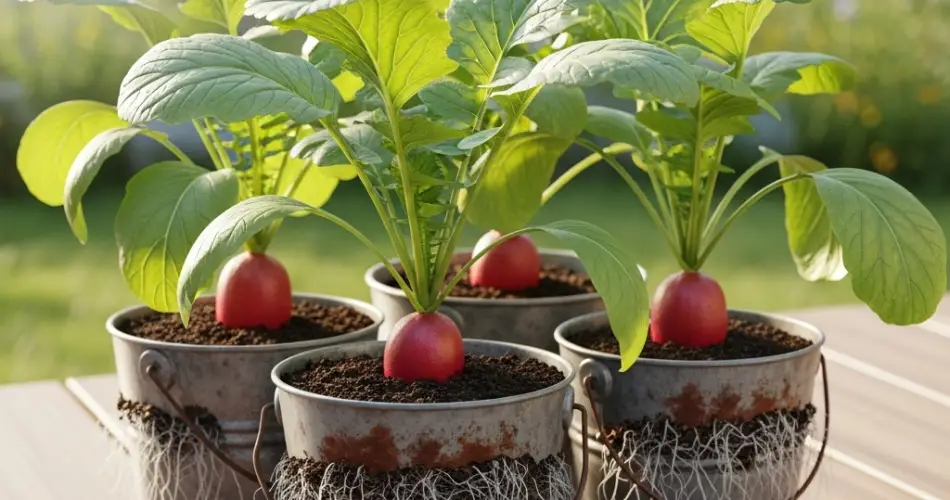
Radishes are a fast-growing, nutrient-rich vegetable that adds a refreshing crunch and peppery flavor to salads, sandwiches, and garnishes. For gardeners with limited space, growing radishes in balcony buckets provides an excellent way to enjoy fresh produce year-round. Container gardening allows for control over soil quality, drainage, and sunlight, ensuring healthy, crisp roots. This guide provides practical tips for growing radishes successfully in buckets, even in small urban spaces.
Why Bucket Gardening Works for Radishes
Radishes are ideal for container gardening due to their shallow root system and short growing cycle. Buckets provide a controlled environment for soil, moisture, and nutrients, allowing radishes to grow quickly and develop their characteristic crisp texture. For urban gardeners, balcony or patio bucket planting maximizes space, reduces pest exposure, and simplifies harvesting compared to traditional garden beds.
Choosing the Right Radish Variety
Radishes come in several varieties, including small round types like “Cherry Belle,” long varieties like “French Breakfast,” and colorful heirlooms such as “Watermelon” radishes. For container gardening, small to medium-sized varieties are best, as they mature quickly and do not require deep soil. Fast-growing varieties allow for successive planting, giving a continuous harvest throughout the season. Selecting the right variety ensures consistent production and tender, flavorful roots.
Selecting and Preparing Buckets
Choose buckets that are at least 6–8 inches deep to accommodate the radishes’ roots. Wider buckets are preferable if planting multiple seeds in the same container. Ensure proper drainage by drilling several holes at the bottom of the bucket. For added drainage, place a thin layer of gravel or small stones at the bottom. Clean the buckets thoroughly before planting to prevent disease and ensure a healthy growing environment.
Soil Preparation
Radishes prefer loose, well-draining, nutrient-rich soil with a slightly acidic to neutral pH of 6.0–7.0. Use a high-quality potting mix enriched with compost or well-rotted organic matter to provide essential nutrients and retain moisture. Adding perlite or sand improves aeration and prevents the soil from compacting, which is critical for smooth, uniform root development. Avoid heavy garden soil, which can impede root growth and cause misshapen radishes.
Planting Radishes
Sow radish seeds directly into the prepared soil about ½ inch deep, spacing them 1–2 inches apart. Thin seedlings as they grow to allow adequate space for roots to develop fully. Water gently after planting to settle the soil around the seeds. Radishes typically germinate within 4–10 days, making them one of the quickest crops to harvest from seeds, which is ideal for continuous planting and urban gardening.
Sunlight Requirements
Radishes grow best in full sun, ideally receiving six hours or more of direct sunlight per day. Place your balcony buckets in a sunny location to promote healthy growth, crisp roots, and vibrant foliage. In hotter climates, providing partial shade during peak afternoon hours can prevent leaf scorching while maintaining optimal root development. Adequate sunlight is essential for rapid growth and high-quality radish production.
Watering and Care
Consistent moisture is key to producing tender, crisp radishes. Keep the soil evenly moist, watering whenever the top inch of soil feels dry. Avoid overwatering, which can lead to root rot and reduce flavor. Mulching the soil surface with straw or shredded leaves helps retain moisture, regulate soil temperature, and prevent weeds. Regularly remove yellowing or damaged leaves to maintain plant health and improve airflow.
Fertilization
Radishes are light feeders but benefit from occasional feeding for optimal growth. Use a balanced, water-soluble fertilizer or organic compost tea every two to three weeks. Avoid over-fertilizing with high nitrogen products, as this can lead to excessive leaf growth at the expense of root development. Proper nutrition ensures crisp, flavorful radishes with excellent texture and taste.
Harvesting Radishes
Radishes are typically ready to harvest within 25–35 days, depending on the variety. Check the roots’ size by gently brushing away some soil; harvest when they are firm and fully colored. Frequent harvesting encourages new growth and allows for successive planting for a continuous supply. Morning harvests provide the freshest, crispiest radishes for salads, snacks, or cooking.
Advantages of Balcony Bucket Gardening for Radishes
Growing radishes in balcony buckets maximizes limited space, simplifies watering and fertilization, and reduces pest and disease issues. Containers are portable, allowing you to optimize sunlight or protect plants from harsh weather. Additionally, bucket-grown radishes are easy to harvest, clean, and enjoy immediately, providing fresh, homegrown produce with minimal effort.
Conclusion
Balcony bucket gardening makes growing radishes practical, convenient, and rewarding, even in urban environments. By selecting the right variety, preparing nutrient-rich soil, providing adequate sunlight, and maintaining consistent watering and fertilization, you can cultivate crisp, flavorful radishes year-round. Container-grown radishes offer a fast, productive, and satisfying way to enjoy fresh vegetables straight from your balcony garden.


