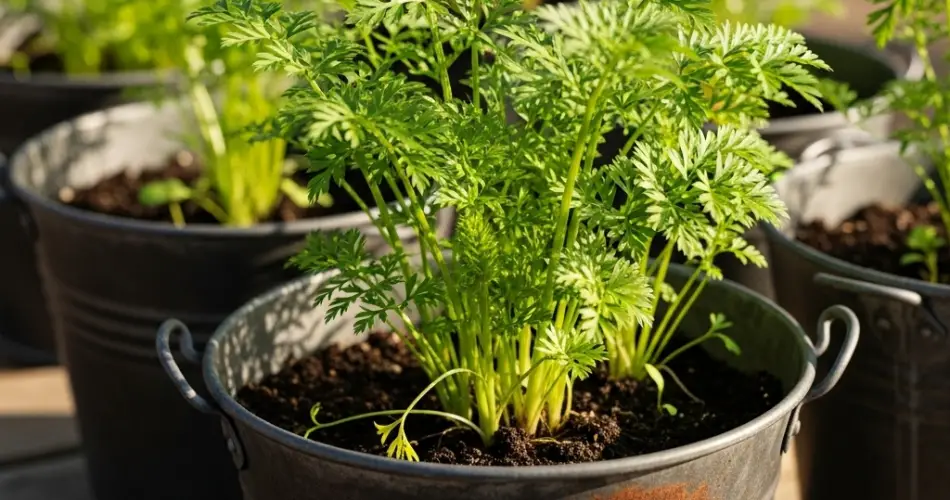
Carrots are a popular and nutritious root vegetable that can thrive in small spaces when grown in containers. Bucket gardening is an ideal solution for urban gardeners or those with limited outdoor space, as it provides control over soil, drainage, and growing conditions. With the right techniques, even small spaces can yield healthy, flavorful carrots. This guide offers practical tips for successfully growing carrots in buckets from planting to harvest.
Why Grow Carrots in Buckets?
Bucket gardening allows gardeners to control soil quality, water, and nutrients more precisely than in traditional garden beds. Carrots prefer loose, well-draining soil for proper root development, and containers prevent soil compaction that can lead to misshapen roots. Growing carrots in buckets also protects them from pests, such as root maggots, and reduces the risk of diseases like root rot. Additionally, containers are portable, enabling you to move them to capture optimal sunlight or protect plants from harsh weather.
Choosing the Right Buckets
Selecting the appropriate bucket is critical for healthy carrot growth. Carrots have long taproots, so containers should be at least 12 inches deep. For larger varieties, deeper buckets of 14–16 inches are preferable. The diameter should be at least 12 inches to accommodate multiple plants without overcrowding. Plastic or food-grade buckets are lightweight and easy to move, while clay or ceramic pots offer stability. Ensure that the bucket has adequate drainage holes to prevent waterlogging, which can stunt growth and encourage disease.
Preparing the Soil Mix
Carrots require loose, fertile, and well-draining soil to develop straight, smooth roots. Compacted or heavy soil can cause twisted or forked carrots. A recommended bucket soil mix includes:
-
50% loamy garden soil or topsoil: Provides structure and essential minerals.
-
30% compost or well-rotted organic matter: Adds fertility, retains moisture, and supports beneficial soil microorganisms.
-
20% perlite, coarse sand, or vermiculite: Improves drainage and prevents compaction.
Mix all components thoroughly and lightly moisten the soil before planting. Avoid clay-heavy soils that can hinder root growth and lead to poor harvest quality. Properly prepared soil encourages straight, tender roots and supports overall plant health.
Planting Carrots
Carrots are typically grown from seeds. Sow seeds about ¼ inch deep and 1–2 inches apart. Once seedlings emerge, thin them to 2–3 inches apart to allow enough room for root expansion. Proper spacing is essential to prevent crowding, which can result in stunted or misshapen roots. For continuous harvests, consider sowing seeds in batches every two to three weeks. Buckets provide flexibility for succession planting, allowing fresh carrots to be harvested over an extended period.
Sunlight and Growing Conditions
Carrots thrive in full sun but tolerate partial shade, making them suitable for container gardening in urban settings. Aim for at least six hours of sunlight per day to encourage optimal root development. Buckets can be moved to catch the best light or protect young seedlings from extreme heat or frost. Carrots also prefer cooler temperatures during root formation, so early spring or fall plantings often yield the best results.
Watering and Mulching
Consistent moisture is vital for container-grown carrots. Buckets dry out faster than garden soil, so regular watering is necessary. Keep the soil evenly moist but avoid overwatering, which can lead to root rot. Mulching with straw, shredded leaves, or other organic materials helps retain moisture, regulate soil temperature, and suppress weeds. Proper watering and mulching contribute to tender, flavorful roots and healthy foliage.
Fertilization and Nutrient Management
Carrots require balanced nutrients for optimal growth. Incorporate a slow-release organic fertilizer or compost into the soil before planting. During the growing season, supplement with liquid fertilizer or compost tea every two to three weeks to maintain nutrient levels. Avoid excessive nitrogen, which can encourage leafy growth at the expense of root development. Adequate phosphorus and potassium support strong root formation and maximize yield.
Pest and Disease Management
Container-grown carrots are generally less prone to pests and diseases than in-ground crops, but occasional issues may occur. Common pests include aphids and carrot flies, while fungal problems like damping-off may affect seedlings. Inspect plants regularly, remove affected foliage, and use organic pest control methods when necessary. Good spacing, well-draining soil, and proper care reduce most problems, ensuring healthy root development.
Harvesting Carrots
Carrots are usually ready to harvest 60–80 days after sowing, depending on the variety. Harvest when roots reach the desired size, gently loosening the soil around the base before pulling them up. Carrots can be harvested individually or in groups, and younger roots often offer sweeter, more tender flavor. Succession planting allows for multiple harvests over the season, making container-grown carrots highly productive.
Conclusion
Growing carrots in buckets is a practical and rewarding approach for small-space gardeners. By selecting appropriate containers, preparing loose, nutrient-rich soil, providing sufficient sunlight, watering consistently, and managing nutrients and pests, gardeners can cultivate healthy carrots from seed to harvest. Container gardening offers flexibility, convenience, and control over growing conditions, allowing you to enjoy fresh, homegrown carrots even in limited spaces. With attention to detail and consistent care, your bucket-grown carrots can provide multiple harvests of vibrant, flavorful roots throughout the season.


