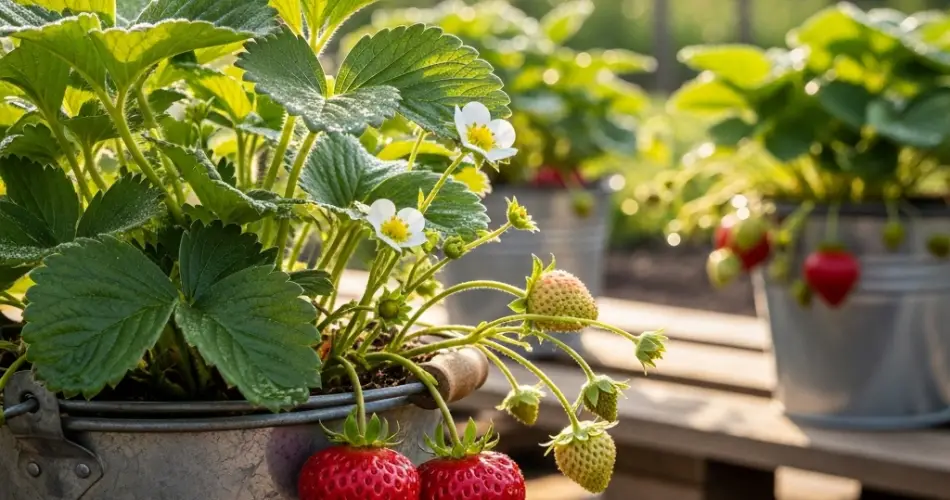
Strawberries are a favorite among gardeners and food lovers alike. Their sweet flavor, vibrant color, and versatility make them perfect for fresh eating, desserts, smoothies, and preserves. For urban gardeners or anyone with limited space, growing strawberries in buckets provides an ideal solution. Container gardening allows for better control over soil quality, drainage, and sunlight, resulting in healthy plants and abundant fruit. This guide explains how to cultivate strawberries successfully using simple bucket gardening methods.
Why Bucket Gardening Works for Strawberries
Strawberries are well-suited for container gardening because they have shallow roots and require well-draining soil. Buckets provide a controlled environment for consistent moisture, nutrient availability, and root development. For small-space gardeners, such as those with balconies, patios, or terraces, buckets make it possible to grow strawberries even without a traditional garden plot. Container-grown strawberries are easier to maintain, harvest, and protect from pests compared to in-ground planting.
Choosing the Right Strawberry Variety
Selecting the right variety is crucial for container gardening success. Strawberries are generally categorized into three types: June-bearing, everbearing, and day-neutral. June-bearing varieties produce a single large crop in early summer, while everbearing and day-neutral varieties produce fruit continuously throughout the growing season. For buckets, everbearing or day-neutral varieties such as “Albion,” “Seascape,” or “Tristar” are ideal because they yield fruit multiple times and perform well in limited space.
Selecting and Preparing Buckets
Choose buckets that are at least 10–12 inches deep and wide enough to accommodate multiple strawberry plants. Ensure proper drainage by drilling several holes in the bottom to prevent waterlogging, which can cause root rot and fungal diseases. Adding a thin layer of gravel or small stones at the bottom improves drainage. Clean the buckets thoroughly before planting to eliminate potential disease-causing agents. Hanging baskets, stackable containers, or repurposed buckets with side drainage holes can also be used for creative growing setups.
Soil Preparation
Strawberries thrive in nutrient-rich, well-draining soil with a slightly acidic pH between 5.5 and 6.5. Fill your buckets with a high-quality potting mix enriched with compost or well-rotted organic matter. Compost improves soil fertility and moisture retention while providing essential nutrients for fruit development. Adding perlite or sand enhances drainage, ensuring that the roots remain healthy. Avoid dense garden soil, which can compact in containers and restrict root growth.
Planting Strawberries
Strawberries can be grown from seedlings, bare-root plants, or small potted plants. When planting, position the crown—the point where leaves emerge—just above the soil surface to prevent rot. Space the plants 8–12 inches apart to allow sufficient room for growth and airflow. Water gently after planting to settle the soil around the roots, ensuring the plants establish quickly.
Sunlight Requirements
Strawberries require full sun for optimal growth and fruit production, ideally 6–8 hours per day. Place your buckets in a sunny location on your balcony, patio, or rooftop. In hot climates, light afternoon shade can prevent leaf scorching while maintaining healthy fruit development. Adequate sunlight ensures vibrant fruit color, sweet flavor, and robust plant growth.
Watering and Maintenance
Consistent moisture is critical for strawberries. Water the plants regularly to keep the soil evenly moist but not waterlogged. Mulching the surface with straw, shredded leaves, or coconut coir helps retain moisture, regulate soil temperature, and reduce weed growth. Regularly remove dead leaves and runners that are not needed for propagation to promote healthy growth and higher fruit yields.
Fertilization
Strawberries benefit from regular feeding. Use a balanced, slow-release fertilizer or organic compost tea every two to three weeks during the growing season. Fertilization encourages strong leaf growth, healthy root development, and abundant fruiting. Avoid over-fertilizing with high nitrogen products, as this can promote excessive foliage at the expense of fruit production.
Harvesting Strawberries
Strawberries are ready to harvest when they are fully red, firm, and aromatic. Pick the fruit carefully, leaving the green cap attached to preserve freshness. Regular harvesting encourages the plants to produce more fruit throughout the season. For continuous production, use everbearing or day-neutral varieties, and remove older flowers to redirect energy to developing berries.
Advantages of Bucket Strawberry Gardening
Growing strawberries in buckets allows gardeners to maximize limited space, monitor water and nutrients effectively, and reduce exposure to pests. Containers are portable, enabling repositioning for optimal sunlight or protection from extreme weather. Additionally, container-grown strawberries are easier to maintain, cleaner to harvest, and often produce sweeter, more flavorful fruit compared to in-ground planting.
Conclusion
Strawberry bucket gardens are an excellent solution for urban gardeners or anyone with limited space who wants fresh, homegrown fruit. By choosing the right variety, preparing nutrient-rich soil, providing adequate sunlight, and maintaining consistent watering and fertilization, you can enjoy a healthy and productive harvest. Container-grown strawberries are not only convenient and space-efficient but also provide delicious, nutritious fruit to enhance meals throughout the growing season.


