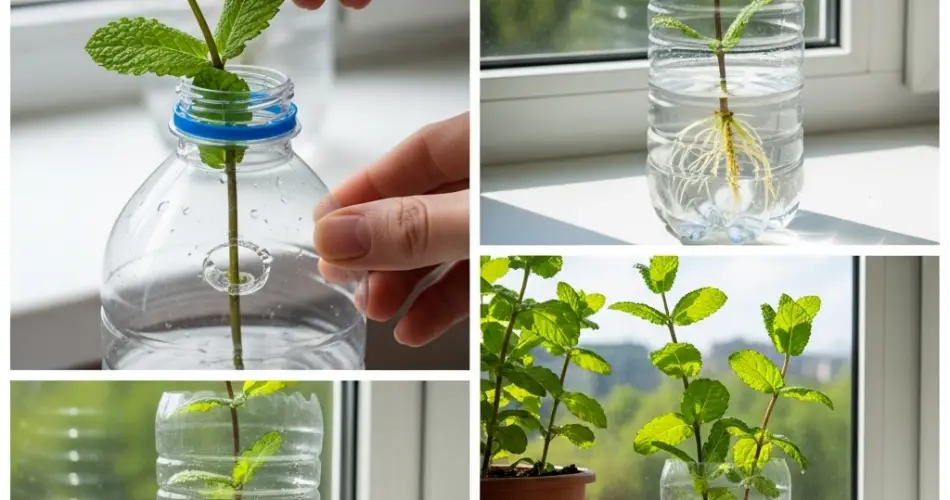
Mint is one of the easiest and fastest herbs to propagate. Known for its vigorous growth and refreshing scent, mint is a staple in teas, desserts, salads, and many home remedies. With just a few simple tools and an empty plastic bottle, you can quickly propagate mint at home—no garden required.
Using plastic bottles to grow mint is a space-saving, budget-friendly, and eco-conscious method. This setup works well whether you’re starting an indoor herb corner or adding greenery to your balcony. By recycling bottles, you not only save money but also reduce plastic waste while growing something useful and fragrant.
Why Propagate Mint?
Mint propagation is a quick way to multiply your herb supply. Instead of buying new plants or starting from seed, you can take a small cutting from an existing plant and root it in just a few days. This method offers several benefits:
-
Speed: Mint roots quickly, often in under a week.
-
Simplicity: It requires minimal tools and no special gardening skills.
-
Consistency: Cloning ensures the new plants have the same flavor and qualities as the parent plant.
-
Cost-effectiveness: One plant can produce dozens of new ones.
Whether you’re growing mint for culinary use, pest control, or decoration, propagation is the fastest way to expand your supply.
Materials You’ll Need
To get started, gather the following items:
-
A healthy mint plant
-
A clean plastic bottle (1-liter or 2-liter size)
-
Sharp scissors or a knife
-
Clean water
-
A sunny window or well-lit balcony
Optional:
-
Small stones or mesh for drainage if planting in soil
-
Potting mix if you plan to root directly in soil
Step 1: Take Mint Cuttings
Start with a healthy mint plant, preferably one that has several strong, green stems.
-
Use clean scissors or a knife to cut a 4–6 inch stem just below a leaf node (the point where a pair of leaves grows from the stem).
-
Remove the lower leaves, leaving the top 2–3 sets intact. This helps reduce moisture loss and directs the plant’s energy toward root formation.
Cut multiple stems if you want to root several plants at once.
Step 2: Prepare the Plastic Bottle
You can use your bottle as a hydroponic rooting station or a soil-based container. Here’s how to set up both:
Water Propagation Method:
-
Cut the plastic bottle in half.
-
Invert the top part and place it into the bottom like a funnel.
-
Fill the bottom with water so the stem can reach it through the mouth of the bottle.
-
Place the cut mint stem into the top portion so that the leaf node is submerged in the water.
Soil Propagation Method:
-
Cut the top off the bottle to make an open container.
-
Poke 3–4 small drainage holes in the bottom.
-
Add a layer of small stones or mesh for drainage (optional).
-
Fill with a well-draining potting mix and moisten it.
-
Insert the cut stem into the soil, covering the lower node.
Both methods work well. Water propagation is faster for visible rooting, while soil propagation eliminates the need for transplanting later.
Step 3: Provide Proper Light and Conditions
Place the bottle near a bright window or sunny balcony. Mint thrives in indirect sunlight while rooting. Avoid direct harsh sunlight during the early days, as this may stress the cuttings.
Keep the water clean by changing it every 2–3 days if using the water method. For soil propagation, keep the soil moist but not soggy.
In ideal conditions, roots will begin forming within 4–7 days in water. In soil, you may see new top growth in 10–14 days, which indicates successful rooting.
Step 4: Transplant or Grow On
Once roots in water reach about 2 inches long, you can transfer the mint to a larger pot or garden bed. If you rooted it in soil directly, you can allow it to continue growing in the same container or replant it as needed.
To transplant:
-
Gently remove the cutting from water.
-
Plant it in a pot filled with moist, well-draining soil.
-
Place the pot in a sunny spot, and water regularly to help the roots establish.
Mint grows quickly once rooted, so be ready to trim and manage the plant often.
Ongoing Care for Mint
Mint is a low-maintenance herb, but it can become invasive if left unchecked. Container growing is ideal for keeping it under control.
Here’s how to care for your propagated mint:
-
Sunlight: At least 4–6 hours of sunlight daily.
-
Watering: Keep soil consistently moist but not soggy.
-
Harvesting: Snip the tips regularly to encourage bushier growth.
-
Fertilizer: A mild liquid fertilizer every few weeks during the growing season.
Final Thought: Propagating mint in plastic bottles is a fast, practical, and sustainable way to expand your herb garden. Whether you’re starting with one plant or building a full collection, this method ensures a steady supply of fresh mint at home—all with minimal effort and maximum results.


