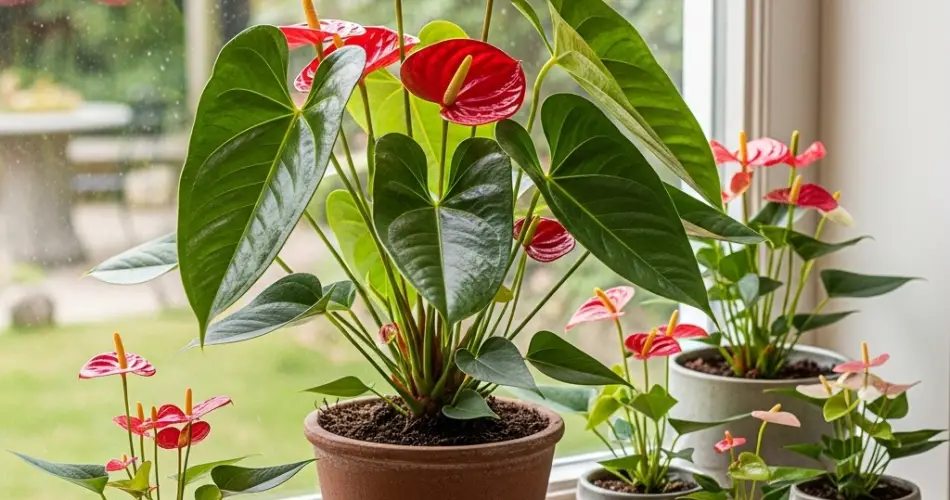
Anthuriums, with their glossy foliage and brightly colored spathes, are one of the most captivating tropical plants to grow indoors. Proper potting techniques and care are essential to help them thrive and bloom consistently. If you’re aiming to grow lush, flowering anthuriums at home, focusing on soil, light, and watering is key.
This guide breaks down the best practices for potting anthuriums, so you can enjoy their beauty for years to come.
Choosing the Right Pot
Anthuriums prefer shallow, well-draining containers. Since their roots are sensitive to excess moisture, the pot you select plays a crucial role in preventing root rot.
What to look for:
-
A container with multiple drainage holes.
-
Slightly snug fit around the root ball—not too large.
-
Terracotta or ceramic pots are ideal for airflow and moisture regulation.
Avoid oversized pots, which can retain water for too long and lead to root issues. If the container is decorative and lacks drainage, place a plastic nursery pot inside it to ensure water can drain freely.
Ideal Potting Mix
The right soil mixture mimics the anthurium’s natural environment—light, airy, and rich in organic matter. These plants are epiphytes in the wild, growing on trees rather than in dense soil.
Recommended potting mix components:
-
1 part orchid bark or coco husk (for aeration)
-
1 part perlite or pumice (for drainage)
-
1 part peat moss or coconut coir (for moisture retention)
Some gardeners also add a handful of charcoal or horticultural sand to enhance drainage and prevent root disease.
Avoid regular garden soil or heavy potting mixes that retain too much water. A mix intended for orchids or aroids is often suitable with minor adjustments.
Lighting Needs
Anthuriums thrive in bright, indirect light. Too much direct sunlight can burn their leaves, while too little light can prevent them from blooming.
Ideal light conditions:
-
Place near an east- or north-facing window for morning sun and filtered light.
-
Use sheer curtains to soften harsh afternoon rays from south- or west-facing windows.
-
If natural light is insufficient, supplement with a grow light to maintain blooming cycles.
Signs of inadequate light include dull leaves, leggy growth, and failure to produce flowers. If you notice these symptoms, move your plant to a brighter location out of direct sun.
Proper Watering Technique
Watering is perhaps the most critical aspect of anthurium care. These plants prefer consistently moist soil—but not soggy. Overwatering is the most common reason anthuriums struggle indoors.
Watering tips:
-
Check the top inch of soil before watering. If it feels dry, it’s time to water.
-
Water thoroughly until water drains from the bottom of the pot.
-
Always empty the saucer to avoid standing water.
-
In warmer months, water once a week. In cooler months, reduce to every 10–14 days depending on indoor humidity.
Humidity tip: Anthuriums love high humidity (ideally 60–80%). If your home is dry, especially in winter, increase moisture with:
-
A room humidifier
-
A pebble tray with water beneath the pot
-
Regular misting of the leaves
-
Grouping plants together to create a microclimate
Fertilizing for Growth and Blooms
Although not heavy feeders, anthuriums benefit from light fertilizing during the active growing season.
Fertilizing recommendations:
-
Use a balanced liquid fertilizer diluted to half-strength (such as 20-20-20).
-
Apply every 6–8 weeks during spring and summer.
-
To encourage flowering, switch to a bloom booster fertilizer higher in phosphorus (like 10-30-20).
Over-fertilizing can lead to salt buildup in the soil and brown leaf tips. If this happens, flush the soil with water to wash away excess nutrients.
General Maintenance Tips
To keep your anthurium healthy and attractive:
-
Wipe the leaves occasionally with a damp cloth to remove dust.
-
Prune off spent flowers and yellow leaves to direct energy to new growth.
-
Rotate the pot every couple of weeks to ensure even exposure to light.
Repot every 2–3 years when the plant becomes root-bound or the soil breaks down and compacts. Refreshing the potting mix at this time will boost growth and flower production.
Troubleshooting Common Issues
-
Brown leaf tips: Often caused by low humidity, underwatering, or fertilizer burn.
-
Yellowing leaves: Can result from overwatering, poor drainage, or low light.
-
Lack of blooms: Check light levels first. Bright indirect light is essential for flowering.
Conclusion
Potting anthuriums successfully is all about balance—well-draining soil, consistent moisture without sogginess, and just the right amount of filtered light. With these key elements in place, your anthurium will reward you with its signature waxy spathes and lush foliage.
Whether you’re a seasoned houseplant enthusiast or a beginner, understanding the specific needs of your anthurium will help it thrive as a vibrant, long-lasting addition to your indoor garden.


