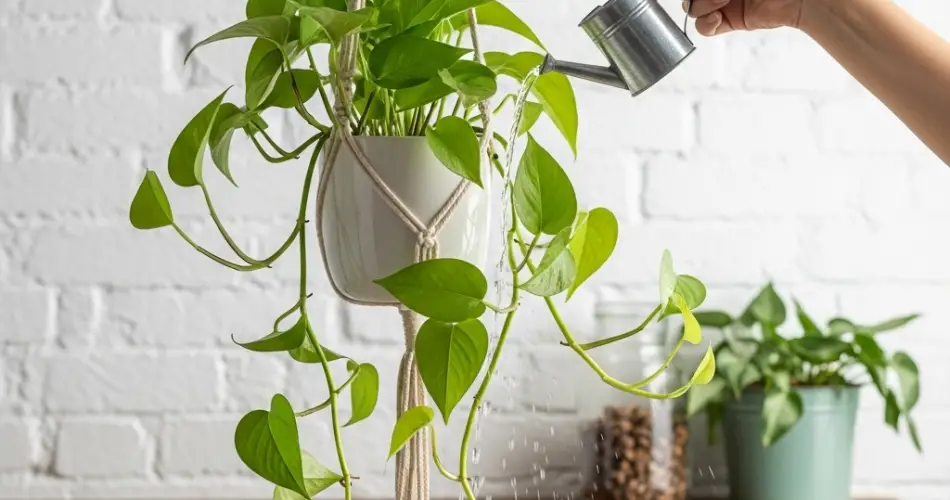
Pothos (Epipremnum aureum), also known as devil’s ivy, is one of the easiest houseplants to grow, making it perfect for beginners. Its heart-shaped leaves and trailing vines can quickly bring life to any space, and its forgiving nature makes it tolerant of a variety of indoor conditions. However, even this low-maintenance plant can suffer if watered incorrectly.
Watering is one of the most important aspects of pothos care. Knowing when and how to water ensures strong roots, lush foliage, and steady growth. This guide walks you through everything a beginner needs to know to maintain a healthy pothos with a simple, stress-free watering schedule.
Why Proper Watering Matters
Pothos is native to tropical regions, where it grows in warm, humid conditions and climbs trees in search of light. In nature, it receives frequent but light rainfall, and its roots are never waterlogged. When grown indoors, the challenge is to provide enough moisture without drowning the roots.
Both underwatering and overwatering can cause problems. While pothos can recover from temporary neglect, consistently improper watering may lead to yellowing leaves, root rot, or slowed growth.
How Often Should You Water Pothos?
There’s no one-size-fits-all answer because watering depends on various factors like room temperature, humidity, pot size, and light levels. On average, you should water pothos every 7 to 10 days. However, this is only a rough estimate.
The best approach is to feel the soil before watering. Stick your finger about 1 to 2 inches into the potting mix:
-
If the soil feels dry at that depth, it’s time to water.
-
If it’s still moist, wait a few more days and check again.
Pothos prefers slightly dry soil between waterings. Letting the soil dry out a bit helps prevent root rot and encourages the roots to grow deeper in search of moisture.
Watering Technique: Do It Right
When it’s time to water, do it thoroughly and evenly. Here’s how:
-
Water deeply: Add water slowly until you see it draining from the bottom of the pot. This ensures the entire root system is hydrated.
-
Empty the saucer: Never let the plant sit in standing water, which can lead to root rot.
-
Use room-temperature water: Cold water can shock the roots and slow down the plant’s growth.
-
Avoid light surface watering: Always saturate the soil so that moisture reaches all parts of the root ball.
Pothos does not need to be misted, although it can benefit from occasional leaf wiping to remove dust.
Choosing the Right Pot and Soil
Proper drainage is key to preventing overwatering problems. Always use a pot with drainage holes. Pothos is highly adaptable and can thrive in many types of containers, but the pot must allow excess water to escape.
The ideal soil for pothos is a well-draining potting mix. A standard indoor plant mix usually works well, but you can improve drainage by mixing in a bit of perlite or orchid bark. Avoid heavy or compacted soils, which tend to hold too much water.
Signs You’re Overwatering or Underwatering
Your pothos will show visible signs if the watering routine isn’t quite right.
Overwatering symptoms:
-
Yellowing leaves, especially lower ones
-
Soggy, dark soil that smells musty
-
Drooping or soft stems
-
Brown or black spots on leaves
Underwatering symptoms:
-
Wilting or curling leaves
-
Dry, crispy leaf edges
-
Soil pulling away from the pot’s sides
-
Slowed or stunted growth
If you notice any of these signs, adjust your watering habits. Let the soil dry out more between waterings, or water more deeply depending on the issue.
Seasonal Watering Tips
Pothos has different water needs depending on the season. During the growing months (spring and summer), the plant will use more water and dry out faster. In these months, check the soil every 5 to 7 days.
In fall and winter, growth slows, and the soil stays moist longer. During this time, watering every 10 to 14 days may be sufficient. Always adjust based on actual soil moisture rather than the calendar.
Extra Tips for Healthy Watering
-
Use a moisture meter: This tool helps beginners avoid guesswork and provides accurate readings of soil moisture.
-
Water in the morning: This allows excess moisture to evaporate during the day, reducing the risk of root rot.
-
Rotate your plant: Even light exposure encourages even growth and balanced water use.
-
Wipe leaves occasionally: Clean leaves can better absorb light, which supports healthy growth and water usage.
Final Thoughts
Watering pothos doesn’t need to be complicated. By checking the soil before watering, using the right technique, and adjusting your routine to the plant’s environment, you’ll be able to keep your pothos thriving. With a little attention and consistency, this beautiful, trailing plant will reward you with vibrant green leaves and robust growth for years to come.


