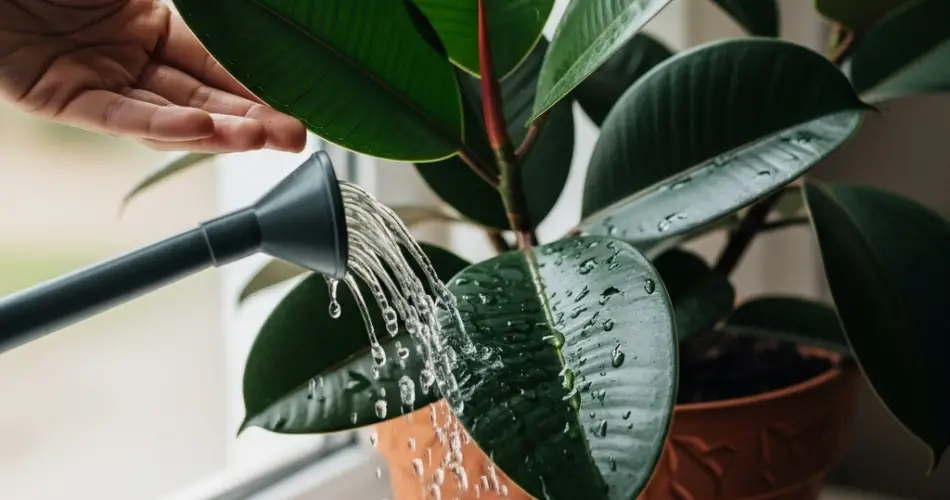
The rubber plant (Ficus elastica) is a striking, easy-to-grow houseplant known for its broad, glossy leaves and bold presence in any room. Native to the tropical forests of Southeast Asia, this resilient plant is relatively low-maintenance, but proper watering is essential to its health. One of the most common issues with rubber plants is overwatering, which can lead to root rot and leaf drop. Understanding how to water your rubber plant correctly will ensure it thrives and grows steadily indoors.
Understanding Rubber Plant Water Needs
Rubber plants are accustomed to warm, humid climates and periods of heavy rain followed by dry spells. Indoors, they adapt well to moderate humidity and indirect light, but they are sensitive to soggy soil. These plants prefer to dry out slightly between waterings and need a balance that keeps the soil moist but never wet.
Like many tropical plants, rubber plants like consistency. They thrive when their watering schedule matches their natural growth rhythm—more water during the growing season and less during dormancy.
How Often Should You Water?
The frequency of watering depends on several environmental factors:
-
Season: During spring and summer, rubber plants actively grow and need more water—usually once a week. In fall and winter, growth slows, and watering every two to three weeks may be enough.
-
Light and Temperature: Plants in bright, indirect light and warmer rooms will need water more frequently than those in cooler or low-light spaces.
-
Pot Size and Material: Plants in smaller or terracotta pots (which dry out quickly) will need more frequent watering than those in plastic or larger containers.
A good rule of thumb is to water when the top 2 inches (about 5 cm) of soil feel dry to the touch.
How to Check If It’s Time to Water
Instead of following a fixed schedule, always check the soil first. Use your finger to feel the moisture level about 2 inches down. If it’s dry at that depth, it’s safe to water. If it’s still slightly moist, wait a few days and check again.
You can also monitor the plant’s behavior. If the leaves begin to droop or curl slightly, that’s often a sign the plant is ready for water. However, prolonged drooping can also indicate overwatering—so checking the soil is key.
How to Water a Rubber Plant Properly
-
Water Thoroughly
When watering, give the plant a deep soak. Pour water slowly over the soil until it begins to drain from the bottom. This ensures all the roots receive moisture. -
Empty Drainage Trays
Always use pots with drainage holes and empty the saucer beneath the plant after watering. Standing water encourages root rot. -
Use Room Temperature Water
Avoid using cold water from the tap. Let the water sit for a few hours to reach room temperature and allow any chlorine to dissipate. -
Water the Soil, Not the Leaves
Direct water onto the soil, not the leaves or stems. Wet leaves can promote fungal problems and leaf spotting, especially in humid environments.
Signs of Overwatering
Rubber plants are highly susceptible to overwatering. Watch for these signs:
-
Yellowing or dropping leaves
-
Mushy or blackened stems at the base
-
Constantly wet or soggy soil
-
Foul or musty odor from the pot
-
Mold or fungus on the soil surface
If you suspect overwatering, reduce the frequency and allow the soil to dry completely. In severe cases, remove the plant from its pot, trim away any rotting roots, and repot with fresh, dry soil.
Signs of Underwatering
While rubber plants are drought-tolerant to an extent, underwatering over time will stress the plant. Signs include:
-
Dry, crispy leaf edges
-
Curling or drooping leaves that don’t bounce back
-
Slow or stunted growth
-
Soil pulling away from the sides of the pot
If your plant shows these signs, give it a thorough watering and adjust your routine to prevent extended dryness.
Choose the Right Soil and Pot
Good drainage is essential to prevent overwatering issues. Use a well-aerated, fast-draining soil mix—such as a standard houseplant mix amended with perlite or pine bark.
Select a pot with drainage holes. Terracotta pots are especially effective as they help moisture evaporate, keeping the soil drier.
Seasonal Watering Adjustments
In the warmer months, the rubber plant’s growth accelerates and so does its water usage. During these periods, increase watering frequency slightly. In winter, cut back on watering to avoid excess moisture around the roots when the plant is dormant.
Final Thoughts
Watering a rubber plant the right way means listening to the soil and observing your plant’s signals. With a consistent routine that allows the soil to dry slightly between waterings, you’ll avoid root rot, leaf drop, and other issues. The reward is a lush, healthy rubber plant that continues to grow tall and strong, bringing elegance to your indoor space.


