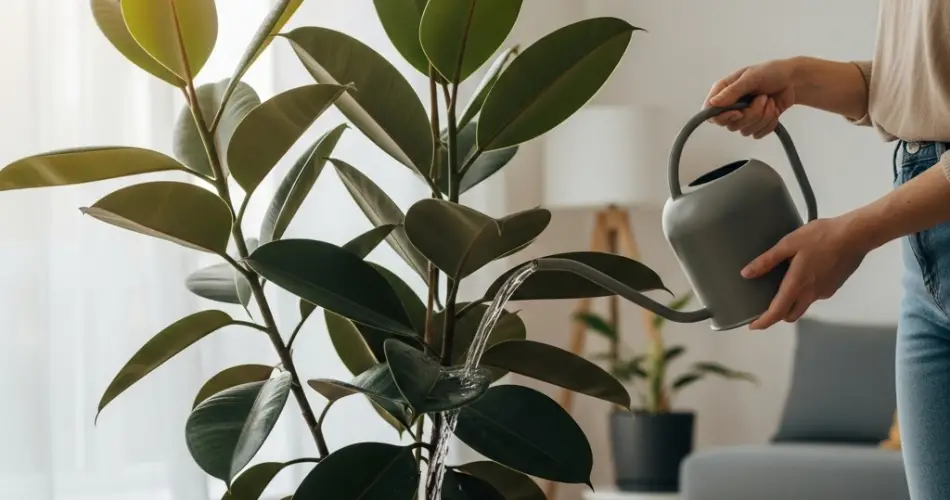
The rubber plant (Ficus elastica) is a striking and easy-to-care-for indoor plant known for its broad, shiny leaves and upright growth. It adds a bold, tropical vibe to any room, and with the right care—especially proper watering—it can thrive for many years. While rubber plants are relatively low-maintenance, improper watering is one of the most common causes of dull foliage, leaf drop, and root rot.
If your goal is to maintain vibrant, glossy green leaves and healthy growth, mastering the rubber plant’s watering needs is essential. This guide offers simple and effective watering tips to help your rubber plant look its best.
Understanding the Rubber Plant’s Water Requirements
Rubber plants originate from Southeast Asia, where they grow in warm, humid forests. In their natural habitat, they receive consistent moisture during the rainy season and drier conditions during certain times of the year. When grown indoors, they prefer a balance: not too dry, not too wet.
These plants store moisture in their thick stems and leaves, which makes them moderately drought-tolerant. However, they are sensitive to waterlogged soil, which can lead to root rot. Striking the right balance between hydration and drainage is the key to success.
How Often Should You Water a Rubber Plant?
There’s no universal watering schedule because factors like temperature, humidity, light exposure, pot size, and soil type all affect how often your rubber plant needs water. That said, a general guideline is to water every 7 to 10 days during the growing season (spring and summer), and every 2 to 3 weeks in the cooler months (fall and winter).
The most reliable method is to check the soil before watering. Insert your finger about 2 inches into the potting mix:
-
If the soil feels dry at that depth, it’s time to water.
-
If it still feels moist, wait a few more days and test again.
Avoid watering on a fixed schedule—always base your decision on the moisture level of the soil.
The Correct Way to Water a Rubber Plant
To promote healthy roots and glossy leaves, water your rubber plant thoroughly but infrequently. Here’s the proper technique:
-
Use room-temperature water to avoid shocking the roots.
-
Water slowly and deeply, allowing moisture to soak through the soil until it begins to drain from the bottom of the pot.
-
Empty the saucer or tray after watering. Never let the plant sit in standing water.
-
Water the soil directly, not the leaves. This prevents fungal issues and keeps the foliage clean.
It’s better to water less frequently but deeply, rather than adding small amounts of water often. Deep watering encourages roots to grow downward, resulting in a stronger and healthier plant.
Soil and Pot Selection Matter
The pot and soil you choose can make a big difference in how well your rubber plant handles watering. Always use a pot with drainage holes to prevent water from accumulating at the bottom.
The soil should be loose, well-aerated, and fast-draining. A mix of potting soil with added perlite, bark, or coarse sand helps provide the ideal environment for root health. Avoid dense or clay-heavy soil, which retains too much moisture and increases the risk of rot.
Repot your rubber plant every 1–2 years to refresh the soil and inspect the roots for health.
Signs of Overwatering vs. Underwatering
Recognizing the signs of watering problems will help you take corrective action early.
Signs of overwatering:
-
Yellowing lower leaves
-
Wilting despite wet soil
-
Mushy or black roots
-
Leaf drop, especially from the bottom up
Signs of underwatering:
-
Drooping or curled leaves
-
Dry, brittle leaf edges
-
Soil pulling away from the pot sides
-
Slow or stunted growth
If you notice signs of overwatering, allow the soil to dry out before watering again. In severe cases, you may need to repot the plant with fresh, dry soil and trim away any rotted roots. For underwatering, give the plant a deep soak and adjust your routine to water more consistently.
Seasonal Adjustments
Rubber plants grow more actively during the warmer months and will need more water during this time. In contrast, their growth slows during fall and winter, and their water needs drop significantly.
During the dormant season, water less frequently and avoid letting the plant sit in damp soil for extended periods. Always test the soil before each watering.
Final Tips for Glossy, Green Leaves
-
Keep the leaves clean by gently wiping them with a damp cloth to remove dust.
-
Use filtered or distilled water if your tap water contains fluoride or chlorine, which can cause brown leaf edges.
-
Position your rubber plant in bright, indirect light to encourage healthy growth and proper water absorption.
-
Avoid frequent relocation of the plant, as this can stress it and affect its water needs.
By understanding your rubber plant’s natural preferences and using the right watering techniques, you’ll enjoy healthy, vibrant foliage and strong growth all year round.


