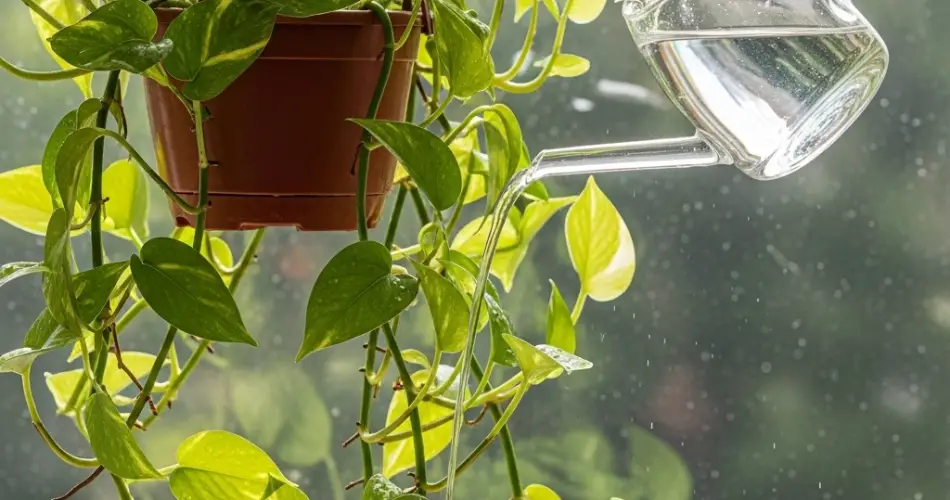
Pothos (Epipremnum aureum) is one of the easiest houseplants to care for, known for its trailing vines, vibrant foliage, and air-purifying abilities. However, even this low-maintenance beauty can suffer if watering is done incorrectly. Over time, common watering mistakes can cause yellow leaves, root rot, or stunted growth. Whether you’re a beginner or an experienced plant parent, understanding the proper watering techniques is essential for keeping your pothos thriving.
This guide explores the most frequent watering errors and offers practical tips to avoid them.
Mistake #1: Overwatering
One of the most common mistakes with pothos is watering too frequently. While pothos enjoys moist soil, it does not tolerate soggy roots. Constantly wet soil suffocates the roots, leading to root rot—a deadly condition that’s hard to reverse once it sets in.
How to Avoid It:
Let the top 1–2 inches (2.5–5 cm) of soil dry out before watering again. Use your finger to test the moisture level. If the soil feels dry at your fingertip, it’s time to water. If it’s still damp, wait a few more days. It’s also wise to lift the pot and feel its weight—light means dry, heavy means moist.
Mistake #2: No Drainage Holes
A beautiful pot without a drainage hole may look great, but it can easily trap water at the bottom, even if you’re careful. Excess water that can’t escape creates the perfect conditions for root rot and fungus growth.
How to Avoid It:
Always choose pots with drainage holes. If your decorative pot doesn’t have one, use it as a cache pot—simply place a plastic nursery pot with drainage holes inside it. This way, excess water can drain freely, and you can remove the plant to empty any collected water.
Mistake #3: Using a Watering Schedule Instead of Checking Soil
Following a fixed watering schedule—such as watering every Sunday—may work for some plants, but it can be harmful to pothos. Factors like indoor humidity, temperature, light exposure, and pot size all affect how fast the soil dries out.
How to Avoid It:
Adjust your watering frequency based on the environment. During summer or in brighter rooms, pothos may need water every 7–10 days. In winter or low-light spaces, watering every 2–3 weeks may be sufficient. Always check the soil before reaching for the watering can.
Mistake #4: Underwatering
While pothos is drought-tolerant, letting the plant dry out too often or for too long can cause issues. The leaves may wilt, curl, or develop brown edges and crispy tips. In extreme cases, pothos vines may stop growing altogether.
How to Avoid It:
Don’t ignore signs of dehydration. If the leaves start to droop or feel thin, it’s likely time to water. Keep an eye on plants during hot spells or if placed near heating vents or sunny windows. Water thoroughly when needed, ensuring the entire root ball gets moisture.
Mistake #5: Inconsistent Watering
Alternating between periods of drought and excess moisture stresses the plant. It can result in uneven growth, yellowing leaves, or root damage over time.
How to Avoid It:
Aim for consistency. Water when the top of the soil feels dry and make sure the plant receives enough water to saturate the root zone each time. Avoid just splashing a little water on top—water should run out of the drainage holes during each session.
Mistake #6: Watering at the Wrong Time of Day
Watering during the hottest part of the day, especially when the plant is in direct sunlight, can cause stress. In warm conditions, water may evaporate too quickly before reaching the roots.
How to Avoid It:
Water early in the morning or in the evening. This allows moisture to reach the roots effectively and helps the plant recover from dry conditions without shock. Avoid wetting the leaves unnecessarily, especially in high humidity, to prevent fungal issues.
Mistake #7: Using Cold Tap Water
Some indoor plants, including pothos, are sensitive to very cold water. It can shock the roots, slow down growth, or in rare cases, damage the plant tissue.
How to Avoid It:
Use room-temperature water. You can let tap water sit for a few hours to allow chlorine to dissipate and the temperature to equalize. Rainwater or filtered water is also ideal if your tap water is hard or chemically treated.
Final Thoughts
Pothos may be a forgiving plant, but it still requires proper care to flourish. Watering may seem simple, but getting it right can mean the difference between a lush, fast-growing plant and a struggling one. By paying attention to your plant’s environment and checking soil moisture regularly, you can avoid these common watering mistakes and enjoy healthy pothos vines that trail beautifully throughout your home.


