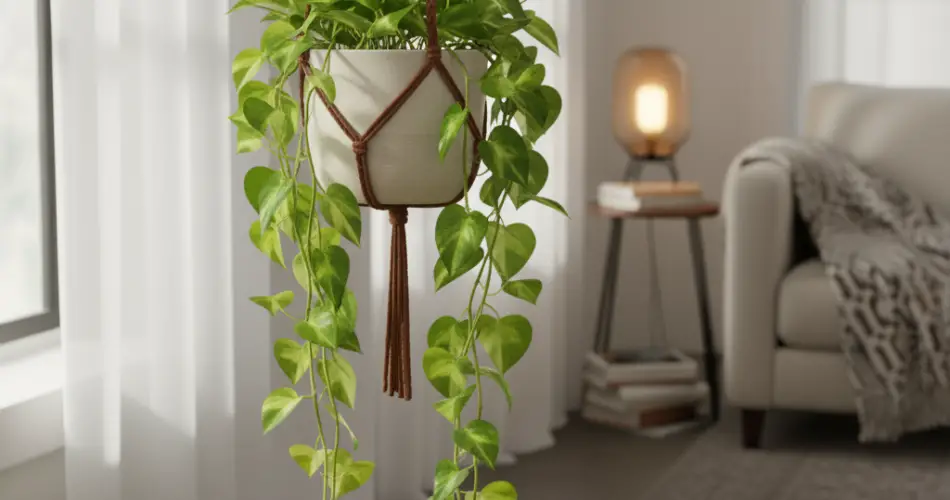
The pothos plant (Epipremnum aureum), also called Devil’s Ivy, is one of the most popular houseplants in the world. Its trailing vines, heart-shaped leaves, and forgiving nature make it an excellent choice for beginners and seasoned plant lovers alike. Often praised for being “impossible to kill,” pothos adapts to a wide range of indoor conditions. Still, one of the biggest questions new plant owners ask is: does pothos do better in low light or in bright rooms?
To answer that, we need to look at how light affects the growth, appearance, and long-term health of this versatile plant.
Native Habitat and Adaptability
Pothos comes from the tropical forests of Southeast Asia and the Pacific islands. In the wild, it grows as a groundcover or climbs trees, thriving under filtered light that makes its way through the forest canopy. This explains why the plant tolerates low light indoors but also responds well to brighter settings.
The adaptability of pothos is one of its greatest strengths. It can adjust to different levels of brightness, though its growth rate, leaf size, and coloration will vary depending on how much light it receives.
How Pothos Behaves in Low Light
One of the reasons pothos is popular in offices, bathrooms, and darker corners of the home is its tolerance for low-light environments. While the plant won’t grow as quickly in these settings, it usually remains healthy for long stretches.
In low-light conditions, expect:
-
Slower growth with fewer new leaves.
-
Smaller leaves compared to plants in brighter rooms.
-
Loss of variegation on varieties like Golden Pothos or Marble Queen, as green pigments take over to capture more light.
-
Longer, leggier vines as the plant stretches toward available light sources.
Pothos can survive in low light, but it won’t reach its full potential in color or size.
How Pothos Responds to Bright Light
When placed in bright, indirect light, pothos thrives. It produces larger, more vibrant leaves and sends out longer vines more quickly. Variegated types keep their striking patterns, and overall growth is more compact and lush.
In bright, indirect light, expect:
-
Faster, fuller growth.
-
Stronger stems and larger leaves.
-
Vibrant variegation patterns.
-
A healthier, bushier plant.
The key is that the light should be bright but not direct. Harsh sunbeams from west- or south-facing windows can scorch the leaves, leaving them with brown, crispy patches. A sheer curtain or positioning the plant a few feet back from the window usually prevents this problem.
The Middle Ground: Moderate Light
For most households, moderate light conditions are ideal for pothos. A spot near an east-facing window or slightly away from a bright south-facing window strikes a good balance. Here, the plant grows steadily without the risk of sunburn, and its leaves maintain their healthy green and variegated tones.
Artificial Light and Pothos
Another advantage of pothos is its ability to adapt to artificial lighting. Fluorescent lights commonly used in offices, as well as LED grow lights, provide enough energy for steady growth. If natural light is limited, placing pothos under artificial light for 10–12 hours a day can keep it looking healthy.
This makes pothos an excellent choice for windowless rooms, provided it receives consistent artificial lighting.
Signs of Too Little or Too Much Light
Like many houseplants, pothos communicates its needs through its leaves and growth pattern. Watch for these signals:
-
Too Little Light: Pale or yellowing leaves, long bare stems, and loss of variegation.
-
Too Much Light: Scorched leaves with brown patches or fading colors.
-
Ideal Light: Steady new growth, vibrant color, and balanced vines that look full rather than sparse.
Practical Placement Tips
-
Place pothos near an east-facing window for gentle morning light.
-
In a south- or west-facing room, use sheer curtains to filter the sun.
-
Rotate the plant every few weeks to ensure even growth on all sides.
-
In dim areas, consider supplementing with artificial light to keep vines strong.
Final Thoughts
So, is pothos better in low light or bright rooms? The answer is both—but with different outcomes. Pothos can survive in low light, making it one of the most adaptable indoor plants. However, it truly thrives in bright, indirect light, where its leaves grow larger, its vines trail more vigorously, and its variegated patterns shine.
If you want a lush, decorative plant, aim for a bright room with filtered sunlight. But if you’re working with a darker corner or office space, don’t worry—your pothos will still be there, patiently growing at its own pace.
With its flexibility and resilience, pothos remains one of the easiest and most rewarding plants to grow, no matter the lighting situation in your home.


