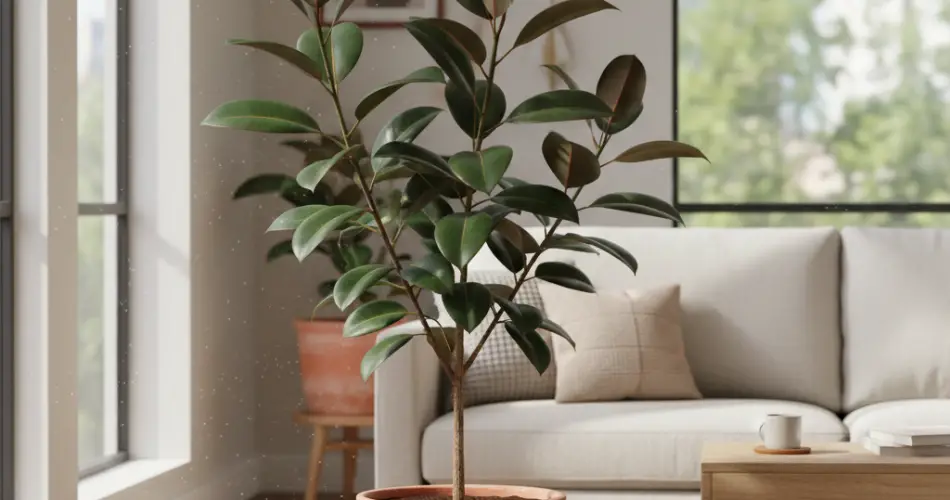
Rubber plants (Ficus elastica) are iconic indoor plants, celebrated for their glossy, thick leaves and bold architectural presence. Native to Southeast Asia, these plants can grow into substantial indoor trees when cared for properly, bringing both greenery and elegance to homes and offices. A question many plant enthusiasts have is: How much sunlight does a rubber plant need? Understanding its light requirements is essential for healthy growth, lush foliage, and long-term success.
Understanding Rubber Plant Light Preferences
Rubber plants naturally grow in tropical rainforests, where they receive filtered sunlight through the canopy of taller trees. This environment has shaped their preference for bright, indirect light, although they are adaptable enough to survive in lower-light conditions. Proper light exposure helps the plant maintain its glossy leaves, encourages steady growth, and supports vibrant foliage colors, particularly in variegated varieties.
Ideal Sunlight Conditions
-
Bright, Indirect Light: The best light for a rubber plant comes from a bright location where direct sunlight is filtered, such as near an east- or south-facing window. This encourages growth while preventing leaf burn.
-
Partial Shade or Low Light: Rubber plants can tolerate moderate to low light, making them suitable for rooms with north-facing windows or spaces further from direct sunlight. Growth may slow, and leaves may become darker green and slightly smaller in low-light conditions, but the plant remains healthy.
-
Avoid Harsh Direct Sunlight: Prolonged exposure to strong midday sun, especially from west-facing windows, can scorch leaves, causing brown spots, yellowing, or crispy edges. Variegated varieties are particularly sensitive to excessive sun.
Signs Your Rubber Plant’s Light Is Off
Observing your plant can help determine if it’s receiving appropriate light:
-
Too Little Light: Growth slows, leaves may drop, and the plant may become leggy, stretching toward the light source. Leaf color may darken, and variegation may fade in variegated cultivars.
-
Too Much Light: Leaves develop sunburn, appearing brown, crispy, or scorched along edges. Excessive light may also stress the plant, reducing overall vigor.
Tips for Providing Optimal Sunlight
-
Choose the Right Spot: Position your rubber plant near a window with bright, indirect sunlight. East- or south-facing windows are ideal, while west-facing windows may require a sheer curtain to diffuse harsh afternoon sun.
-
Rotate Regularly: Rotate the plant every few weeks so all sides receive light evenly. Uneven exposure can lead to leaning or lopsided growth.
-
Use Sheer Curtains: If the plant is exposed to direct sunlight, sheer curtains can filter the light and prevent scorching.
-
Supplement with Artificial Light: In darker rooms or during winter months, fluorescent or LED grow lights can provide supplemental illumination. Approximately 12 hours of indirect artificial light per day is usually sufficient.
-
Gradual Adjustments: When moving a rubber plant to a brighter location, introduce it gradually to prevent shock or leaf burn.
Additional Care Considerations
Sunlight is critical, but other environmental factors influence rubber plant health:
-
Watering: Light affects soil drying. Plants in brighter spots may need more frequent watering, while those in low-light areas require less. Overwatering can lead to root rot, especially in dimly lit areas where soil dries slowly.
-
Temperature: Rubber plants prefer temperatures between 60°F and 75°F (16°C–24°C) and should be kept away from drafts or heating vents.
-
Humidity: While rubber plants tolerate average indoor humidity, higher humidity promotes healthier foliage and reduces leaf edge browning. Occasional misting or a humidifier can be beneficial.
Benefits of Proper Light
Providing the right amount of light offers multiple benefits:
-
Vibrant, Glossy Leaves: Adequate light enhances the plant’s natural sheen and supports variegation in patterned varieties.
-
Balanced Growth: Proper light encourages strong, upright growth, reducing legginess and uneven development.
-
Leaf Retention: Plants with appropriate light levels are less likely to drop leaves, maintaining a lush appearance.
-
Resilience: Healthy, well-lit plants are more resilient against pests, stress, and diseases, requiring less intervention.
Conclusion
Rubber plants are versatile and adaptable, capable of surviving in a range of indoor lighting conditions. For optimal health, bright, indirect light is preferred, while low light may slow growth and reduce leaf color intensity. Direct sunlight should be avoided to prevent leaf scorching, especially for variegated varieties. By selecting the right location, monitoring leaf health, and gradually adjusting light exposure, you can enjoy a thriving rubber plant with glossy foliage, strong growth, and a striking presence in your indoor space. Proper sunlight is the foundation for maintaining the plant’s natural beauty and ensuring it flourishes for years to come.


