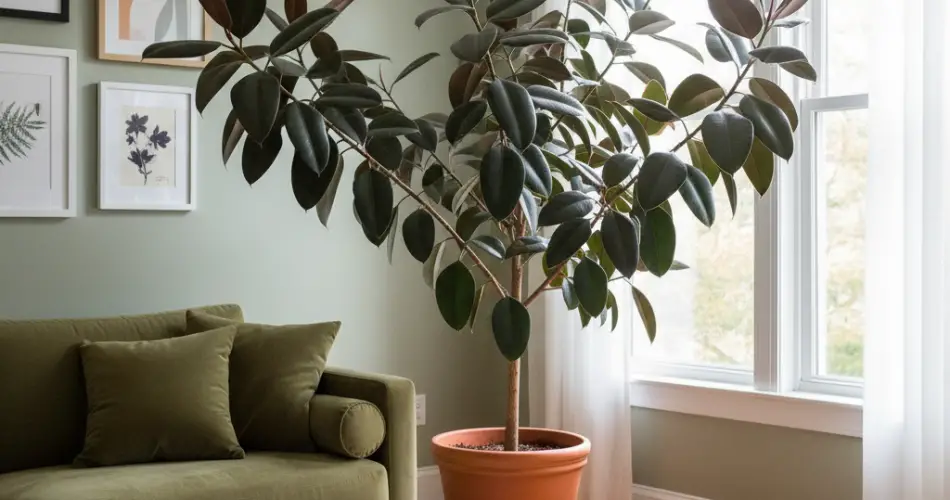
The rubber plant (Ficus elastica) is a classic houseplant that never goes out of style. With its broad, glossy leaves and upright growth, it adds a touch of greenery and sophistication to any indoor space. Despite its bold presence, the rubber plant is relatively easy to care for once its needs are understood. Among these, light requirements play the most critical role in keeping this plant healthy, vibrant, and growing steadily.
Understanding how much light your rubber plant needs—and how to adjust its placement depending on your home’s conditions—can make all the difference between a thriving specimen and one that struggles.
Native Habitat and Growth Pattern
The rubber plant is native to Southeast Asia, where it grows as a large tree in tropical forests. In its natural environment, it enjoys bright, filtered light beneath the taller trees of the canopy. This gives us an important clue: while it loves brightness, it is not used to the harshness of all-day direct sunlight.
Indoors, rubber plants are often grown as medium-to-large potted specimens. Their growth habits—upright, with strong stems and large leaves—make them perfect for corners of living rooms, offices, or entryways. But placement is key if you want to enjoy their full beauty.
Ideal Light Conditions Indoors
Rubber plants thrive in bright, indirect light. Place them near a sunny window, but ensure that direct rays do not scorch their leaves. East-facing windows are often the best choice since the morning sun is softer and gentler. A few feet away from a south- or west-facing window also works, provided the sunlight is filtered through a curtain.
Signs of optimal light include:
-
Deep, glossy leaves.
-
Consistent new growth during the active growing season.
-
Upright, compact stems that don’t lean toward light sources.
Can Rubber Plants Grow in Low Light?
One reason rubber plants remain popular is their adaptability. They can tolerate lower light conditions better than many large indoor plants. In a dimmer corner, they will usually survive, but their growth will slow significantly. Leaves may become smaller, and the plant may lose its rich coloration.
Over time, in very low light, stems can become leggy as they stretch toward the nearest source of brightness. While this won’t kill the plant, it reduces its overall health and ornamental value. If your rubber plant is in a low-light setting, rotating it and occasionally supplementing with artificial light can help maintain its vigor.
What About Direct Sunlight?
While rubber plants enjoy brightness, too much direct sunlight can cause damage. Leaves exposed to harsh afternoon sun may develop scorched patches, turning brown or crispy. The plant may also lose its glossy sheen if constantly overexposed.
That said, a few hours of gentle morning sun can benefit the plant, especially during the growing season. If you are moving a rubber plant from a shaded area to a brighter one, do so gradually to avoid shock.
Artificial Lighting for Rubber Plants
For homes and offices with limited natural light, artificial lighting is a reliable alternative. Rubber plants respond well to full-spectrum fluorescent or LED grow lights. Position the plant about 12–24 inches away from the light source and provide 10–12 hours of illumination daily.
This setup is especially useful during winter months when daylight hours are shorter or in urban apartments where tall buildings block natural light.
Seasonal Light Adjustments
Like many houseplants, rubber plants may need repositioning throughout the year as sunlight angles and intensities change.
-
Spring and Summer: Place the plant near bright windows, but monitor for sunburn if the light becomes too strong.
-
Autumn and Winter: Move closer to a window or add artificial light to make up for shorter days and weaker sunlight.
Rotating the plant every few weeks ensures all sides receive balanced exposure, preventing lopsided growth.
Common Light-Related Problems
-
Too Little Light: Slowed growth, smaller leaves, leggy stems, and dull coloration.
-
Too Much Direct Sun: Leaf scorch, crispy edges, or faded foliage.
-
Just Right: Vibrant, glossy leaves, steady new growth, and a well-balanced shape.
By paying attention to these signals, you can adjust placement and lighting before problems become severe.
Final Thoughts
The rubber plant is a resilient and adaptable houseplant, but like all living things, it has specific needs. Light plays the most important role in determining how healthy and beautiful your plant will be. While it can survive in lower light conditions, it truly thrives in bright, indirect light, where its large leaves can maintain their rich sheen and its growth remains steady.
Avoid prolonged harsh sunlight, supplement with artificial lighting when needed, and adjust placement seasonally to match changing conditions. With the right balance of light, your rubber plant will reward you with years of lush, striking greenery that enhances your indoor space.


