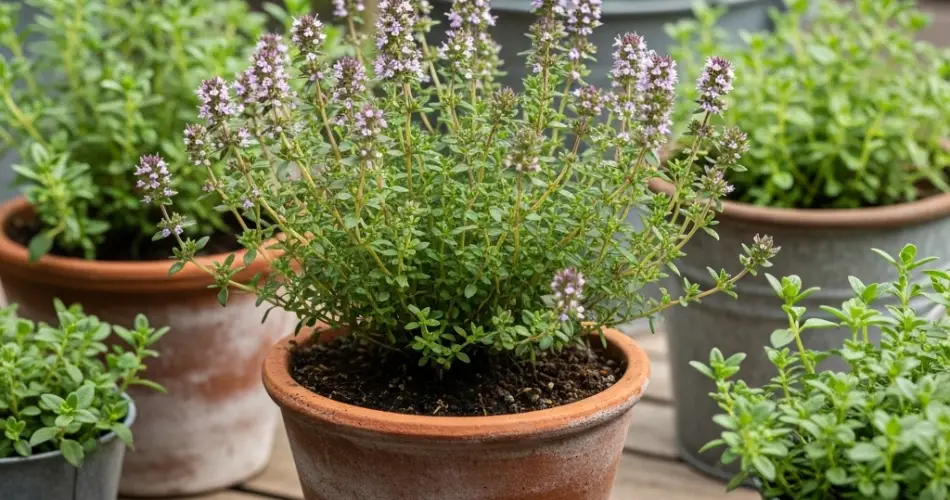
Thyme is a hardy, flavorful herb that’s perfect for year-round container gardening. With its woody stems, tiny aromatic leaves, and long-lasting flavor, thyme is a kitchen staple for everything from roasted vegetables and meats to soups and herbal teas. Growing thyme in pots not only makes it accessible all year, but also keeps this low-maintenance herb manageable and thriving in small spaces.
Whether you’re working with a balcony, patio, windowsill, or indoor countertop, pot-growing thyme offers flexibility, freshness, and beauty. This guide will show you how to grow thyme in containers successfully—no garden bed required.
Why Thyme is Ideal for Pot Gardening
Thyme is a Mediterranean herb that naturally thrives in poor, rocky soils and dry climates. These qualities make it well-suited for container gardening. In fact, thyme prefers the kind of controlled conditions that pots offer—good drainage, targeted watering, and lots of sunlight.
Pot-growing also prevents overcrowding and makes it easier to bring the plant indoors during cold weather, allowing for a longer growing season—or even continuous indoor growth year-round.
Choosing the Right Pot
Thyme doesn’t need deep soil but prefers width to allow for spreading. Choose a pot that is:
-
At least 6–8 inches deep
-
10–12 inches wide for a single plant, or larger for multiple herbs
-
Equipped with drainage holes to prevent water accumulation
Terracotta or clay pots are ideal, as they allow moisture to evaporate quickly and help avoid soggy soil. If you’re using plastic or ceramic, just make sure to avoid waterlogging by monitoring drainage closely.
The Best Soil Mix for Thyme
Thyme thrives in light, well-draining soil with a neutral to slightly alkaline pH. To create the perfect potting mix, use:
-
2 parts standard potting soil
-
1 part coarse sand or perlite
-
A handful of crushed eggshells or garden lime (optional, to increase alkalinity)
Avoid rich or overly moist soils—thyme doesn’t like “wet feet.” A gritty texture helps the roots breathe and mimics the herb’s natural environment.
Starting Thyme: Seeds, Cuttings, or Transplants
There are three ways to begin your thyme plant:
From Seeds:
-
Fill the pot with moistened soil.
-
Sprinkle seeds on the surface and lightly press them in.
-
Cover with a very thin layer of soil or sand.
-
Keep the container in a warm, bright area.
-
Mist lightly until germination occurs (usually 10–20 days).
Note: Seeds can be slow to germinate and inconsistent. For faster results, consider cuttings or nursery plants.
From Cuttings:
-
Take a 3–4 inch cutting from a healthy thyme plant.
-
Remove leaves from the lower half.
-
Dip in rooting hormone (optional) and plant in moist soil or place in water until roots form.
-
Once rooted, transfer to your pot.
From Transplants:
-
Purchase a young thyme plant and transplant it directly into your prepared container.
-
Water well after planting.
Light, Temperature, and Placement
Thyme is a sun-loving herb. For best results:
-
Place the pot in a location that gets at least 6–8 hours of sunlight daily
-
If growing indoors, position near a south- or west-facing window
-
Use a grow light if natural light is limited, especially in winter
-
Ideal temperature range: 60°F to 75°F (15°C to 24°C)
In cooler climates, thyme can be moved indoors before the first frost and grown in pots throughout the winter with adequate light.
Watering and Feeding
Thyme is drought-tolerant and prefers slightly dry soil. Water only when the top inch of soil feels dry. Be cautious not to overwater—root rot is the most common problem in potted thyme.
Tips:
-
Water thoroughly, allowing excess to drain
-
Let the soil dry out between waterings
-
Avoid misting the leaves, especially indoors
Fertilizing thyme is not usually necessary. If desired, feed with a diluted organic fertilizer once every 6–8 weeks during the active growing season (spring through early fall). Too much fertilizer can weaken the plant’s flavor.
Pruning and Harvesting
Frequent pruning encourages bushy, healthy growth and more flavorful leaves.
-
Begin harvesting once the plant is well-established (4–6 inches tall)
-
Use clean scissors to snip sprigs just above a leaf node
-
Regularly trim the tips to prevent woodiness and promote new growth
-
Remove any flowering stems to keep the plant focused on leaf production
You can use fresh thyme immediately or dry sprigs by hanging them in a warm, shaded area. Once dry, store the leaves in airtight containers for long-term use.
Troubleshooting Common Issues
-
Leggy Growth: Often due to low light—move the pot to a sunnier location.
-
Yellow Leaves: May indicate overwatering or poor drainage.
-
Weak Flavor: Caused by rich soil or excessive fertilizing—thyme likes lean conditions.
-
Pests: Rare, but occasional spider mites or aphids can be managed with neem oil or a blast of water.
Year-Round Tips
To enjoy thyme year-round:
-
Grow indoors during colder months with supplemental lighting
-
Harvest regularly to keep growth compact and flavorful
-
Divide the plant every couple of years if it becomes woody or outgrows its pot
-
Consider growing multiple thyme varieties—such as lemon thyme or creeping thyme—for variety in flavor and appearance
Final Thoughts
Growing thyme in pots is one of the easiest ways to enjoy fresh herbs all year. Its compact size, drought tolerance, and versatility in the kitchen make it a must-have for any home herb garden. With just a little sunlight, good drainage, and minimal care, your thyme plant will reward you with fragrant, delicious leaves season after season.
Whether you’re a seasoned gardener or a complete beginner, thyme is the perfect herb to grow in a pot—bringing the taste of the Mediterranean straight to your windowsill.


