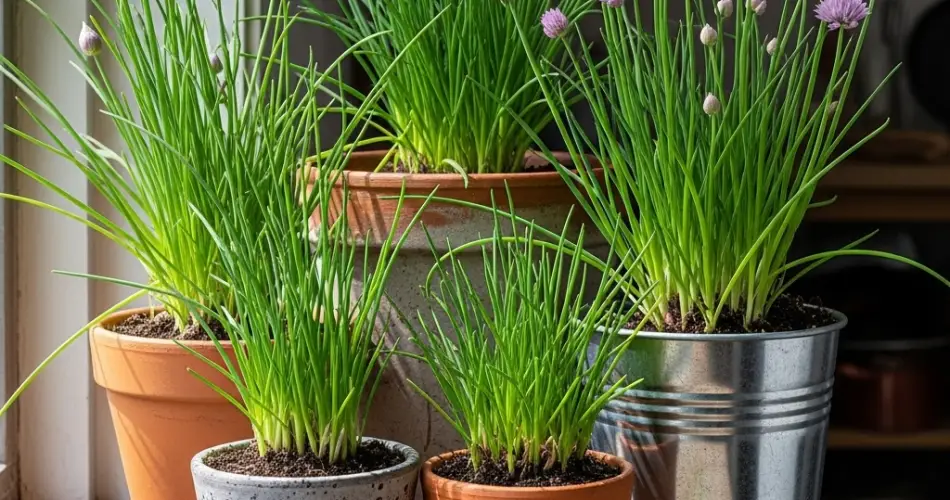
When it comes to versatile herbs that are easy to grow and endlessly useful in the kitchen, chives stand out as a true favorite. Known for their delicate onion-like flavor, chives are a perennial herb that, once established, can provide fresh harvests year after year. Best of all, they thrive beautifully in containers, making them perfect for small spaces like balconies, patios, or even sunny kitchen windowsills.
This guide will show you how to grow perennial chives in pots, how to care for them through the seasons, and how to harvest them for a continuous supply of fresh herbs.
Why Chives Are Perfect for Containers
Chives are part of the allium family, closely related to onions and garlic. Unlike their larger relatives, they grow in slender clumps that are ideal for small-scale gardening. Because they don’t require much root space, chives adapt perfectly to containers, and their perennial nature means you can enjoy them year after year with minimal effort.
Their vibrant green stalks also add beauty to container gardens, and when left to flower, they produce attractive purple blossoms that are both edible and pollinator-friendly.
Choosing the Right Container
To grow healthy, long-lasting chives, start with the right pot:
-
Size: A container at least 8–10 inches wide and deep is sufficient for a clump of chives. Larger pots allow for more growth and can support multiple plants.
-
Drainage: Drainage holes are essential, as chives dislike sitting in soggy soil.
-
Material: Clay pots help prevent overwatering, while plastic containers retain moisture longer—choose based on your climate and watering habits.
Best Soil for Perennial Growth
Chives prefer light, well-draining soil. A standard potting mix enriched with compost is ideal. If your soil tends to hold too much water, mix in a handful of sand or perlite to improve drainage.
Since chives are long-lived perennials, refreshing the soil every two to three years is recommended. Replacing old soil ensures nutrients stay available and prevents compaction that can slow growth.
Planting Chives in Pots
You can start chives from seed, seedlings, or by dividing an existing clump.
-
From Seeds: Sow seeds about ¼ inch deep and keep the soil consistently moist. Germination usually takes 10–14 days.
-
From Seedlings: Transplant nursery plants into your pot, spacing them about 6 inches apart.
-
From Divisions: If you have an established clump in the garden or another pot, divide the roots into smaller clusters and replant them in fresh soil.
Dividing clumps is the fastest way to get a strong, harvest-ready plant.
Sunlight and Watering Needs
Chives thrive with at least 6 hours of sunlight daily. Place your container in a sunny spot on the balcony, patio, or windowsill. If growing indoors, position the pot near a south-facing window or supplement with a grow light.
For watering, aim to keep the soil evenly moist but not waterlogged. Chives prefer slightly damp soil, but letting them sit in standing water can cause root rot. Check the soil regularly and water when the top inch feels dry.
Feeding for Season-Long Growth
Chives are not heavy feeders, but regular nutrition helps them produce lush green stalks. A light feeding every 4–6 weeks with a balanced liquid fertilizer or compost tea is enough. Avoid over-fertilizing, as this can dilute the flavor of the leaves.
Harvesting Chives
The best part about growing chives in containers is enjoying fresh harvests almost year-round.
-
When to Harvest: Begin harvesting once the stalks are at least 6 inches tall.
-
How to Harvest: Use scissors to snip leaves about 1–2 inches above the soil line. This encourages regrowth and prevents damage to the root system.
-
Harvest Regularly: Cutting chives frequently keeps them productive. If left untrimmed, the leaves can toughen, and the plant may direct energy into producing flowers instead.
The edible flowers can also be harvested and used in salads, herb butter, or as garnishes.
Maintaining Chives Year After Year
Because chives are perennial, they will return season after season with proper care. Here’s how to keep them thriving long-term in pots:
-
Winter Care: In cold climates, chives die back in winter but return in spring. Pots can be brought indoors or left outside if frost-tolerant.
-
Dividing Clumps: Every 2–3 years, divide your chive plant into smaller clusters to prevent overcrowding and encourage vigorous new growth.
-
Soil Refresh: Replace or replenish the potting mix when dividing to provide fresh nutrients.
Benefits of Growing Perennial Chives
Growing chives in containers is not only convenient but also highly rewarding. Here are some of the advantages:
-
Continuous Harvests: Once established, you can enjoy fresh chives season after season without replanting.
-
Space Efficiency: A single small pot can provide enough chives for regular kitchen use.
-
Low Maintenance: Chives are hardy, forgiving, and easy to regrow even after neglect.
-
Pollinator-Friendly: Their purple flowers attract bees and beneficial insects, boosting your container garden’s biodiversity.
Conclusion
Chives are the perfect perennial herb for container gardeners. With their ability to regrow season after season, they require little effort yet provide a steady supply of fresh flavor. By choosing the right pot, ensuring good drainage, and keeping up with light watering and regular harvests, you can enjoy the benefits of chives for years to come.
Whether you grow them on a balcony, windowsill, or patio, perennial chives are a compact, reliable, and flavorful addition to any herb garden. Once you plant them, they’ll reward you with countless harvests—making them one of the most practical herbs you can grow in containers.


