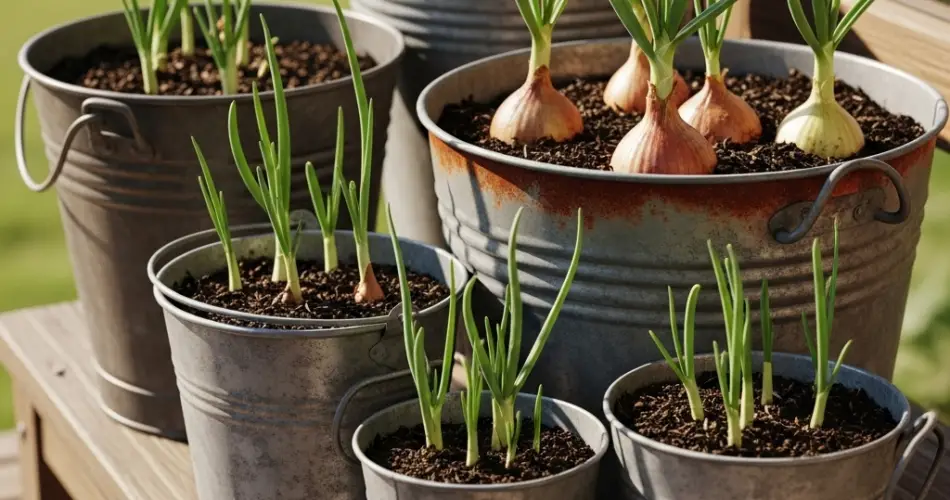
Onions are one of the most widely used vegetables in the kitchen, adding flavor and depth to countless recipes. They are also surprisingly easy to grow, even if you don’t have a large garden. Container gardening has opened the door for city dwellers, balcony growers, and anyone with limited space to enjoy fresh, homegrown onions. Among the many vegetables suited for bucket growing, onions adapt exceptionally well, provided you choose the right varieties. Not all onions are created equal, and selecting the proper type is key to achieving a plentiful harvest in buckets. This article explores onion varieties that thrive in container buckets and offers tips to help you succeed in your home onion garden.
Why Grow Onions in Buckets?
Buckets provide an ideal growing environment for onions because they allow you to control soil quality, drainage, and growing conditions more effectively than planting directly in the ground. Many soils are either too heavy or too compacted for onions, which prefer loose, well-draining soil that allows bulbs to expand. Buckets also make it easier to relocate plants for maximum sunlight or to protect them from excessive rain. For those living in apartments or small houses, onion buckets are a practical and space-saving solution.
Choosing the Right Varieties
Different onion varieties vary in size, shape, taste, and growth requirements. When growing in buckets, you want varieties that do not demand excessive space, mature relatively quickly, and provide good yields in confined conditions. The following types are among the best choices for container gardening:
1. Green Onions (Scallions)
Green onions are one of the easiest and most rewarding types to grow in buckets. They require very little space since they don’t form large bulbs. Instead, they are harvested for their long, slender stalks and mild flavor. Green onions mature quickly, often in as little as 50–60 days, making them perfect for continuous harvests. You can plant them densely in buckets and snip the greens as needed, ensuring a steady supply for your kitchen.
2. Shallots
Shallots are another excellent option for bucket gardening. Unlike large globe onions, shallots form clusters of smaller bulbs that are easier to accommodate in confined soil. They have a mild, slightly sweet flavor that’s prized in gourmet cooking. Shallots thrive in well-draining container soil and mature in about 90–120 days. Because of their smaller bulb size and clumping growth habit, they make efficient use of bucket space.
3. Bunching Onions
Bunching onions are non-bulbing varieties that resemble scallions but can grow taller and thicker. Since they don’t need space to swell into full bulbs, they are well-suited to small containers. They can be harvested at various stages of growth, offering versatility in the kitchen. Planting them in succession ensures a continuous harvest throughout the growing season.
4. Small Bulb Onions (Pearl or Cipollini)
If you prefer growing bulb onions in buckets, consider smaller types such as pearl onions or cipollini onions. These varieties develop compact bulbs that don’t require as much soil depth as large globe onions. Their small size makes them ideal for container conditions, and they’re especially useful for pickling, roasting, or adding whole to stews.
5. Compact Day-Neutral Onions
Day length plays a crucial role in onion bulb formation. Long-day onions need extended summer daylight to develop, while short-day onions thrive in regions with mild winters and shorter days. For container gardening, day-neutral onions are the most versatile choice because they are less sensitive to daylight length and can grow well in various climates. Compact day-neutral varieties with smaller bulb sizes are particularly suitable for buckets.
Tips for Growing Onions in Buckets
Choosing the right variety is just the first step. Proper care and attention ensure your onions thrive in containers. Here are some practical tips:
-
Bucket Size: Use containers at least 10–12 inches deep, with drainage holes at the bottom. Larger buckets allow you to plant more onions at once.
-
Soil Mix: Onions prefer loose, fertile, and well-draining soil. A mix of garden soil, compost, and perlite or sand works well. Avoid heavy clay that restricts bulb growth.
-
Spacing: For green onions and bunching onions, plant seeds or sets close together. For bulb onions, space them about 4 inches apart to give room for growth.
-
Watering: Onions need consistent moisture but cannot tolerate soggy soil. Water when the top inch of soil feels dry, and ensure good drainage.
-
Sunlight: Onions thrive in full sun, requiring at least 6–8 hours of direct light daily. Position buckets in the sunniest spot available.
-
Fertilization: Onions are heavy feeders. Apply a nitrogen-rich fertilizer early in the growing season, then switch to one higher in potassium as bulbs begin forming.
-
Harvesting: Green onions and bunching onions can be harvested as soon as they reach the desired size. Bulb onions are ready when the tops turn yellow and fall over.
Conclusion
Growing onions in buckets is both practical and rewarding, especially when you select varieties suited for container conditions. Green onions, shallots, bunching onions, pearl onions, and compact day-neutral types all thrive in buckets, providing fresh harvests even in small spaces. With the right soil, sunlight, and care, your onion buckets will reward you with crisp greens, flavorful bulbs, and the satisfaction of enjoying homegrown produce. Whether you are a beginner gardener or an experienced grower looking for space-saving methods, container onions prove that even limited areas can yield abundant harvests.


