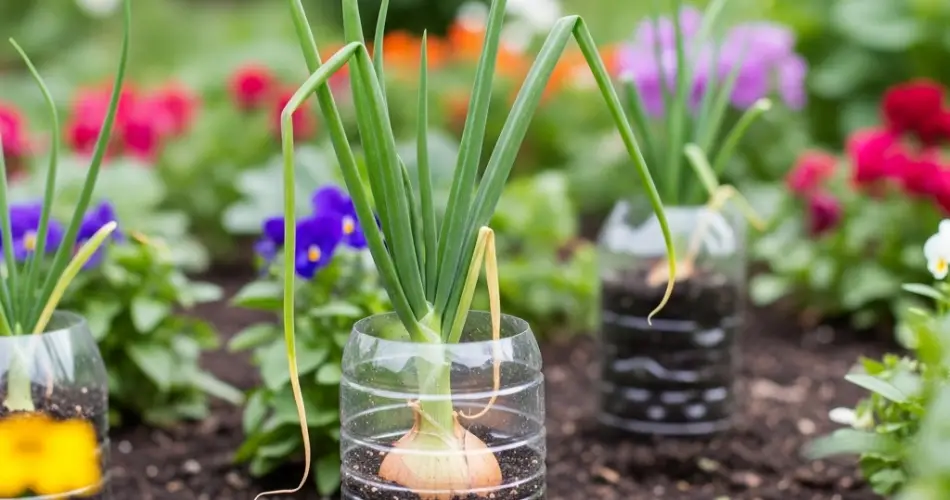
Growing onions at home doesn’t require a backyard or large garden. With a few used plastic bottles, you can cultivate fresh onions on a balcony, windowsill, or patio. This method is ideal for urban gardeners who want a continuous supply of green onions or even mature bulbs without taking up much space.
Onions are one of the easiest vegetables to grow. They require minimal maintenance, adapt well to containers, and grow quickly. By using old bottles, you not only grow your own food but also recycle plastic waste, making this method sustainable and environmentally friendly.
Why Grow Onions in Bottles?
Using plastic bottles for onion farming offers several advantages:
-
Space-saving – Ideal for tight urban spaces and vertical gardening setups.
-
Low cost – Utilizes recycled materials and basic household items.
-
Water-efficient – Smaller containers reduce water waste and make moisture control easier.
-
Quick results – Green onions grow fast and can be harvested repeatedly.
-
Clean and organized – A neat solution for small-scale indoor or outdoor gardening.
This technique is perfect for beginners and experienced gardeners alike.
What You’ll Need
To get started with bottle-grown onions, gather the following materials:
-
1.5- to 2-liter plastic bottles (one or more, depending on how many onions you want to grow)
-
A knife or scissors
-
Heated nail or drill for making holes
-
Onion sets (small bulbs) or onion scraps from the kitchen
-
Potting soil or a DIY soil blend
-
Watering can or spray bottle
-
A sunny spot (windowsill, balcony, or outdoor ledge)
Preparing the Bottles
-
Clean the Bottles: Remove labels, wash thoroughly, and allow to dry.
-
Cut Planting Holes: Cut several circular or oval holes along the side of the bottle (about the size of a coin). Space them about 2–3 inches apart in a spiral pattern, allowing room for onion greens to grow outward. Leave the top portion of the bottle open for adding soil.
-
Create Drainage: Poke 4–6 holes in the bottom of the bottle to allow excess water to drain.
-
Optional: If you want to hang the bottles, punch two small holes near the neck and loop a rope or wire through them to create a hanger.
Choosing Onion Starts
You can use either:
-
Onion sets: These are small, immature bulbs readily available at garden centers.
-
Onion scraps: Use leftover onion bases from cooking. Place the base in water until roots appear, then transfer them into soil.
Both methods work well, especially if you’re aiming for green onion tops rather than full bulbs.
Planting Your Onions
-
Add a few inches of soil to the bottom of the bottle.
-
As you fill the bottle with soil, insert onion sets or scraps through the side holes, with the root end facing inward and the top sticking out. Fill gently around each as you work your way up.
-
Once all planting holes are filled and the bottle is nearly full, add a few onions on top for vertical growth.
-
Water lightly to moisten the soil evenly.
Growing Conditions and Maintenance
-
Sunlight: Place the bottles in a sunny location where they receive at least 4–6 hours of light daily. Onion greens grow faster with more light.
-
Watering: Keep the soil lightly moist but not soggy. Check daily, especially in warmer weather. Hanging bottles may dry out faster.
-
Fertilizing: Use compost tea or diluted liquid fertilizer every 2–3 weeks to encourage lush green growth.
-
Airflow: Make sure the plants have space between them and that the location is well-ventilated to prevent mold or fungus.
Harvesting Onions
If you’re growing for green onion tops, you can start harvesting in about 2–3 weeks. Simply snip the greens with scissors when they’re about 6–8 inches tall, and they’ll continue to regrow from the base.
For full bulb development, allow the onions to grow for 90–120 days, depending on the variety. Once the tops start yellowing and falling over, it’s time to harvest. Pull out the bulbs, brush off the soil, and let them cure in a dry, shaded spot for 1–2 weeks before storing.
Replant and Reuse
One of the advantages of this method is that you can easily replant new sets or scraps into the same bottle once you’ve harvested. The container can be used repeatedly throughout the year, and the compact setup fits well into a continuous planting cycle.
Final Thoughts
Onion farming using old bottles is a practical, affordable, and eco-friendly way to grow food at home. Whether you want a regular supply of green onions for cooking or are aiming to harvest full bulbs, this method makes it easy—even without a garden. With just a little space and some creativity, you can turn recycled plastic bottles into productive planters that provide fresh onions all year long.
It’s a perfect project for families, schools, or anyone wanting to grow their own food sustainably and efficiently in a small space.


